Seattle Mayor Katie Wilson orders new approach to RV homelessness after vetoing permit program
Nov 3, 2026, 2:03 PM | Updated: 3:49 pm
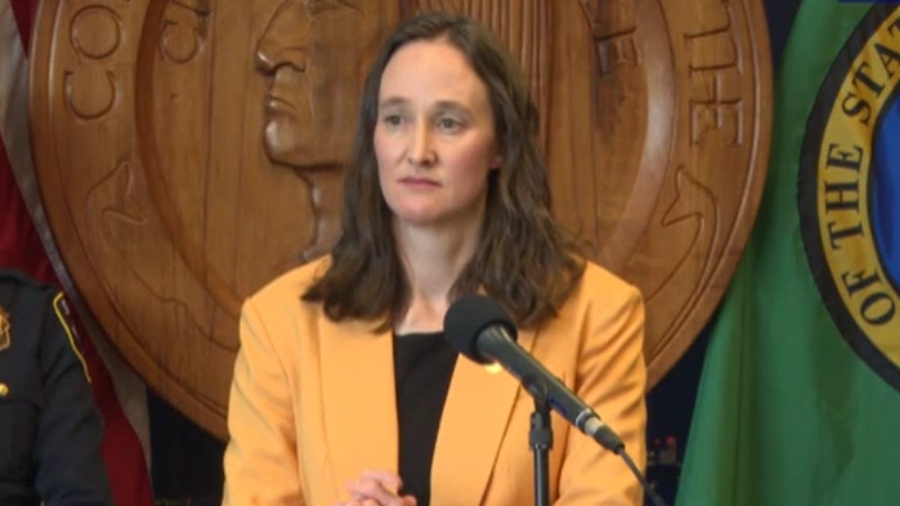
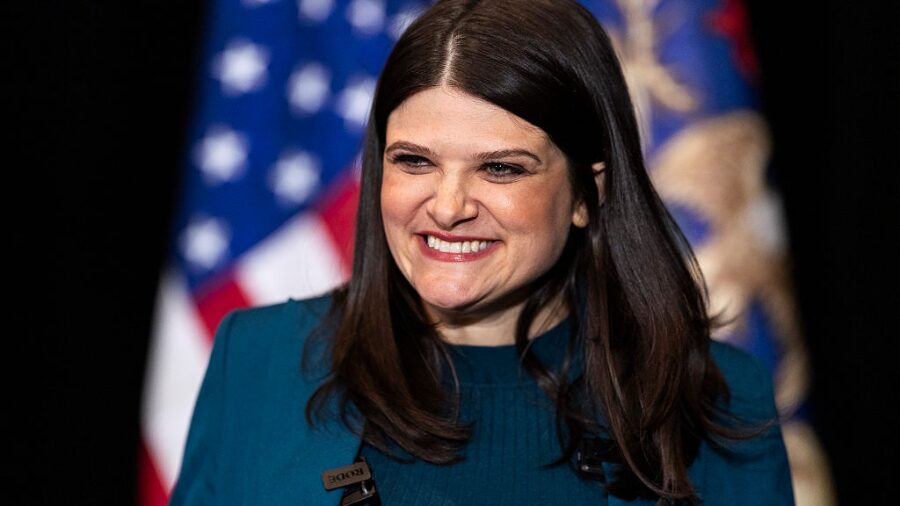
A photo of Katie Wilson during a Tuesday press conference announcing a new Executive Order. (Photo courtesy of the Seattle Channel)
(Photo courtesy of the Seattle Channel)

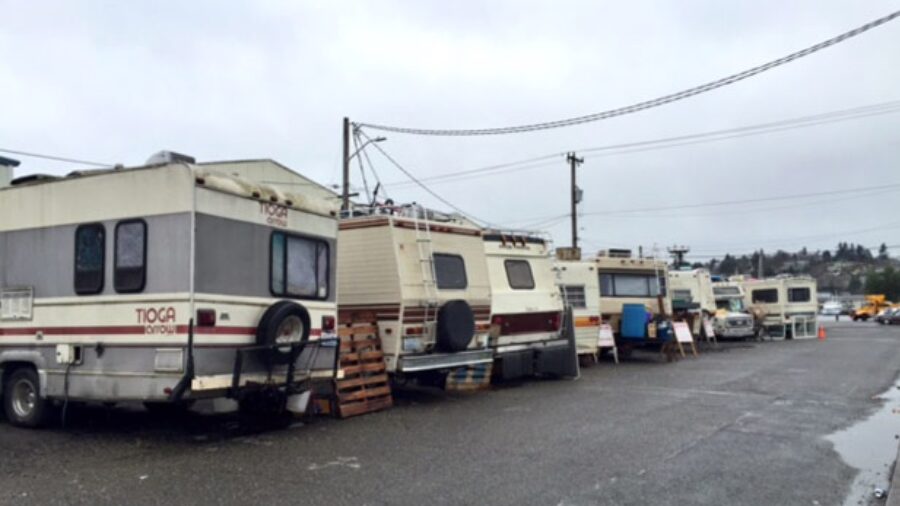
Seattle Mayor Katie Wilson announced an executive order Tuesday aimed at connecting people living in RVs with shelter and services, along with improving the city’s response to public safety and neighborhood concerns involving the vehicles.
Wilson’s announcement followed her decision to veto Council Bill 121283, a measure that would have created a permit program for motorhomes and travel trailers. Wilson cited concerns over its cost, legal risks, enforcement requirements, and potential to increase unsheltered homelessness.
“As the mayor, it is my responsibility to ensure that our city policies and programs are feasible, a cost-effective use of public resources, and have a reasonable likelihood of achieving their stated goals,” Wilson said. “I vetoed this bill because I am concerned that the permit program outlined in Council Bill 121283 does not meet that threshold, and I wanted to give the council an opportunity to consider an alternative pathway.”
The mayor signed the other four ordinances in the City Council’s legislative package.
Wilson outlines alternative approach to RV homelessness
Wilson’s executive order will direct city departments to strengthen outreach, identify barriers to housing, and review how Seattle handles problematic RVs. A working group will deliver recommendations within 60 days, and Wilson expects to send any necessary legislation to the council by March 31, 2027.
“Our goal is simple: better outcomes for people living in vehicles, fewer people living in vehicles over time, and cleaner, safer public spaces for everyone,” Wilson said.
Wilson also directed the Human Services Department to deploy 2026 funding to operate Glass Yard Commons, a roughly 4-acre RV safe lot in West Seattle expected to open in November, and to engage with people living in vehicles across Seattle.
The city will prioritize resources for service providers and its Unified Care Team to connect RV residents with safe lots, shelter, and supportive services. Outreach efforts will also help residents access RV storage options, which Wilson said can remove a major obstacle to accepting shelter.
“For many people, the fear of losing their vehicle is a major barrier to accepting shelter,” she said.
The funding also includes the creation of a citywide by-name list focused on better understanding of who needs services that will lead toward stable housing.
The second major focus of Wilson’s executive order is improving collaboration between city departments and community partners with a goal of improving responses to neighborhood impacts and public safety issues that involve RVs.
Wilson will convene a working group consisting of representatives within the city budget office, human services department, Seattle Police Department, Seattle Department of Transportation, Department of Finance and Administrative Services, Seattle Public Utilities, and other community organizations.
Councilmembers weigh in on Wilson’s RV executive order
Seattle City Councilmember Rob Saka, who voted for the RV legislation, said the city needs to combine support for homeless individuals with enforceable rules that protect neighborhoods.
“Compassion alone is insufficient. Accountability alone is inadequate and inhumane. Seattle needs both,” Saka said.
Seattle City Councilmember Alexis Mercedes Rinck, who voted against the permit program, supported Wilson’s veto and questioned whether the city could carry out the legislation.
“A permit program that we can’t staff, can’t enforce, and can’t pay for does not meet that standard,” Rinck said.
RELATED STORIES


Councilmember Strauss says Mayor Wilson broke her promise by vetoing RV permit program
Seattle City Councilmember Dan Strauss, who sponsored the legislation, said in a news release Monday that Wilson had previously promised not to veto the ordinance and accused her of breaking that commitment.
Strauss said he had worked with frontline service providers and city departments since January to develop the legislation, including months of meetings with the mayor’s office.
“Before we passed this legislation, Mayor Katie Wilson promised me not to veto it and to work together to implement. Now, thirteen days after we passed it, the mayor gave me a call at 4 p.m. to let me know she was breaking that promise,” Strauss said in a statement.
According to Strauss’s office, Wilson’s last direct communication with him before the veto was an Oct. 15 email, five days before the legislation passed. His office said the email followed a meeting in which the mayor’s office promised not to veto the measure.
“If the proposed legislation is adopted by the city council, my office will work with you through the Vehicle Resident Assistance Permitting Program Review Work Group to implement this program,” Wilson wrote in that email, according to Strauss’s office.
Strauss argued that the current approach is failing both people living in RVs and their neighbors.
“The city has few resources, and no strategy for helping people living in their RVs get into safer shelter and housing. We can’t continue to leave people forgotten on our streets,” Strauss said. “That’s why I proposed this legislation, and that is why the council passed it.”
Why Wilson vetoed the RV permit program
Wilson’s veto letter stated that she questioned the complexity and cost of a one-time census of people living in RVs, including how the program would affect future vehicle residents who were not counted.
She also raised legal concerns about requiring proof of RV ownership, immediate impoundment or seizure without notice, and the potential for selective enforcement.
Other concerns included the cost of storing relinquished RVs, hiring staff, and developing interdepartmental technology systems. Wilson also questioned the safety and legal risks of towing occupied vehicles and relying more heavily on Seattle police to enforce the program.
Wilson said city programs must be implementable, cost-effective, and reasonably likely to achieve their goals.
“I am vetoing this bill today because I am concerned that the permit program outlined in CB 121283 does not meet this threshold, and I want to give the council an opportunity to consider an alternative pathway,” Wilson wrote.
Four other RV ordinances signed
Among the measures Wilson signed was Council Bill 121279, which expands the authority of the Department of Finance and Administrative Services director to sign leases and open safe parking lots, storage sites, and other resources for people living in vehicles.
Wilson also pointed to funding in the proposed 2027-2028 budget for two safe lots anticipated to accommodate 182 vehicle residents.
RELATED STORIES
RV proposal drew debate before mayor’s veto
“The Jake and Spike Show” on KIRO Newsradio previously reported that Strauss argued, “doing nothing is not an option.”
However, the proposal drew mixed reactions between KIRO hosts Jake Skorheim and Spike O’Neill.
Spike supported taking an initial step, even if the plan was imperfect.
“Rather than not do anything because it’s not perfect, I appreciate some progress,” Spike said.
Jake questioned whether the proposed consequences for repeatedly declining shelter would be strong enough.
“If you’re saying that they get five chances before there’s any teeth to this thing, it’s like when they were talking about all those Metro bus ambassadors,” Jake said.
Jake and Spike also raised concerns that the rules could move RVs around Seattle rather than reduce vehicle camping.
“They want to spread the problem around the city,” Jake said.
Contributing: Julia Dallas, MyNorthwest
Follow Jason Sutich on X. Send news tips here.