Former WA AG Rob McKenna breaks down Supreme Court birthright citizenship, mail-in ballot rulings
Jul 1, 2026, 11:00 AM

A photo of the U.S Supreme Court. (Photo: Kevin Dietsch, Getty Images)
(Photo: Kevin Dietsch, Getty Images)

The U.S. Supreme Court struck down President Donald Trump’s executive order seeking to end birthright citizenship and upheld state laws allowing mail-in ballots to arrive after Election Day in a pair of landmark decisions this week, prompting a flurry of analysis from legal experts across the country.
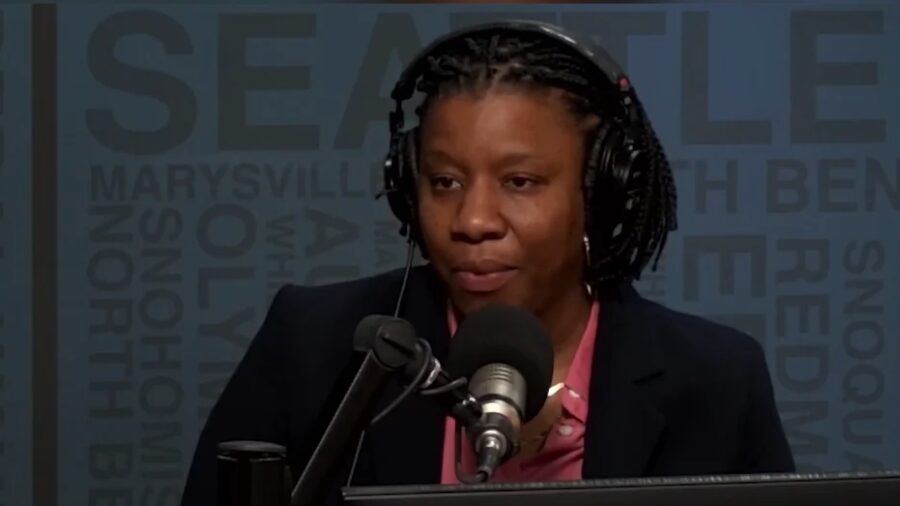
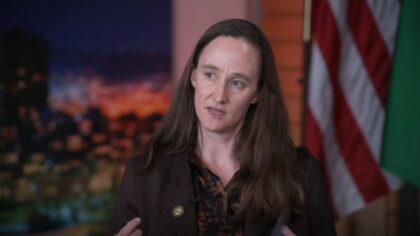
Former Washington State Attorney General Rob McKenna spoke on “Seattle’s Morning News” on Wednesday and said the birthright citizenship ruling in Trump v. Barbara was more nuanced than many observers expected — himself included.
“I predicted a possible 6-3 decision,” McKenna said, noting that the oral arguments had pointed in that direction. “It was a little more complicated or nuanced than that. It was actually a 5-1-3 decision.”
Supreme Court ruling revealed a complex split among the justices
The court ruled Tuesday that Trump’s executive order, signed on his first day in office in January 2025, violated the 14th Amendment’s guarantee of citizenship to anyone born on U.S. soil. Chief Justice John Roberts wrote the majority opinion, joined by Justices Amy Coney Barrett, Sonia Sotomayor, Elena Kagan, and Ketanji Brown Jackson.
Justice Brett Kavanaugh filed a separate opinion concurring in the judgment, giving the ruling a 6-3 majority in outcome. But McKenna noted Kavanaugh took a narrower path, arguing the executive order violated federal statute rather than the Constitution itself.
Justices Clarence Thomas, Samuel Alito, and Neil Gorsuch dissented. Thomas authored a 90-page dissent arguing the 14th Amendment was designed to protect formerly enslaved people and was never intended to apply to those in the country temporarily.
“He wrote a very passionate dissent arguing that those people are clearly part of the United States, subject to its sovereignty,” McKenna said. “He said this language was never intended to apply to people who were here on tourist visas, for example.”
McKenna said the majority relied on precedent dating to the 1890s — a reference to the court’s 1898 ruling in United States v. Wong Kim Ark — and declined the administration’s request to overturn it.
“They said, ‘Look, we’re not breaking new ground here,'” McKenna said. “That question was decided in the 1890s in a case that they affirmed.”
Asked whether the three dissenters would consistently side with the administration, McKenna was measured.
“I wouldn’t say always, but more often than the other justices apparently,” he said, adding that both Roberts and Barrett would “go the wrong way more often” from the administration’s perspective — much like former Justice Sandra Day O’Connor once did.
RELATED STORIES


Second ruling proved even harder to predict, McKenna said
On the mail-in ballot case, Watson v. Republican National Committee, McKenna said the 5-4 ruling Monday was harder to predict. The court upheld a Mississippi law allowing ballots to be counted if postmarked by Election Day and received within five days. Justice Barrett wrote the majority opinion, again joined by Roberts and the court’s three liberal justices.
“It was interesting again to see the Chief Justice and Justice Coney Barrett coming down on the side of the law, the state law that says ballots will be counted even if they arrive after Election Day, if they’re postmarked by Election Day,” McKenna said.
He said the justices likely recognized that states control elections, and he suspected the court had military voters in mind.
“I wonder how many overseas military would have been disenfranchised,” McKenna said. “Their ballots would not have been counted if the plaintiffs in this case had prevailed.”
The decisions come as the court wraps up a blockbuster term that has also included rulings on transgender rights and youth sports. The rulings land just over four months before the 2026 midterm elections.
McKenna served as Washington’s attorney general from 2005 to 2013.
Manda Factor is the host of “Seattle’s Morning News” on KIRO Newsradio. Follow Manda on X and email her here.