3 Democrat-led states have rolled back Medicaid access for people lacking permanent legal status
Jul 19, 2025, 6:01 AM | Updated: Jul 22, 2025, 9:58 am
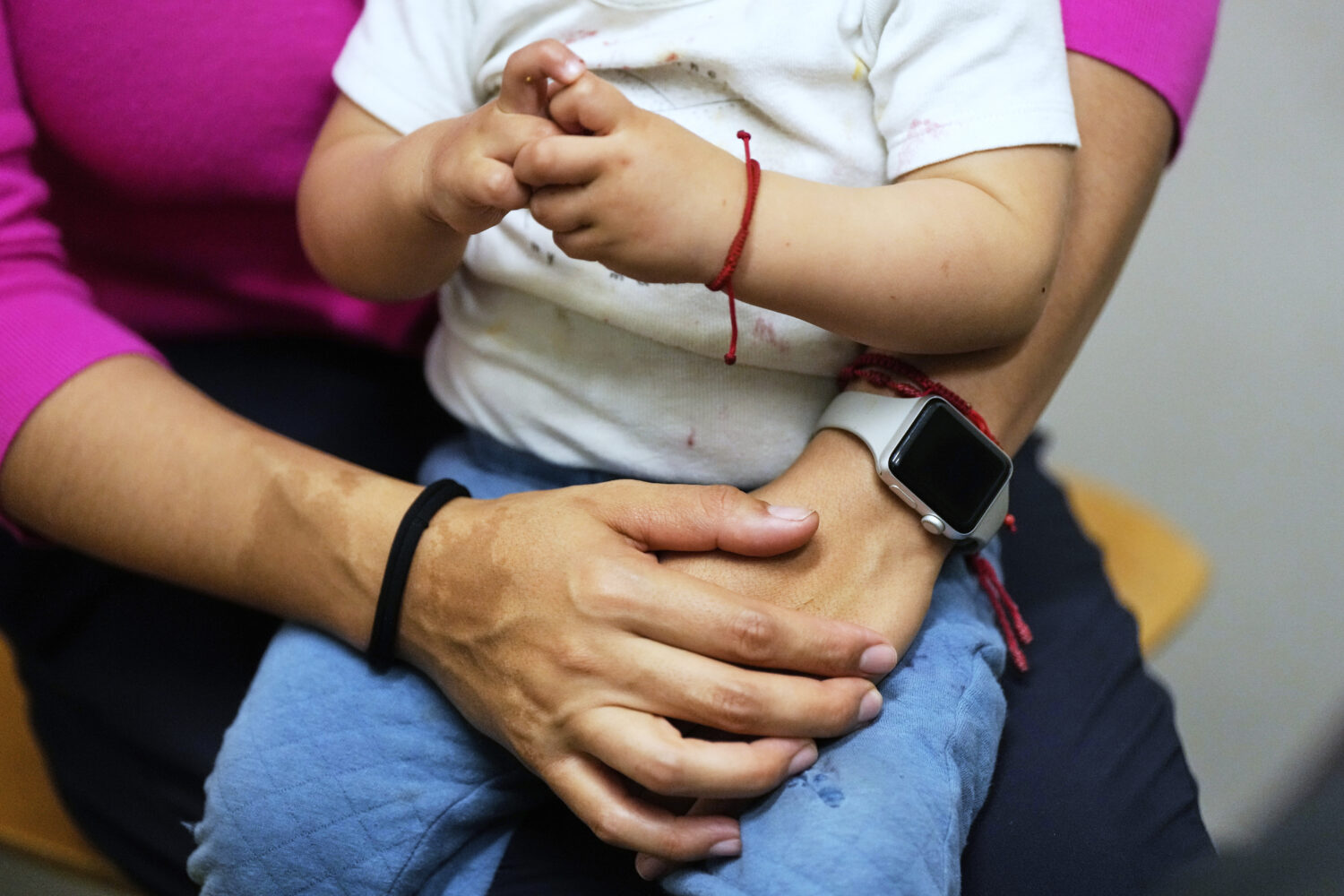
A woman and her 16-month-old son wait to see a doctor at a CommuniCARE+OLE clinic Thursday, June 26, 2025, in Davis, Calif. (AP Photo/Godofredo A. Vásquez)
Credit: ASSOCIATED PRESS
(AP Photo/Godofredo A. Vásquez)

SACRAMENTO, Calif. (AP) — For nearly 20 years, Maria would call her sister — a nurse in Mexico — for advice on how to manage her asthma and control her husband’s diabetes instead of going to the doctor in California.
She didn’t have legal status, so she couldn’t get health insurance and skipped routine exams, relying instead on home remedies and, at times, getting inhalers from Mexico. She insisted on using only her first name for fear of deportation.
Things changed for Maria and many others in recent years when a handful of Democrat-led states opened up their health insurance programs to low-income immigrants regardless of their legal status. Maria and her husband signed up the day the program began last year.
“It changed immensely, like from Earth to the heavens,” Maria said in Spanish of Medi-Cal, California’s Medicaid program. “Having the peace of mind of getting insurance leads me to getting sick less.”
At least seven states and the District of Columbia have offered coverage for immigrants since mostly 2020. But three of them have done an about-face, ending or limiting coverage for hundreds of thousands of immigrants who aren’t in the U.S. legally in California, Illinois and Minnesota.
The programs cost way more than officials had projected at a time when the states are facing multibillion-dollar deficits now and in the future. In Illinois, adult immigrants ages 42-64 without legal status have lost their health care to save an estimated $404 million. All adult immigrants in Minnesota no longer have access to the state program, saving nearly $57 million. In California, no one will automatically lose coverage, but new enrollments for adults will stop in 2026 to save more than $3 billion over several years.
Cuts in all three states were backed by Democratic governors who once championed expanding health coverage to immigrants.
The Trump administration this week shared the home addresses, ethnicities and personal data of all Medicaid recipients with U.S. Immigration and Customs Enforcement officials. Twenty states, including California, Illinois and Minnesota, have sued.
Health care providers told The Associated Press that everything, especially the fear of being arrested or deported, is having a chilling effect on people seeking care. And states may have to spend more money down the road because immigrants will avoid preventive health care and end up needing to go to safety-net hospitals.
“I feel like they continue to squeeze you more and more to the point where you’ll burst,” Maria said, referencing all the uncertainties for people who are in the U.S. without legal permission.
People who run free and community health clinics in California and Minnesota said patients who got on state Medicaid programs received knee replacements and heart procedures, and were diagnosed for serious conditions like late-stage cancer.
CommunityHealth is one of the nation’s largest free clinics, serving many uninsured and underinsured immigrants in the Chicago area who have no other options for treatment. That includes the people who lost coverage 31,500 people ages 42-64.
One of CommunityHealth’s community outreach workers and care coordinator said Eastern European patients she works with started coming in with questions about what the change meant for them. She said many of the patients also don’t speak English and don’t have transportation to get to clinics that can treat them. The worker spoke to the AP on condition of anonymity to protect patients’ privacy.
Health Finders Collective in Minnesota’s rural Rice and Steele counties south of Minneapolis serves low-income and underinsured patients, including large populations of Latino immigrants and Somali refugees. Executive director Charlie Mandile said they’re seeing patients rushing to squeeze in appointments and procedures before 19,000 people age 18 and older are kicked off of insurance at the end of the year.
Free and community health clinics in all three states say they will keep serving patients regardless of insurance coverage — but that might get harder after the U.S. Department of Health and Human Services decided this month to restrict federally qualified health centers from treating people without legal status.
CommunityHealth CEO Stephanie Willding said she always worried about the stability of the program because it was fully state funded, “but truthfully, we thought that day was much, much further away.”
“People are going to die. Some people are going to go untreated,” Alicia Hardy, chief executive officer of CommuniCARE+OLE clinics in California, said of the state’s Medicaid changes. “It’s hard to see the humanity in the decision-making that’s happening right now.”
A spokesperson for the Minnesota Department of Health said ending the state’s program will decrease MinnesotaCare spending in the short term, but she acknowledged health care costs would rise elsewhere, including uncompensated care at hospitals.
Minnesota House Speaker Lisa Demuth, a Republican, said the state’s program was not sustainable.
“It wasn’t about trying to be non-compassionate or not caring about people,” she said. “When we looked at the state budget, the dollars were not there to support what was passed and what was being spent.”
Demuth also noted that children will still have coverage, and adults lacking permanent legal status can buy private health insurance.
Health care providers also are worried that preventable conditions will go unmanaged, and people will avoid care until they end up in emergency rooms – where care will be available under federal law.
One of those safety-net public hospitals, Cook County Health in Chicago, treated about 8,000 patients from Illinois’ program last year. Dr. Erik Mikaitis, the health system’s CEO, said doing so brought in $111 million in revenue.
But he anticipated other providers who billed through the program could close, he said, adding: “Things can become unstable very quickly.”
State lawmakers said California’s Medi-Cal changes stem from budget issues — a $12 billion deficit this year, with larger ones projected ahead. Democratic state leaders last month agreed to stop new enrollment starting in 2026 for all low-income adults without legal status. Those under 60 remaining on the program will have to pay a $30 monthly fee in 2027.
States are also bracing for impact from federal policies. Cuts to Medicaid and other programs in the recently signed massive tax and spending bill include a 10% cut to the federal share of Medicaid expansion costs to states that offer health benefits to immigrants starting October 2027.
California health officials estimate roughly 200,000 people will lose coverage after the first full year of restricted enrollment, though Gov. Gavin Newsom maintains that even with the rollbacks, California provides the most expansive health care coverage for poor adults.
Every new bill requires a shift in Maria’s monthly calculations to make ends meet. She believes many people won’t be able to afford the $30-a-month premiums and will instead go back to self-medication or skip treatment altogether.
“It was a total triumph,” she said of Medi-Cal expansion. “But now that all of this is coming our way, we’re going backwards to a worse place.”
Fear and tension about immigration raids are changing patient behavior, too. Providers told the AP that, as immigration raids ramped up, their patients were requesting more virtual appointments, not showing up to routine doctor’s visits and not picking up prescriptions for their chronic conditions.
Maria has the option to keep her coverage. But she is weighing the health of her family against risking what they’ve built in the U.S.
“It’s going to be very difficult,” Maria said of her decision to remain on the program. “If it comes to the point where my husband gets sick and his life is at risk, well then, obviously, we have to choose his life.”
___
Associated Press journalist Godofredo Vasquez in San Francisco contributed to this report. Shastri reported from Milwaukee.
___
The Associated Press Health and Science Department receives support from the Howard Hughes Medical Institute’s Department of Science Education and the Robert Wood Johnson Foundation. The AP is solely responsible for all content.