A White House press ban was lifted this week. But the tensions and legal battle aren’t over yet
Sep 25, 2026, 2:34 PM
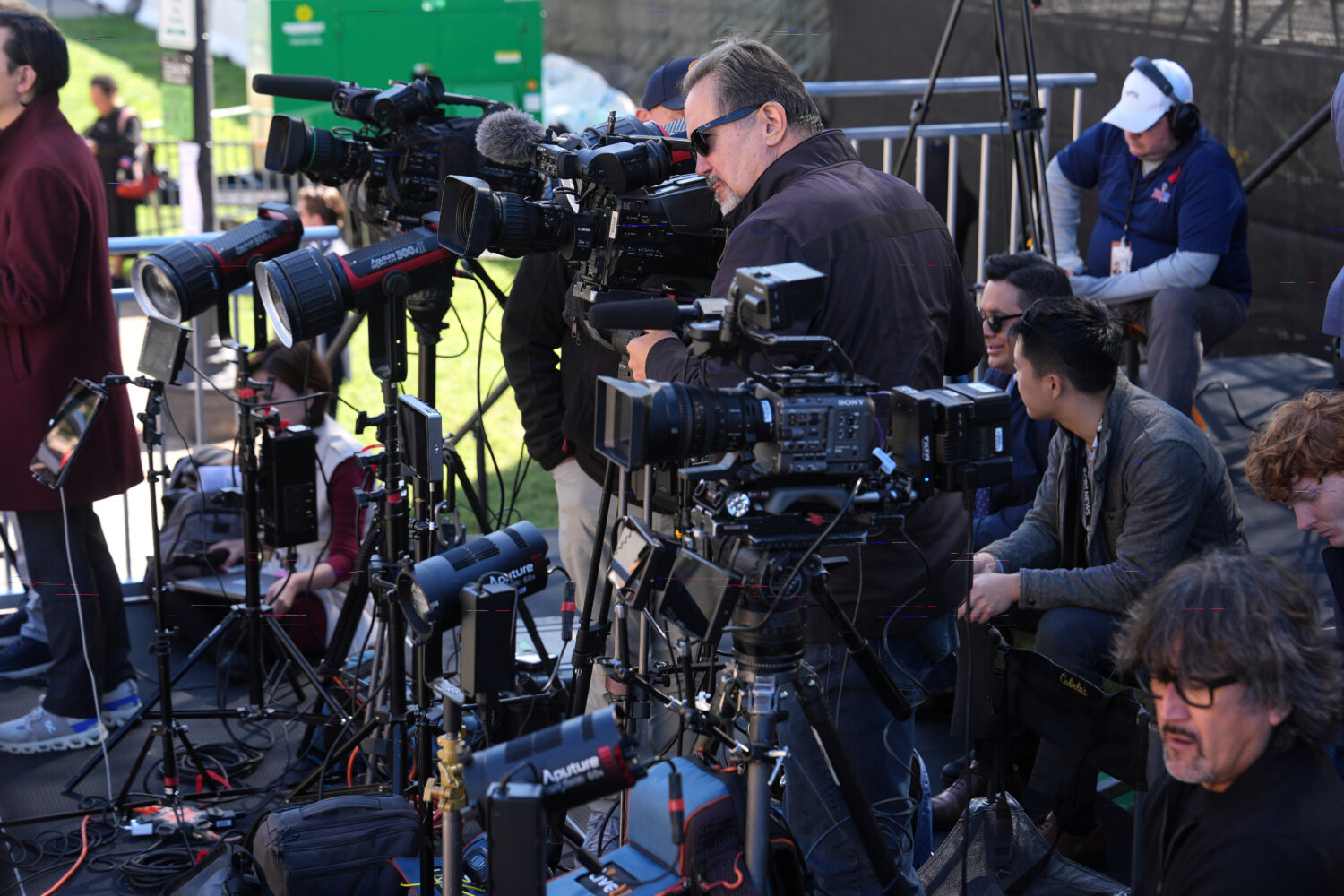
Television networks set up before President Donald Trump, first lady Melania Trump, China's President Xi Jinping and his wife Peng Liyuan arrive at the National Archives Museum, Friday, Sept. 25, 2026, in Washington. (AP Photo/Julia Demaree Nikhinson)
Credit: AP Photo/Julia Demaree Nikhinson
(AP Photo/Julia Demaree Nikhinson)

Journalists from three news outlets that President Donald Trump banned from White House grounds are back at the executive complex with TV cameras, laptops and microphones in hand.
But the legal battle between Trump and some of the media that cover him is far from over.
Here are some things to know about the White House press corps, lawsuits over press access, and the increasingly contentious relationship between the president and the Fourth Estate.
Last week, Trump said he was banning CNN, MS NOW and Politico from the White House over what he called unfavorable coverage and “fake news.” Some journalists with those organizations had their White House press passes revoked, prohibiting them from White House grounds.
The affected news organizations sued, and several other news outlets and press associations filed legal briefs and released statements supporting them.
The president’s attorneys later argued in court that the outlets’ coverage threatened national security, but they didn’t detail how the coverage put the nation at risk. Court filings cited letters the administration sent each outlet outlining stories it found problematic and dangerous, but the judge found that the standard they described was too vague to justify the ban.
Attorneys for the news organizations called the ban a blatant First Amendment violation and a clear case of ‘viewpoint discrimination’ — government action that penalizes speech because of the viewpoint expressed.
U.S. District Judge Timothy Kelly issued a temporary restraining order early Thursday, ordering the White House to reinstate the banned journalists’ press credentials. That order lasts 14 days.
There will likely be another round of court filings and legal arguments over the next several days before the judge decides whether to issue a longer-lasting ruling called a preliminary injunction.
Preliminary injunctions are also temporary, often designed to last until a lawsuit is resolved one way or another.
Kelly’s temporary order focused less on whether the news outlets enjoy a First Amendment free press right to White House access and more on whether their Fifth Amendment due process rights may have been violated.
Existing case law is clear, Kelly wrote. Members of the press corps are entitled to fair notice from the government about why their credentials may be revoked, as well as an opportunity to state their case to the government on why their credentials should be preserved.
Kelly wrote that he issued the temporary restraining order because it’s likely the news outlets will be able to demonstrate they weren’t given proper notice or a chance to respond.
The work of the president occurs around the clock and often in spaces too small to accommodate every journalist who covers the executive branch. The White House Correspondents’ Association — a group of journalists who cover the president — created the press pool decades ago to ensure that a rotating roster of journalists traveled with the president wherever he goes.
The pool typically follows the president almost everywhere, including aboard Air Force One, at state dinners, in the Oval Office and on the golf course. The pool traditionally represents print and wire reporters, photographers and radio and television journalists.
The effort is designed to hold the nation’s chief executive accountable on behalf of the American public, providing information on the president’s activities and the work of the executive branch. The pool is always near the president so journalists can document unexpected developments.
The pool distributes in-person reports and imagery to the broader press corps. They also share their notes, video and audio with other news outlets, congressional offices and interested parties.
The White House video pool consists of five major U.S. television broadcasters that take turns shooting and sharing video. When the White House banned CNN — which belongs to the pool — the other four pool members declined to participate in a show of solidarity. For days, the pool provided no live video of the president. By Friday, the video pool was back in operation.
For decades, the White House Correspondents’ Association selected the members of the pool, but that changed Feb. 25, 2025, when the White House announced its officials would pick the pool members — effectively giving the executive control over coverage of the American presidency.
The White House almost always selects journalists who are outwardly favorable to Trump as part of the mix.
To show his displeasure with a news organization’s coverage, Trump has hurled personal insults at journalists or tried to exclude outlets entirely. In some cases, the news organizations sue in response.
During Trump’s first term, the White House suspended the credentials of Jim Acosta, who was a CNN correspondent at the time. The same judge handling the lawsuit from CNN, MS NOW and Politico also decided Acosta’s case, ordering the White House to restore his credentials.
Last year, Trump barred Associated Press journalists from some events and kicked the news agency out of the press pool after it refused to accede to the president’s demands to change its style from “Gulf of Mexico” to “Gulf of America.”
AP sued, and that case is ongoing, though a preliminary ruling from a federal appeals court said Trump could ban the wire service from some highly restricted areas such as the Oval Office or Air Force One.
___
Boone reported from Boise, Idaho. Associated Press journalists Jocelyn Noveck in New York and Laurie Kellman in London contributed.