An alarmed bond market gets the Trump administration to act again
Aug 19, 2026, 11:30 AM
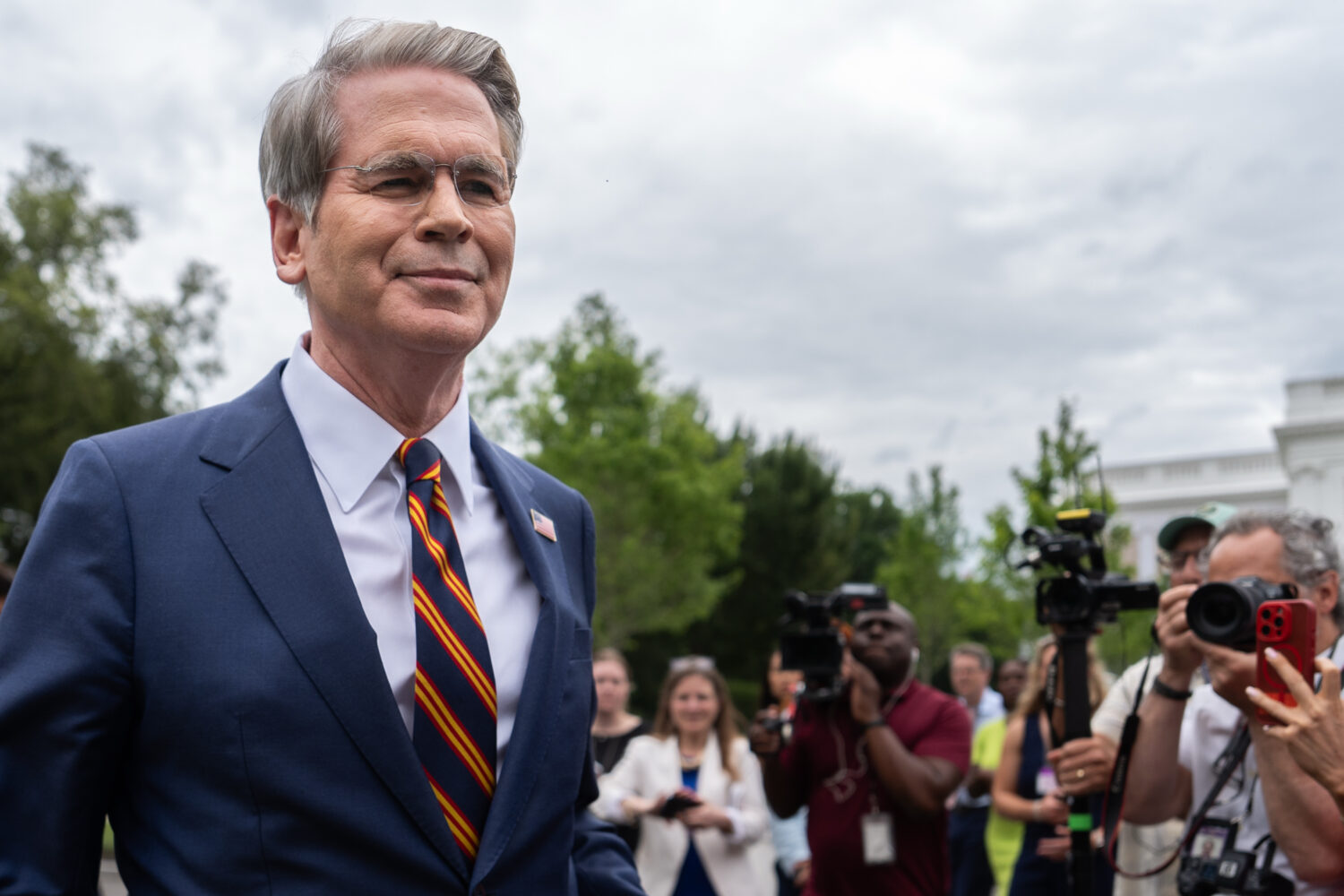
Treasury Secretary Scott Bessent walks past reporters following an interview with Fox News outside the White House, Thursday, July 30, 2026, in Washington. (AP Photo/Julia Demaree Nikhinson)
Credit: AP Photo/Julia Demaree Nikhinson
(AP Photo/Julia Demaree Nikhinson)

NEW YORK (AP) — Normally quiet, the bond market can occasionally send warning signals loud enough to hit stock markets worldwide and even grab the attention of U.S. presidents and other world leaders.
After the bond market’s alarm bells rose in volume through the summer, the Trump administration announced on Wednesday a move that could help calm it down. The U.S. Treasury Department said it will more than double the amount of U.S. government bonds that it will buy back, and the move worked in getting longer-term yields lower, for now at least.
Yields worldwide had earlier climbed to heights not reached in years and, in some cases, decades, because of the jump in oil prices due to the war with Iran, worries about big and growing debts for governments and other concerns.
The stakes are high because high yields drag on economies and bring downward pressure on stock markets after Wall Street hit records on excitement about big corporate profits and the promise of artificial-intelligence technology.
But what’s to come is still uncertain, and some analysts warn the Treasury Department’s move could even ultimately backfire.
Here’s a look at what’s going on and how things got this way:
In the United States, the centerpiece of the bond market recently touched its highest yield in more than a year. The 10-year Treasury yield, which shows how much interest investors want the U.S. government to pay them before they’ll lend it money for a decade, topped 4.70%, before falling back to 4.65% Wednesday.
That’s up from just 3.97% before the Iran war began in late February, and it’s a significant move for the bond market.
More notably, the 30-year U.S. Treasury yield has jumped well above 5%, back to where it was in 2007, before the 2008 financial crisis sent yields crashing toward zero worldwide.
In Japan, the yield on the 10-year government bond has touched its highest level in nearly 30 years, while the German 10-year yield is back to where it was in 2011.
When the U.S. and other governments have to pay more in interest to borrow money, so do people and companies.
For many U.S. households, that’s most easily seen through rates for mortgages. Such rates have climbed with the 10-year Treasury yield since the Iran war began, and the average rate on a 30-year fixed mortgage is near its highest level in a year.
Higher yields also make it more expensive for U.S. companies to borrow money to build factories and otherwise grow. That’s particularly dangerous at this moment, when big investments in data centers to power AI are a major driver of the U.S. economy’s growth.
If high yields slow the economy, that puts pressure on the stocks. An economic slowdown would threaten how much profit companies can make, which is the lifeblood of the stock market.
High yields undercut the stock market in other ways too. When a Treasury is paying more in interest, that can draw investors away from investments that carry more risk. Why pay record prices for U.S. stocks when a U.S. government bond is paying more than before to wait in relative safety?
Gold, bitcoin and many other investments can also feel downward pressure from high yields.
When yields rise, the U.S. and other governments have to pay more in interest to cover their debts. That’s painful when debt loads for governments worldwide are ballooning as they spend far more than they’re bringing in through revenue.
And if the U.S. government is already paying this much to borrow money when the economy is growing, what will happen if it needs to borrow even more to manage the pain when the next severe recession hits?
That’s why jumps in yields can scare politicians even more than swings in the stock market.
The bond market helped make Liz Truss the United Kingdom’s shortest-serving prime minister in 2022, when it revolted against her plan to cut taxes and raise spending without a way to pay for them.
Last year, President Donald Trump said the bond market may have played a role in his decision to delay many of his proposed tariffs, saying that he noticed investors there “were getting a little queasy.”
U.S. Treasury Secretary Scott Bessent’s move is a high-stakes effort to contain the rise in long-term yields, and some analysts are skeptical the impact will last.
“The operation changes almost nothing in terms of the fundamentals, in particular the unchanged need to finance the tidal wave of hyperscaler debt in addition to very large government deficits,” Krishna Guha, an analyst at Evercore ISI, and colleagues wrote in a note to clients.
“Hyperscalers” refers to the Big Tech companies that are borrowing mountains of money to build AI data centers. The bonds they’re selling are competing with U.S. Treasurys for buyers, which can push bond yields higher.
The U.S. government, meanwhile, continues to run its own large deficits regardless of what the Treasury Department does with its repurchases.
“The move could even backfire if the limited firepower results in little sustained impact,” Guha said.
The Federal Reserve could always cut the federal funds rate, which affects very short-term, overnight loans.
But longer-term yields like the 10- and 30-year Treasury yields are set by investors in the bond market. And recently, they have been demanding more in interest to make up for the growing risks of high inflation, continued government deficits and other factors.
The Fed also appears more likely to raise its benchmark short-term rate than to cut it. At its last meeting in late July, three Fed policymakers voted to raise the fed funds rates even as nine voted to keep it unchanged. And Fed Chair Kevin Warsh’s decision to signal little about the Fed’s next moves appeared to push longer-term Treasury yields higher amid questions about what the central bank will do to get inflation back to its 2% target.
The government’s most recent inflation data suggest inflation may be slowing, leading many on Wall Street to forecast the Fed will keep the federal funds rates steady at its next meeting in September. The next big potentially market-moving event may come on Aug. 28, when Warsh will give a speech at the Fed’s annual economic symposium in Jackson Hole, Wyoming.