Cameras in courtrooms stir debate from baby Lindbergh kidnapping to OJ and Charlie Kirk’s killing
Apr 17, 2026, 3:03 AM | Updated: 3:52 pm
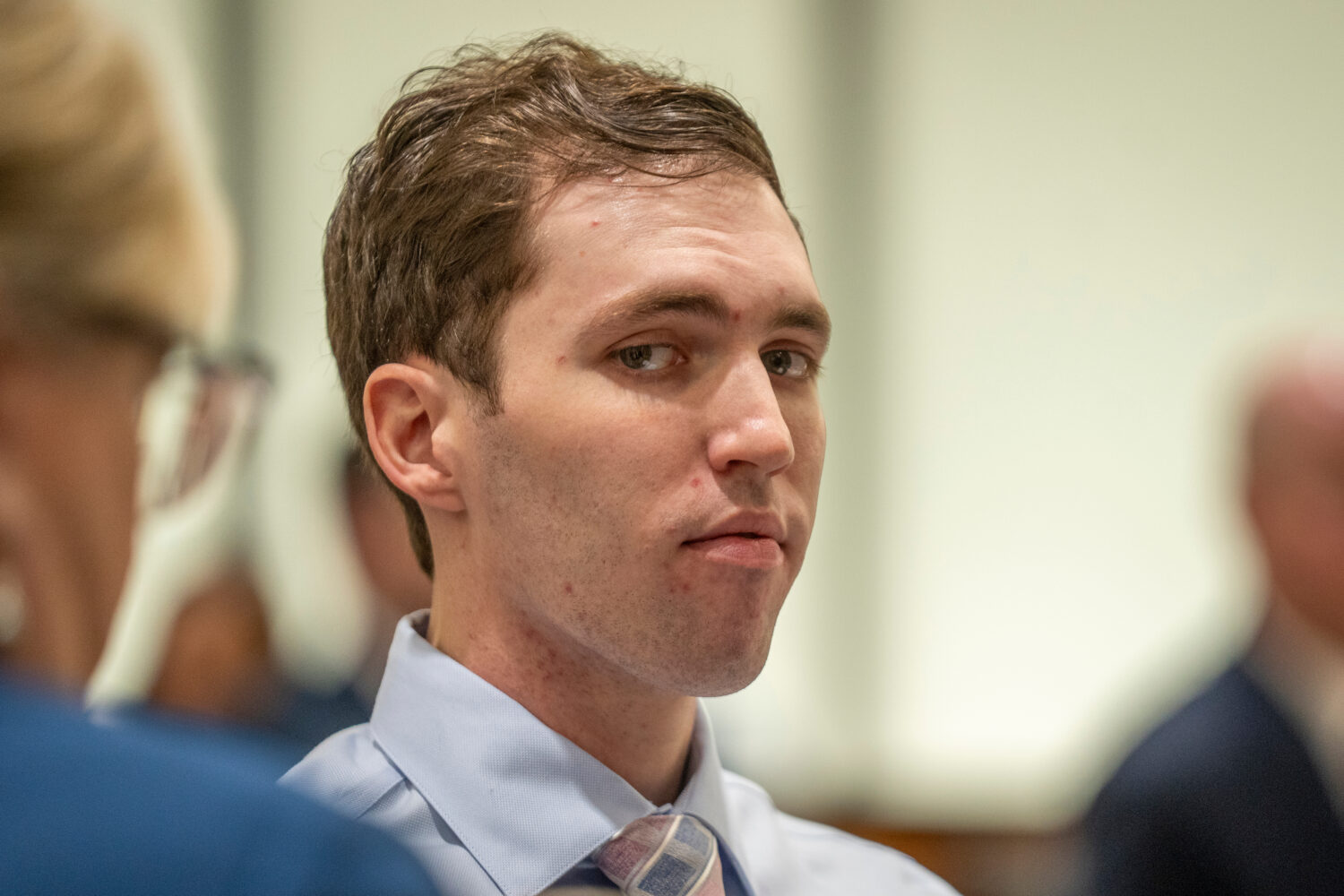
FILE - Tyler Robinson, who is accused of fatally shooting Charlie Kirk, appears during a hearing in Fourth District Court in Provo, Utah, Thursday, Dec. 11, 2025. (Rick Egan/The Salt Lake Tribune via AP, Pool, File)
Credit: ASSOCIATED PRESS
(Rick Egan/The Salt Lake Tribune via AP, Pool, File)

From the O.J. Simpson’s double murder case, cameras in the courtrooms have long exposed the inner workings of some of America’s most spectacular criminal cases. Now calls to bar cameras from Tyler Robinson ‘s trial in the killing of Charlie Kirk is reigniting the debate over whether they belong.
Robinson’s attorneys want cameras banned from a Utah courtroom, pointing to sometimes sensationalist media coverage they fear will foster widespread bias against their client as he faces prosecution in last September’s shooting death of the conservative activist on a college campus.
Prosecutors want cameras allowed, and suggested they could help dispel conspiracy theories and “distorted narratives” swirling around the case since Kirk was shot in the neck while speaking to a crowd of thousands.
“Transparency serves as a corrective to misinformation,” Utah County prosecutors said in a court filing arguing in favor of cameras. A trial date has not yet been set.
Cameras appeared in courts long before the man charged with kidnapping and killing legendary aviator Charles Lindbergh’s baby went on trial in New Jersey in 1935.
An earlier photo captured a clutch of mobsters at Al Capone ’s trial holding hats in front of their faces so they wouldn’t be recognized. In 1932, a German photographer feigned a broken arm to sneak a camera into the U.S. Supreme Court inside a sling and get a rare picture of justices in session.
Then came the “trial of the century” for Bruno Richard Hauptmann in the killing of Lindbergh’s son. It ushered in a new era of criminal trial as visual spectacle.
Hundreds of reporters and dozens of photographers chronicled the proceedings. Popping flashbulbs repeatedly startled witnesses and some photographers reportedly climbed on tables to get their pictures.
Hauptmann was convicted of murder and executed. The chaotic trial provoked a backlash and new judicial ethics rules that kept cameras out of courtrooms for decades.
Whether cameras should be allowed has spurred perpetual disagreement between transparency advocates and defense attorneys eager to shield clients from ignominious publicity that could tilt a jury against them.
In 1962, a Texas state judge allowed news organizations to film the trial of infamous con man Billie Sol Estes on swindling charges.
The case had national notoriety after Estes was accused of looting a federal crop subsidy program, triggering a Washington scandal during President John F. Kennedy’s administration. His attorneys argued against cameras, saying they would prejudice potential jurors. The judge rejected the request and pledged he would not let the media transform his courtroom into a circus.
Court documents later described the scene in the courtroom as “a mass of wires, television cameras, microphones and photographers.” Hearings in the case were broadcast live by radio and television.
Following Estes’ conviction, the Supreme Court took up his appeal and said the intense publicity deprived him of his constitutional right to a fair trial. Justices overturned the state court conviction in an opinion that derided “the evil of televised trials.”
“To permit this powerful medium to use the trial process itself to influence the opinions of vast numbers of people, before a verdict of guilt or innocence has been rendered, would be entirely foreign to our system of justice,” justices said.
The ruling was in line with a long-standing prohibition on cameras in federal courts.
Less than a decade later the Supreme Court decided differently in a case involving two Florida police officers who burglarized a restaurant.
Justices said in an 8-0 ruling that states could allow cameras at criminal trials and there was no “empirical data” to show the presence of broadcast media in the courtroom inherently has a negative effect.
In the years following, cameras gradually came into common use in state and local courtrooms across the nation. High-profile cases that were broadcast included murder trials for serial killers Ted Bundy and Jeffrey Dahmer, the excessive force prosecutions of the Los Angeles Police officers who beat Rodney King, and the murder trial of Jodi Arias in the killing of her ex-boyfriend.
Still, restrictions remain and judges typically retain broad discretion over which parts of a case can be broadcast and who can be filmed or photographed.
Donald Trump’s trial and 2024 conviction in a hush money case was closed to cameras while court was in session under a New York state law that sharply restricts video coverage. Media organizations used sketch artists to capture the scene.
Arguably the most watched televised trial remains the 1995 prosecution of former football player O.J. Simpson in the death of his former wife, Nicole Brown Simpson and Ron Goldman. It, too, became known as the “trial of the century” and is listed by Guinness World Records as the “most viewed trial” with a daily average viewership of 5.5 million people.
As the case dragged on for months, viewers were inundated with courtroom testimony and analysts opinions. Simpson was acquitted.
The focus on every aspect of the case raised concerns about potential bias to jurors, and also that the lawyers and even the judge were acting differently knowing they were being watched across the nation.
“People were talking about how the judge and the attorneys were playing to the cameras as much as they were playing to the jury,” said Cornell Law School professor Valerie Hans.