Elon Musk is gone, but DOGE’s actions are hard to reverse. The US Institute of Peace is a case study
Jun 5, 2025, 8:00 AM
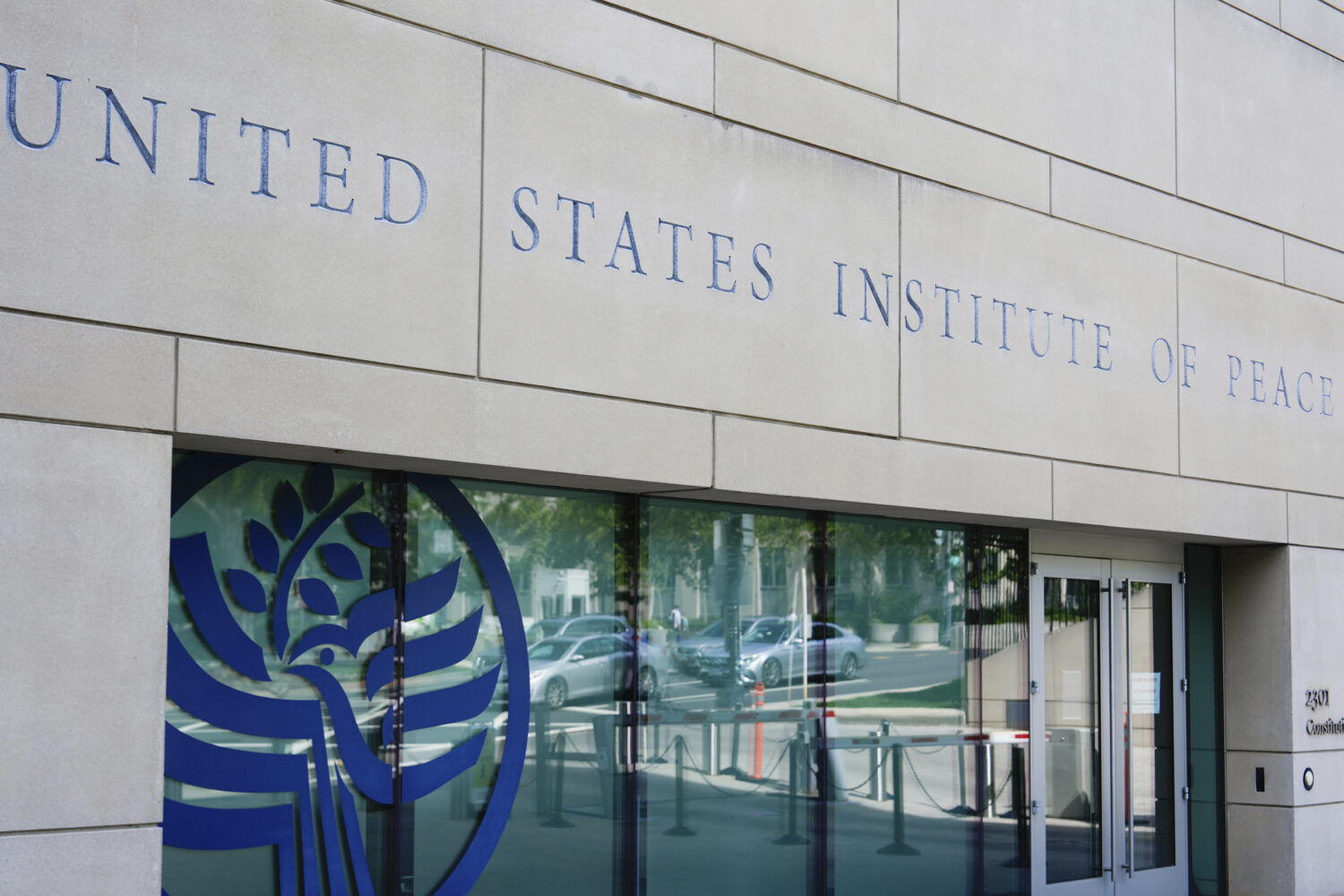
The United State Institute of Peace building is pictured, Monday, May 19, 2025, in Washington. (AP Photo/Julia Demaree Nikhinson)
Credit: ASSOCIATED PRESS
(AP Photo/Julia Demaree Nikhinson)

WASHINGTON (AP) — The staff was already jittery.
The raiders from Elon Musk’s Department of Government Efficiency had disposed of the U.S. Institute of Peace board, its acting president and its longtime outside counsel. But until 9:30 p.m. on Friday, March 28, there was hope the damage might somehow be limited.
Then termination notices started popping up in personal emails. That was only the start.
After ending his sojourn in Washington, Musk left behind a wounded federal government. DOGE’s playbook was consistent: Show up physically, take over the facility and information technology systems, fire the leadership and replace it with DOGE associates. Dismiss the staff. Move so quickly that the targets and the courts have little time to react, let alone reverse whatever damage has already occurred.
Thousands of workers across the federal government saw the playbook in action over the last four months. But the Institute of Peace, a small, 300-employee organization, is unique: The blitz during its takeover has been, for the moment, reversed in court. The headquarters taken away in a weekend of lightning moves is back in the hands of its original board and acting president.
The question they must answer now is a point that U.S. District Judge Beryl A. Howell made during one hearing: Even a win “makes no promises” about how difficult or possible it will be to put the Institute of Peace back together. “A bull in a China shop breaks a lot of things,” the judge said.
Nearly three weeks since the judge delivered a win, the institute is slowly trying to reboot. But there are barriers, and winning might not mean full restoration. For other agencies and departments fighting their own DOGE battles, it is a cautionary tale.
The Institute of Peace was created by Congress in the 1980s. President Ronald Reagan signed the bill into law in 1985. Described as an independent, nonprofit think tank funded by Congress, its mission has been to work to promote peace and prevent and end conflicts while working outside normal channels such as the State Department. When DOGE came knocking, it was operating in 26 conflict zones, including Pakistan, Afghanistan, Mali and Burkina Faso.
The institute was one of four organizations targeted by President Donald Trump’s Feb. 19 Executive Order 14217. The order said it was being enacted to “dramatically reduce the size of the federal government.”
The institute’s acting president, career diplomat and former Ambassador George Moose, and longtime outside counsel George Foote tried to explain to DOGE representatives that the institute was an independent nonprofit outside the executive branch.
That attempt was for naught. At 4 p.m. on March 14, most of the institute’s board was fired by email. The lone holdovers were ex officio — Cabinet members Pete Hegseth and Marco Rubio and the National Defense University’s president, Vice Adm. Peter Garvin. Within minutes of the emails, DOGE staff showed up and tried to get into the building but failed over the next several hours during a standoff.
That, according to court documents, kicked off a weekend of pressure by the FBI on institute security personnel. DOGE returned the following Monday and got into the headquarters with help from the FBI and Washington police officers.
Foote thought the local officers were there to expel the DOGE contingent but learned quickly they were not. He, security chief Colin O’Brien and others were escorted out by local authorities. “They have sidearms and tasers and are saying you can’t go anywhere but out that door,” Foote said. “I had no choice. ‘You guys have the guns, and I don’t.’”
The board filed a lawsuit the following day and asked for a temporary restraining order. Howell expressed dissatisfaction with DOGE’s tactics but declined to restore the fired board members or bar DOGE staff from the headquarters.
By then a DOGE associate, Kenneth Jackson, had been named as acting president of the organization by the ex officio board members. Employees held out hope that the organization would not be disassembled because Jackson was asking questions as if he might do an assessment of the organization’s work, said Scott Worden, director of the Afghanistan and Central Asia programs.
The staff knew what he’d done as the head of the U.S. Agency for International Development. Now Jackson was at the Institute of Peace, but they were hopeful “we would have a process of explanation or review of our work,” Worden said.
Then came March 28. The notices came alphabetically. By the time it was finished, shortly before midnight, almost all the institute’s 300 employees had been let go.
The impact was “profound and devastating on a few levels,” Worden said. First, employees at the institute are not government employees so they got no government benefits or civil service protections. Insurance also was gone — critical for employees fighting health problems. Partners abroad also suddenly lost their support and contacts. It left “thousands of partners in a lurch,” he said.
The lawyers representing board members in their lawsuit asked for a court hearing as soon as possible to head off rumors of more mayhem to come. But when they walked into courtroom 26A of the E. Barrett Prettyman Courthouse at 10 a.m. on April 1, the headquarters and other assets were gone, too. It was, Howell said at the hearing, “a done deal.”
Over the weekend, as workers reeled, DOGE was making personnel changes of its own. Jackson had given way to DOGE representative Nick Cavanaugh, whose name was on the documents that allowed DOGE to take control of Institute of Peace assets and transfer the headquarters — built in part with private donations — to the General Services Administration.
Howell was incredulous that it had been accomplished in two days. In court, the Trump administration’s attorney, Brian Hudak, laid out the timeline, making clear that the newly named president of the institute had not only been authorized to transfer the property but also the request had gone through proper channels. For the second time, Howell refused to stop the actions.
Throughout hearings, Howell struggled with how to describe the institute — whether it was part of the executive branch and under the Republican president’s authority. That was central to the case. The government argued that it had to fall under one of the three branches of government and it clearly wasn’t legislative or judicial. Lawyers defending the government also said that because presidents appointed the board, presidents also had the authority to fire them.
The White House also maintained that despite decades of operation and an annual budget of around $50 million, the institute had failed to bring peace and was rightfully targeted.
Howell’s May 19 opinion concluded that the institute “ultimately exercises no Executive branch power under the Constitution but operates, through research, educational teaching, and scholarship, in the sensitive area of global peace.”
“In creating this organization,” the judge said, “Congress struck a careful balance between political accountability, on the one hand, and partisan independence and stability, on the other.”
She added that even if the organization was part of the executive branch, the law that created it set specific steps for firing the board members and none of those had been followed. Because the board was fired illegally, all subsequent actions — including replacing Moose, firing the staff and transferring the headquarters — were “null and void,” she said in her ruling.
The government filed a notice of appeal and asked Howell to stay her order. She said no. The government has requested a stay with the U.S. Court of Appeals for the District of Columbia.
Two weeks later, about 10% of the people who would normally be inside the headquarters, about 25 people, are there, doing maintenance, getting systems running and trying to get to the institute’s funding.
Any physical damage comes more from inattentiveness than malice — food that spoiled, leaks that went unfixed, popup security barriers needing maintenance. Desks are empty but with paperwork and files strewn across them, left by the speed of the takeover.
O’Brien, the security officer, praised the General Services Administration and security managers who tried to keep the building going. But getting systems fully functioning will entail lots of work. “We’re the first ones to get behind the looking glass,” O’Brien said.
Foote said those returning continue to try to locate and access the institute’s funding. That includes funds appropriated for this fiscal year by Congress and the part of the endowment moved during the takeover. He said transferring funds within the federal government is “complicated.” The result: Workers are furloughed, and overseas offices will remain closed.
Nicoletta Barbera, acting director for the U.S. Institute of Peace’s West Africa and Central Africa programs, is one of the furloughed workers.
“We had USIP representatives based in Burkina Faso, Mali and Niger that, overnight, were left with no support system from anyone here in HQ,” she said. The programs were focused on preventing terrorism by supporting women and young people, to “identify signs of radicalization.”
Barbera said a recent attack in Burkina Faso ended with “hundreds of atrocities and deaths.”
“And I couldn’t just stop but think, what if I could have continued our work there during this time?” she said.
Moose has said the speed at which the organization gets back to work depends on numerous factors, including the appeals process. But, he said, there will likely be lasting damage — “the traumatic effects this has had on the people who have been impacted by it.”
“And, obviously, that includes our own … staff members,” Moose said, “but it also extends to the people with whom we collaborate and work all around the world. That’s going to be hard to repair.”