Fewer AAPI adults report hate incidents but racism concerns linger, new poll shows
May 3, 2026, 9:18 PM
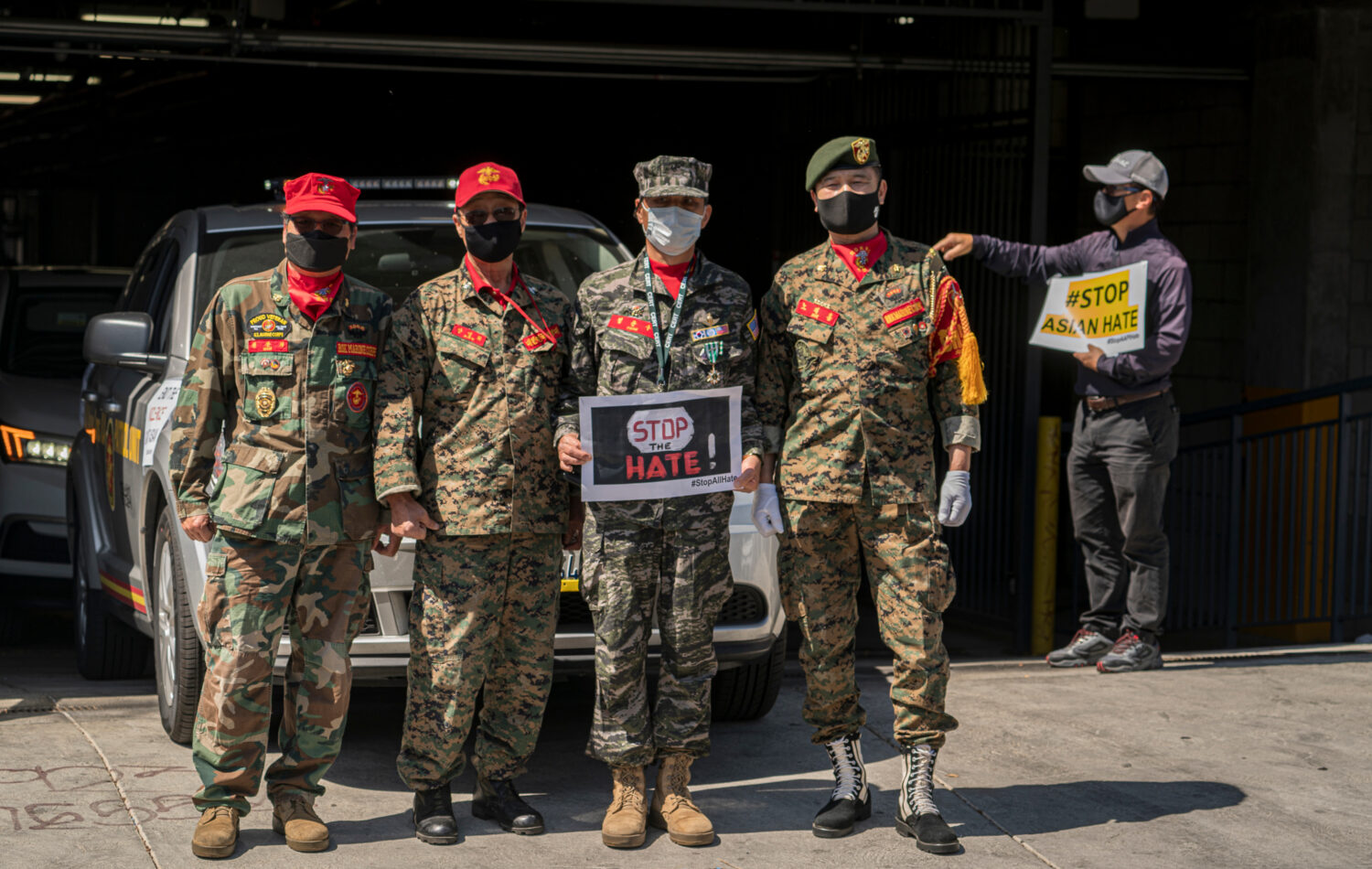
FILE - Members of the Korean American Federation of Los Angeles hold signs reading: "#Stop Asian Hate," in a caravan around Koreatown to denounce hate against the Asian American and Pacific Islander communities in the Koreatown neighborhood in Los Angeles March 19, 2021. (AP Photo/Damian Dovarganes, File)
Credit: ASSOCIATED PRESS
(AP Photo/Damian Dovarganes, File)

Fewer Asian American and Pacific Islander adults are reporting overt anti-Asian attacks than during the height of the COVID-19 pandemic, a new AP-NORC/AAPI Data poll finds, but many still worry about racial discrimination.
A new poll out Monday, as AAPI Heritage Month begins, from October 2023 poll where 36% said they were victims of an act of abuse tied to their race or ethnicity over the prior year.
Preliminary FBI data also reflects a decline as the pandemic receded into the background. Based on information submitted by law enforcement agencies, anti-Asian hate crimes and bias crimes overall fell between 2024 and 2025.
However, about 3 in 10 AAPI adults in the new survey think it’s “extremely” or “very” likely that they’ll be a victim of discrimination based on their race or ethnicity in the next five years.
“The key is there’s been a decline but a stabilization. So, it hasn’t declined since last year, ” said Karthick Ramakrishnan, founder and executive director of AAPI Data. “Both hate crimes and hate incidents are still an issue in our community.”
The poll finds that fewer AAPI adults report experiencing verbal assaults compared to the survey from two years ago.
About 1 in 10 say they have been called a racial or ethnic slur in the past 12 months, down from roughly 2 in 10 in October 2023. Around 15% say they have been verbally harassed or abused by another person in the past year because of their race or ethnicity, down from 23% in 2023.
Advocates report that the tone of the rhetoric has shifted away from COVID-19-related tropes toward anti-immigrant sentiments.
“We’re seeing things like ‘Go back to China’ still. But, it’s more like ‘ICE is going to deport you,’” said Stephanie Chan, data and research director at Stop AAPI Hate. “The rhetoric that’s being used to justify very harsh and aggressive immigration enforcement, all of this is also feeding into anti-AAPI hate persisting.”
Being made to feel like a foreigner is something Ambar Capoor, 52 and India-born, has encountered even in his diverse Los Angeles neighborhood. Last year, while waiting in line at a restaurant, a white man pushed him unprovoked to get to the front.
Capoor said the man told him: “You don’t belong here. You should go back to your country.”
Capoor, who is a naturalized citizen and has lived in the U.S. for 26 years, tries to shrug off these racist interactions.
“None of this stuff normally bothers me,” he said. “If somebody starts an altercation, that I’ll walk away from.”
But Capoor, a Democrat, thinks the divisive political climate has emboldened people to openly say racist things.
Nosheen Hamid, 36 and a stay-at-home mother with a toddler, has lived in Salt Lake City since 2009. In her native Pakistan, her family was considered a minority because of their Catholic faith. In her community in Utah, which is mostly white, she says she gets racially profiled, too.
A couple of months ago, a door-to-door salesman approached her home and seemed surprised she lived there.
“He was like, ‘Are you renting here?’ He asked me a few times and it got to me for just a second,” Hamid said. “People didn’t expect me to be in the space that I was, work-wise, school-wise.”
With inflation and higher gas prices as the Iran war continues, AAPI adults are much more preoccupied with economic concerns than discrimination. Around 4 in 10 say personal finances are a “major source” of stress. And about 2 in 10 say the same thing about health concerns and relationships with family or friends. In contrast, only about 1 in 10 say discrimination is currently a major source of stress in their lives. Around half don’t see discrimination as a source of stress at all.
John Magner, 58, is half white and also of Hawaiian and Chinese ancestry. He says he actually faces more discrimination from Native Hawaiians and Pacific Islanders around his home of West Jordan, Utah, who don’t believe he is part Hawaiian. The state is home to around 60,000 Native Hawaiians and Pacific Islanders, according to U.S. census data.
Last year, a Pacific Islander customer at the hardware store where Magner works called him “cracker and a little wannabe Pacific Islander.”
But he doesn’t dwell on those interactions. He is more focused on juggling family expenses, working and getting a master’s degree in counseling.
“I work full-time but we’re struggling,” Magner said. “Inflation and then also some family stuff that’s gone on, having to pay medical bills. It’s just bills.”
Ramakrishnan, from AAPI Data, also considers whether there is less scapegoating of immigrants of color because people understand that it has no bearing on the current economy.
“The likely reasons for those economic struggles have nothing to do with race or immigration,” he said. “They have to do with other factors, like tariffs, war on foreign policy, AI data centers. Those are all the things that people see that are driving up costs.”
Hate crimes and incidents are often underreported, and experts note that some groups under the AAPI umbrella may be experiencing incidents at a higher rate than others.
“If you look at it in the longer term, (hate incidents) are still really high compared to what it was like pre-pandemic, Chan said, referring to the FBI data.
There has recently been a rise in incidents among South Asians, according to FBI data and Stop AAPI Hate. The largest spikes tend to occur “in moments of South Asian visibility,” such as New York City Mayor Zohran Mamdani’s election, Chan said.
Between the current political climate and being Indian, Capoor has been carrying his U.S. passport card on a lanyard for the past six months.
“After seeing all the reports of actual white folk getting arrested and thrown into camps and taking them like three days to get out of it,” Capoor said. “I don’t have friends in high places. I don’t have the correct skin color.”
___
The poll of 1,228 U.S. adults who are Asian American, Native Hawaiian and Pacific Islanders was conducted March 23-30, using a sample drawn from NORC’s probability-based Amplify AAPI Panel, designed to be representative of the Asian American, Native Hawaiian and Pacific Islander population. The margin of sampling error for all respondents is plus or minus 4.5 percentage points.
This poll is part of an ongoing project exploring the views of Asian Americans, Native Hawaiians and Pacific Islanders, which are usually not highlighted in other surveys because of small sample sizes and lack of linguistic representation.