Israel, Lebanon agree to a 10-day ceasefire, Trump says
Apr 16, 2026, 8:59 AM | Updated: 9:17 am
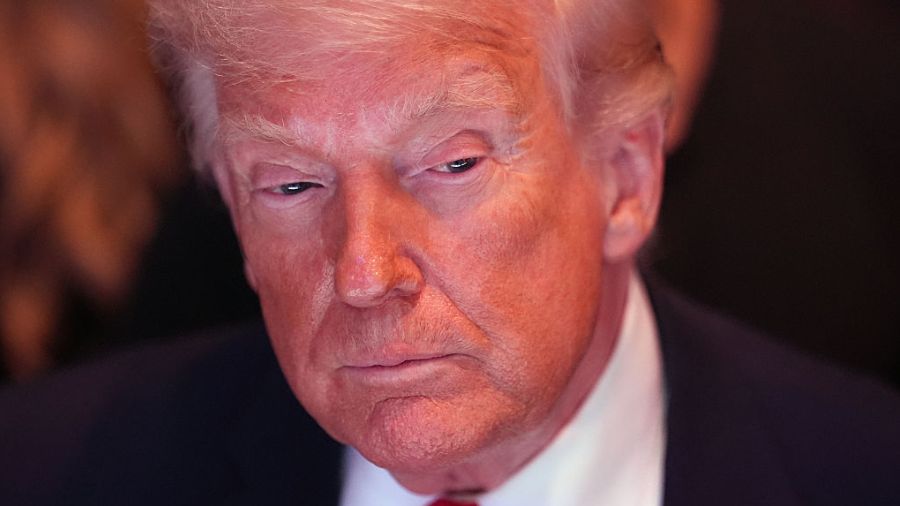
A photo of U.S. President Donald Trump. (Photo: Julia Demaree Nikhinson - Pool, Getty Images)
(Photo: Julia Demaree Nikhinson - Pool, Getty Images)

U.S. President Donald Trump announced a 10-day pause in fighting between Israel and Lebanon starting on Thursday at 5 p.m. ET, following “excellent” conversations he had with each nation’s leader.
Earlier in the day, Lebanese President Joseph Aoun refused to speak to Israeli Prime Minister Benjamin Netanyahu, despite Trump saying the two leaders would convene. Israel’s and Lebanon’s respective ambassadors to the U.S. held their first direct diplomatic talks in decades earlier this week.
Israel has been fighting the Iran-backed Hezbollah militant group in Lebanon, where nearly 2,200 people have been killed by Israeli strikes.
Trump said he’s directed U.S. Vice President JD Vance and others to work with Israel and Lebanon to “achieve a Lasting PEACE.” He added: “So let’s, GET IT DONE.”
14 ships turn around from the Iran blockade, US military says
U.S. Central Command says those vessels have turned around in the first three days of the blockade on Iranian ports at the direction of American forces.
At a Pentagon news briefing earlier Thursday, U.S. defense leaders said more than 10,000 American troops are helping enforce the blockade on Iranian ports and that no ships have yet needed to be boarded.
Pakistan’s army chief met with Iranian officials in Tehran on Thursday in a bid to extend the ceasefire, which paused almost seven weeks of war between Israel, the U.S. and Iran that have killed thousands of people and upended global markets by disrupting the flow of oil. Uncertainty remains whether the frantic diplomacy can lead to a deal. A second round of US-Iran talks hasn’t been scheduled yet, Pakistan’s Foreign Ministry spokesperson said Thursday.
The meeting comes as Lebanese President Joseph Aoun refused to speak to Israeli Prime Minister Benjamin Netanyahu, despite U.S. President Donald Trump saying the two leaders would convene on Thursday to discuss halting the fighting between them. Israel’s and Lebanon’s respective ambassadors to the U.S. met for their first direct diplomatic talks in decades earlier this week.
U.S. Treasury Secretary Scott Bessent warned on Wednesday that the U.S. is preparing to ramp up economic pain on Iran by levying secondary sanctions on financial institutions that do business with the Middle Eastern nation. Bessent called the measure the “financial equivalent” of a bombing campaign.
Trump calls Lebanese president in ongoing diplomatic scramble over war between Israel, Hezbollah
The office of Lebanon’s President Joseph Aoun said President Trump was thanked by the Lebanese head of state to reach a ceasefire in the devastating war.
Aoun earlier spoke to U.S. Secretary of State Marco Rubio where he refused to have a direct call with Israeli Prime Minister Benjamin Netanyahu and has insisted on achieving a ceasefire ahead of continued direct talks. Israel hasn’t made a decision regarding a ceasefire.
The statement said Trump stressed “his commitment to fulfilling the Lebanese request for a ceasefire as soon as possible.”
Neither the State Department nor the White House immediately issue a statement on the calls with the Lebanese president.
Houthi leader in Yemen blames the US in Iran talks
Abdul Malik al-Houthi, leader of the Iran-backed Yemeni rebel group, said that in negotiations with Iran, the U.S. is making “impossible demands for any independent country to accept.”
During a video speech Thursday, he said the ongoing two-week ceasefire was a result of “failures” by the U.S. and Israel to achieve their goals in the Iran war.
“If negotiations succeed, it will either result in a longer period of stability or an end to the aggression,” he said, adding that the U.S. entered negotiations based on their own terms built on “arrogance and pride.”
Death toll of Lebanese killed in Israeli strikes increases to 2,196
Lebanon’s Health Ministry says that among the killed are 260 women and 172 children since the latest war between Israel and Hezbollah began March 2. Another 7,185 have been wounded.
Israel’s latest military escalation started after Hezbollah fired rockets towards northern Israel in solidarity with its key ally and patron Iran.
Lebanon and Israel started direct talks Tuesday, the first of their kind since 1993. Lebanon hopes those talks can end the war.
‘Difficult days and weeks’ for sailors trapped on ships unable to travel through Strait of Hormuz
Germany’s largest shipping company Hapag-Lloyd says it’s feeling the impact of the blockade of the Strait of Hormuz as 150 sailors are trapped there on six of its vessels.
“Five and a half weeks in a war zone — that’s something relatively new. And of course, these are difficult days and weeks for our colleagues,” Hapag Lloyd spokesperson Nils Haupt told The Associated Press.
“We’ve been able to rotate some of them in the meantime, but you can easily imagine that after such a long time, monotony naturally sets in on board, and the most important thing now in this situation is to maintain that team spirit,” he added.
Hapag-Lloyd is in contact with the captains and crews at least once a day asking how the crew is doing and what they can do to help.
It’s helpful, Haupt says, that thanks to modern satellite technology, the sailors are able to keep up communication with their families.