Louisiana’s alligator farms raise the reptiles for meat, skins — and conservation
Mar 13, 2026, 6:17 AM
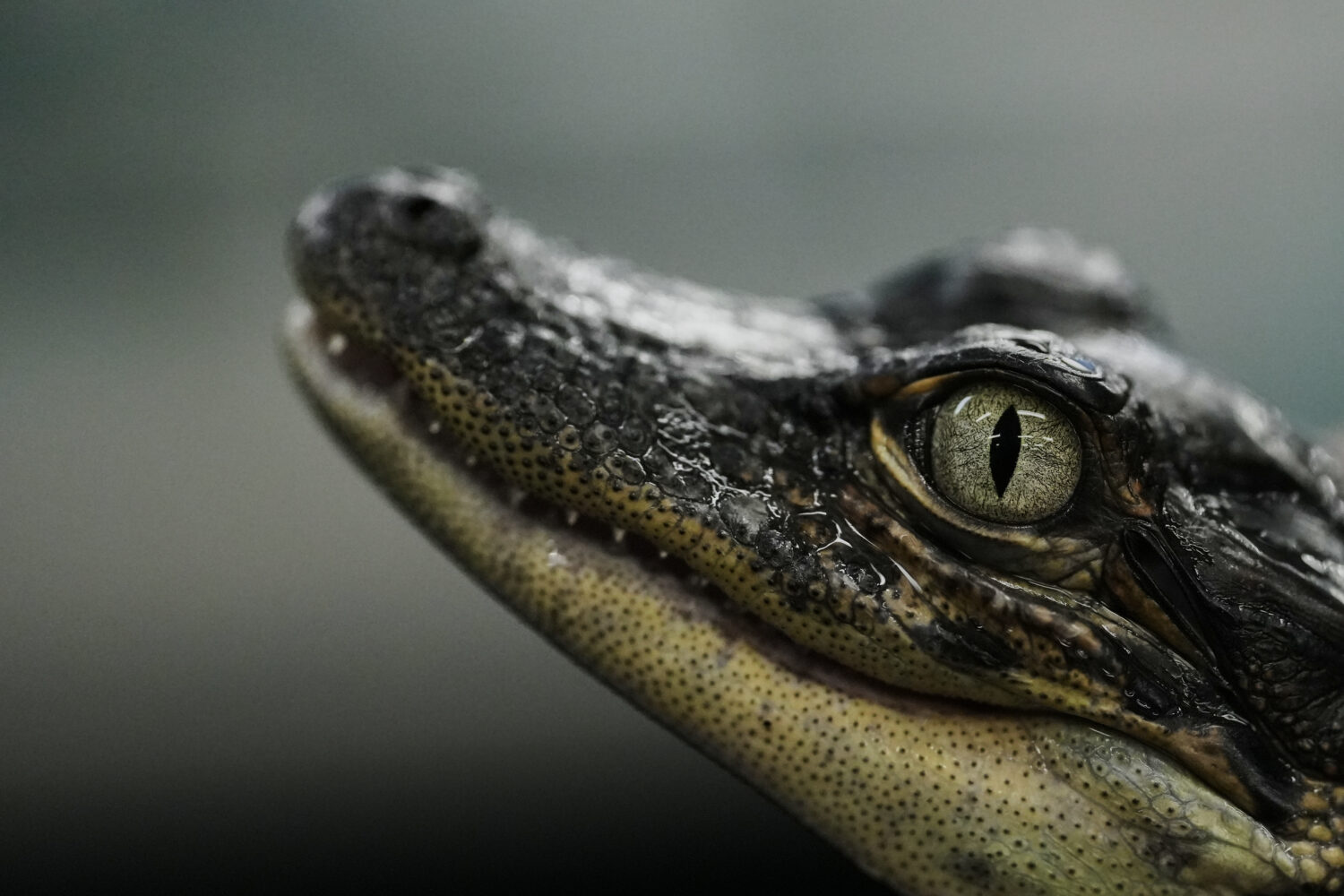
A baby alligator is held Tuesday, Jan. 20, 2026, at Rockefeller Wildlife Refuge in Grand Chenier, La. (AP Photo/Joshua A. Bickel)
Credit: ASSOCIATED PRESS
(AP Photo/Joshua A. Bickel)

ABBEVILLE, La. (AP) — Jacob Sagrera unrolls an alligator skin and lays it flat on a metal table, brushing off flecks of salt. He holds it up to the light, looking for blemishes, and gives it a score. That score will help a tannery an ocean away prepare it to be used by a luxury designer — for items like boots, watch bands and handbags destined for fashion runways and posh shops.
Then he adds it to a pile of hides, each with a yellow tracking tag that allows authorities to enforce legal trade.
Advocates say commercial alligator farming has helped preserve a species often seen as scary, bothersome or good only for their skins. Not all conservationists think that’s a good thing, but for the farmers and luxury brands seeking to market their products as sustainable, it’s made sense to tie conservation to capitalism.
Some of the scientists who study them agree.
“These wetlands, these alligators … it has to have some kind of monetary value,” said George Melancon, alligator research biologist for the Louisiana Department of Wildlife and Fisheries. “Otherwise, people just forget about them.”
Sagrera’s grading work at his family’s operation, Vermilion Gator Farm, is just one step in a decades-old system.
American alligators were once in peril of being hunted to extinction, and went on the Endangered Species List decades ago. Their numbers weren’t too depleted to rebound in the wild if their habitat was maintained, say some experts, including Grahame Webb, director of Wildlife Management International and an adjunct professor at Charles Darwin University in Australia who has worked on reptile and crocodilian conservation since the 1960s.
But scientists with the state of Louisiana proposed a different way to boost their numbers: farmers would pay landowners for eggs, raise the gators to sell their meat locally and their skins on the luxury market and then release some back into the wild every year.
Now, Louisiana produces around 400,000 farmed alligators every year, according to the state’s wildlife & fisheries department, which valued farmed skins in 2024 at over $56 million. The state decides how many young alligators to release annually on data from nest surveys and hunting tags, and estimates around 3 million alligators now in the wild in Louisiana. As wild numbers have grown, they’ve dropped the percentage of farmed gators returned each year, from almost 20% in the early 2000s to about 5% now.
American alligators were delisted as endangered in 1987 but are now a species of “Least Concern” on the IUCN Red List of Threatened Species, though their trade is still regulated because of how similar they look to other, more vulnerable crocodilian species. Alligators can be found across the Southern U.S., but Louisiana is by far the largest producer, with farms also in Georgia, Florida and Texas.
Farmers and state officials say the trackers help ensure every product came from a legal operation. One company that sells alligator leather goods, Col. Littleton in Lynnville, Tennessee, keeps records of all its tracking tags, said Hayley Holt, their director of corporate and specialty sales. They mostly sell within the U.S., but many retailers log where they sourced their materials in case they want to ship products internationally, Holt said.
Alligator farming benefits from a large legal market and strong regulation, said Oliver Tallowin, senior program officer on wildlife use and trade for the International Union for Conservation of Nature and Natural Resources.
Some animal rights advocates question the ethics of raising alligators on farms. Beyond welfare concerns, some think the practice perpetuates demand for skins that can fuel poaching.
“That shadow trafficking industry is going to be there because you’ve rooted your system in profit,” said Sarah Veatch, principal for wildlife policy for the nonprofit Humane World for Animals, formerly the Humane Society of the United States. “Trade not only meets the existing demand, but it normalizes it, it legitimizes it and it grows that demand for wild animal skins.”
When brands market high-end items, sustainability is often part of the pitch.
Brands have taken a more active role in sourcing alligator leather by buying shares in or acquiring family-operated farms, tanneries and manufacturers, said Christy Gilmore, a consultant who communicates between Louisiana alligator officials and the Convention on International Trade in Endangered Species of Wild Fauna and Flora (CITES), a trade agreement among global governments.
“The brands started asking questions and digging deeper and quite honestly, just doing things that those of us who were small family businesses didn’t think about,” said Gilmore, whose family has been in the hide business for over a century and owns an alligator and crocodile tannery in Georgia. “We’re not sitting around thinking about what our carbon footprint has been.”
Meanwhile, the state wildlife and fisheries agency has increased its marketing budget over the years, from a cap of $300,000 to $500,000. That money comes from the industry, including sales of hunting tags each year, and goes into a fund dedicated to alligator programs.
The budget has gone up as they’ve had more money to spend and because of competition with hides from other crocodilian species entering the market, said Jeb Linscombe, alligator program manager for Louisiana Department of Wildlife and Fisheries. But there’s also been concern that animal rights groups could push the luxury market away from alligator hides, Linscombe said.
A related industry, fur, has seen significant declines in recent years. Last year, Poland passed a law to end fur farming by the end of 2033 and New York Fashion Week announced it would ban fur for its fall 2026 shows.
Some animal rights groups think hides like gator and python could be the next target. Some smaller venues like London Fashion Week have already banned exotic skins.
The alligator program also drives research on a species that has long been a mystery.
Melancon, the alligator biologist, wants to better understand their biology to help ranchers — for instance, developing a vaccine against West Nile virus, which can cause skin lesions that damage the valuable hides.
Other researchers want to investigate whether alligators are a climate benefit. A study in the journal Scientific Reports last year found a strong correlation between the abundance of alligators in a wetland and how much carbon that wetland stores. That’s important because when released into the atmosphere, carbon dioxide is a main cause of global warming. That team is developing another study to see whether gators directly contribute to carbon storage, possibly by eating animals that nibble carbon-storing vegetation, said lead author Chris Murray, an adjunct professor of biology at Southeastern Louisiana University.
“Alligators can’t stop climate change,” Murray said, but “there’s the chance they are participating in the global challenge of climate change for the good and not the bad.”
Murray said he’s not doing the research to help the industry, but for conservation in general. He sees value in gators beyond luxury bags and he wants others to see it, too.
“It’s more than just this cool thing for kids to look at,” Murray said. “It’s, ‘hey, they have an important role in the functionality of the earth that you live in.’”
___
Associated Press visual journalist Joshua A. Bickel contributed.
___
Follow Melina Walling on X @MelinaWalling and Bluesky @melinawalling.bsky.social. Follow Joshua A. Bickel on Instagram, Bluesky and X @joshuabickel.
___
The Associated Press’ climate and environmental coverage receives financial support from multiple private foundations. AP is solely responsible for all content. Find AP’s standards for working with philanthropies, a list of supporters and funded coverage areas at AP.org.