Oscar-winning filmmaker Frederick Wiseman dies, leaving legacy of American institutions
Feb 16, 2026, 3:05 PM | Updated: 6:00 pm
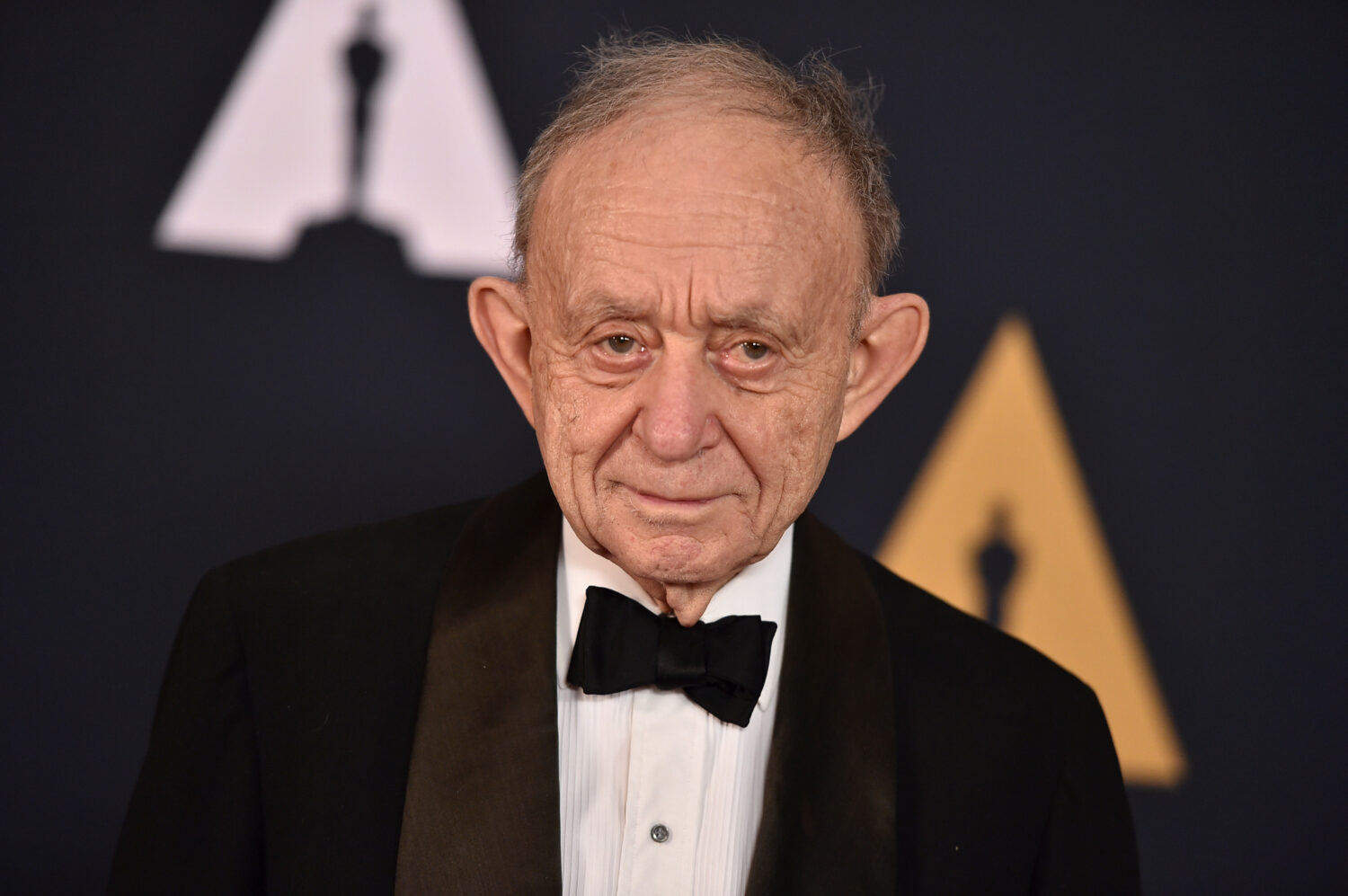
FILE - Frederick Wiseman arrives at the 2016 Governors Awards, Nov. 12, 2016, in Los Angeles. (Photo by Jordan Strauss/Invision/AP, File)
Credit: Jordan Strauss/Invision/AP
(Photo by Jordan Strauss/Invision/AP, File)

NEW YORK (AP) — Frederick Wiseman, the celebrated director of “Titicut Follies” and dozens of other documentaries whose in-depth, unadorned movies comprised a unique and revelatory history of American institutions, died Monday at age 96.
The death was announced in a joint statement from his family and from his production company, Zipporah Films. Additional details were not immediately available.
“He will be deeply missed by his family, friends, colleagues, and the countless filmmakers and audiences around the world whose lives and perspectives were shaped by his unique vision,” the statement reads in part.
Among the world’s most admired and influential filmmakers, Wiseman won an honorary Academy Award in 2016 and completed more than 35 documentaries, some several hours long. With subjects ranging from a suburban high school to a horse race track, his work aired on public television, screened at retrospectives, was spotlighted in festivals and praised by critics and fellow directors. Wiseman was in his mid-30s before he made his first full-length movie, but was soon ranked with — and sometimes above — such celebrated peers as D.A. Pennebaker and Robert Drew for helping to establish the modern documentary as a vital and surprising art form.
Starting with “High School” and the scandalous “Titicut Follies,” he patented a seamless, affecting style, using a crew so tiny that Wiseman served as his own sound engineer. The results led to acclaim, amusement, head-shaking, finger-pointing and — with “Titicut Follies” — prolonged legal action.
“I don’t set out to be confrontational, but I think sometimes the content of the movie runs against people’s expectations and fantasies about the subject matter,” Wiseman told Gawker in 2013.
Wiseman’s vision was to make “as many films as possible about different aspects of American life,” and he often gave his documentaries self-explanatory titles: “Hospital,” “Public Housing,” “Basic Training,” “Boxing Gym.” But he also dramatized how people functioned within those settings: an elderly welfare applicant begging for assistance, a military trainee complaining of harassment, a doctor trying to coax coherent answers out of a dazed heroin addict, sales clerks at Neiman Marcus rehearsing their smiles.
“The institution is also just an excuse to observe human behavior in somewhat defined conditions,” Wiseman told The Associated Press in 2020. “The films are as much about that as they are about institutions.”
For “Titicut Follies,” which premiered in 1967, Wiseman visited the Massachusetts-based Bridgewater State Hospital for the criminally insane. He amassed footage of nude men being baited by sadistic guards and one inmate being force-fed as he lies on a table, liquid pouring down a rubber hose shoved into his nose. The images were so appalling and embarrassing that state officials successfully restricted its release, giving the film exalted status among those determined to see it.
In “High School,” released in 1968, Wiseman recorded daily life in a suburban Philadelphia school. He filmed a student being questioned about whether he has permission to make a phone call, an English teacher earnestly analyzing the lyrics of Simon & Garfunkel’s “The Dangling Conversation,” an awkward sex education class in which boys are told the more active they are, the more insecure they must be.
“What we see in Fred Wiseman’s documentary … is so familiar and so extraordinarily evocative that a feeling of empathy with the students floods over us,” The New Yorker’s Pauline Kael wrote. “Wiseman extends our understanding of our common life the way novelists used to.”
Wiseman made movies without narration, prerecorded soundtracks and title cards. But he disputed, forcefully, that he was part of the “cinema verite” movement of the 1960s and ’70s, calling it a “pompous French term that has absolutely no meaning.”
Oscar winner Errol Morris dubbed him “the undisputed king of misanthropic cinema,” but Wiseman insisted that he was not a muckraker out to correct injustice. He saw himself as a subjective, but fair-minded and engaged observer who discovered through the work itself how he felt about a given project, combing through hundreds of hours of footage and unearthing a story — sometimes despairing, sometimes hopeful. For “High School II,” he visited a school in East Harlem in the 1990s, and was impressed by the commitment of the teachers and administrators.
“I think it’s as important to document kindness, civility and generosity of spirit as it is to show cruelty, banality and indifference,” Wiseman said when he accepted his honorary Oscar.
He was as adventurous in his 80s and 90s as he was in his 30s, making “Crazy Horse” about the erotic Parisian dance revue, the 4-hour “At Berkeley,” about the California state university, and the 2 1-2 hour “Monrovia, Indiana” about an aging rural community. Wiseman also had a long career in theater, staging plays by Samuel Beckett and William Luce among others and adapting his movie “Welfare” into an opera. In 2025, he had brief acting roles in two acclaimed movies — as a poet in “Jane Austen Wrecked My Life” and off-screen as a radio announcer in “Eephus.”
Much of his own work was made through Zipporah, named for his wife, who died in 2021. They had two children.
Wiseman was born in Boston, his father a prominent attorney, his mother an administrator at a children’s psychiatric ward and a would-be actor who entertained her son with stories and imitations. His education was elite despite attending schools with Jewish quotas — Williams College and Yale Law School — and his real life experiences were invaluable for the movies he would end up making.
In the 1950s and early ’60s, he worked in the Massachusetts attorney general’s office, was a court reporter in Fort Benning, Georgia; and Philadelphia, a research associate at Brandeis University and a lecturer at Boston Law School. Drafted into the Army in 1955 and stationed in Paris, he picked up some practical film knowledge by shooting street scenes with a Super 8 camera.
“I reached the witching age of 30 and figured I better do something I liked,” Wiseman told the AP in 2016. “It was just a few years after the technological developments that it made it possible to shoot synchronous sound … so that opened up the world for filmmaking. And there were so many good subjects that hadn’t been filmed, as there still are.”
His new career began with narrative drama. He read William Miller’s “The Cool World,” a novel about young Blacks on the streets of Harlem, called up the author and acquired rights. Wiseman served as producer of the low-budget, 1964 adaptation that was directed by Shirley Clarke, and he became confident that he could handle a movie himself.
While teaching at Boston Law School, Wiseman organized class trips to the nearby Bridgewater facility. In 1965, he wrote to officials there, proposing a film — ultimately “Titicut Follies” — that would give the “audience factual material about a state prison but will also give an imaginative and poetic quality that will set it apart from the cliche documentary about crime and illness.”
Around the time the movie was screened at the New York Film Festival, the state of Massachusetts sought an injunction, alleging that Wiseman had violated the prisoners’ privacy. For more than 20 years, Wiseman was permitted to show “Titicut Follies” only in prescribed settings such as libraries and colleges. The ban was finally relaxed when Superior Court Judge Andrew Meyer in Boston first ruled that the documentary could be shown to the general public if faces were blurred, then, in 1991, lifted all restrictions.
“I have viewed the film and agree that it is a substantial and significant intrusion into the privacy of the inmates shown in the film,” Meyer wrote in his initial opinion, in 1989. “However, I also regarded ‘Titicut Follies’ as an outstanding film, artistically and thoughtfully edited with great social and historical value.
“Another observation about the film: It is true.”