Takeaways from AP investigation: Adopted kids confined in for-profit institutions
Apr 28, 2026, 3:28 AM
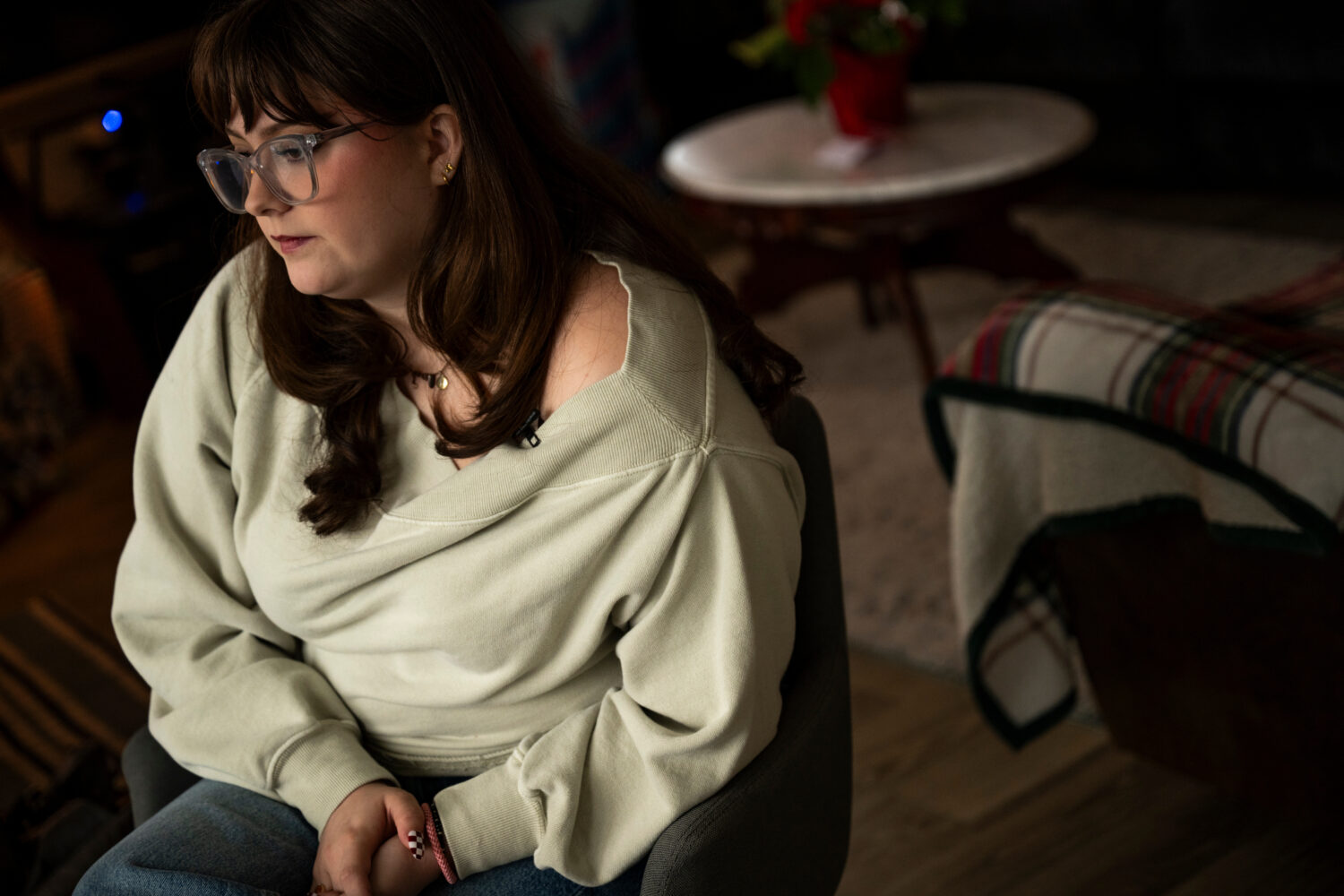
Kate poses for a portrait in her apartment in Kentucky, Wednesday, Dec. 10, 2025. (AP Photo/Michael Swensen)
Credit: ASSOCIATED PRESS
(AP Photo/Michael Swensen)

An Associated Press investigation finds that a business known for tough-love boarding schools for rebellious, rich teenagers set its sights on a different demographic: adopted kids.
Adoptees are vastly overrepresented in what some call the “troubled teen industry,” a sprawling network of loosely regulated, for-profit residential treatment centers, wilderness programs and boarding schools. Experts say that adoptees, only 2% of American children, account for an estimated 25-40% of those in residential treatment.
Adoptees told the AP they believe they’ve been enmeshed in a shadow orphanage system where children end up with the very fate that adoption was supposed to spare them — promised forever homes but institutionalized instead, some for years, in oppressive and sometimes abusive facilities.
Many said the programs felt like prison, except they had not been convicted of any crime, they had no sentence and no judge monitored their confinement. Parents alone usually decide to send their children away and for how long.
The AP interviewed dozens of program attendees and their families, former employees, public officials, attorneys and experts, and obtained hundreds of government and business records to examine why and how adopted kids land in such facilities despite the companies’ disturbing track records.
You can read the full story here. Here are the takeaways:
Charging as much as $20,000 a month, many of these facilities promise in their marketing pitches to treat adopted children for reactive attachment disorder, often called RAD. They offer a salve for desperate adoptive parents, claiming the child’s behavioral problems are caused by a pathological failure to connect with caregivers, and they can learn to attach in faraway treatment.
But experts say most teenagers confined in these facilities almost certainly don’t have RAD, and that the treatment offered wouldn’t fix it even if they did.
The diagnosis is meant for young children who were so neglected in early life that they struggle to bond with caregivers, said Brian Allen, a psychologist who runs the mental health program at Penn State’s Center for the Protection of Children.
It originally described the effects of confinement in orphanages abroad that were so understaffed that babies were rarely held and received no affection, Allen said. The Diagnostic and Statistical Manual of Mental Disorders — the catalog of mental illnesses known as the DSM — says it applies to children who have become so withdrawn, they seek no comfort when they are distressed or scared. It is extremely rare and applies to children under 5 — not older children who suffer neglect when small and misbehave years later.
But some apply RAD to virtually any adopted preteen or teenager with behavioral challenges, Allen said. His clinic studied 100 adopted and foster children brought in for treatment. Around 40% of them had been diagnosed with RAD, but not a single one fit the criteria.
Allen argues the DSM should delete RAD from its listings. The diagnosis has been too “corrupted,” he said. Yet many facilities advertise treatment for it.
“Often what sweeps in is this overpromise, a very seductive promise from residential treatment centers,” said Sloan Nova, a psychologist at the University of California in San Francisco, who was adopted from South Korea in the 1980s and ended up in a treatment facility as a teenager.
“So it just sounds almost too good to be true.”
There’s a lot of money to be made from adopted children in distress. The AP found at least 80 private facilities advertise they treat adoption-related issues.
Many of these businesses started as small operations, with behavioral modification approaches historically rooted in Christian teachings, experts said. Today, public and private equity companies drawn to the promise of significant profits and an endless supply of struggling kids have been acquiring centers and commercializing treatment.
That reliable money flow allows investors to go “into these markets risk free,” said Raj Kumar, an analyst at the financial services firm Stephens who tracks healthcare.
Promising a healthy 20% in profit margins, residential treatment centers make money based on minimizing staffing costs and maximizing how long kids are in care, Kumar said. That’s easier to do, experts said, because there are so few regulations compared to other inpatient healthcare settings like nursing homes.
One company backed by private equity, Family Help & Wellness, operates more than a dozen facilities across the country and faces multiple lawsuits alleging abuse.
In a statement to the AP, the company said its programs are independently operated, and it supports legislation to tighten industry regulations and is committed to strengthening oversight and improving quality of care that aligns with evolving best practices.
“The safety, well-being, and long-term success of every young person and family are our priority,” it wrote in a statement. “We recognize this is an area of increasing public attention and scrutiny, understandably so, given the real impact on young lives.”
The stakes are extraordinarily high: In the last two years, two of the company’s properties in North Carolina shuttered after children died there.
Kate spent most of her teenage years in institutions, including two acquired by Family Help & Wellness. She says she was sexually assaulted by another girl at Asheville Academy, and later sent to Unita Academy in Utah.
Kate was 13 when she arrived at Uinta Academy, she says. The AP is using only her first name at her request because it does not typically identify victims of sexual assault.
On her first night there, she says, she had a panic attack because her roommate turned off her night light. She’d been scared of the dark, she said, since the girl assaulted her at her previous facility. She ran and curled into a ball, heaving and weeping.
Three employees followed her — to comfort her, Kate thought. Instead, they threw her face first into the carpet, she said, yelling that she was “OIC” — “out of instructional control.” For what seemed like an hour, they held her down, Kate said, one on each arm, the third holding her legs.
They held her to the ground, she said. She screamed “I can’t breathe” as snot poured from her nose. Eventually, she went silent, exhausted, she said, and she was released. She went to bed, without a night light.
The girls there were required to do what they were told without question, with a neutral expression on their faces — no sighing, no frowning, no crying, she said. Break the rules and they had to scrub the floor on their knees with a toothbrush for hours or go outside in 100-degree heat, rake moldy hay or pull weeds all day, she said. The smell of freshly pulled weeds still makes her sick.
“We were afraid all of the time,” she said.
She is not alone: A congressional investigation led by U.S. Sen. Ron Wyden of Oregon found that in facilities across the country, chronic understaffing led to improper physical restraints, a lack of mental healthcare and rampant physical, sexual and emotional abuse. The report, entitled “Warehouses of Neglect,” described the prevalence of improper physical restraints, a lack of mental healthcare and rampant physical, sexual and emotional abuse.
The facilities, the report found, often functioned more like confinement for kids in trouble, rather than places where vulnerable children find healing.
____
Galofaro reported from Kentucky and Tennessee. Ho reported from California, Missouri and Washington.
____
The Associated Press receives support from the Public Welfare Foundation for reporting focused on juvenile justice. The AP is solely responsible for all content.