Takeaways from AP-KFF investigation into allegations of medical neglect by detainees in ICE custody
Jun 2, 2026, 6:04 AM
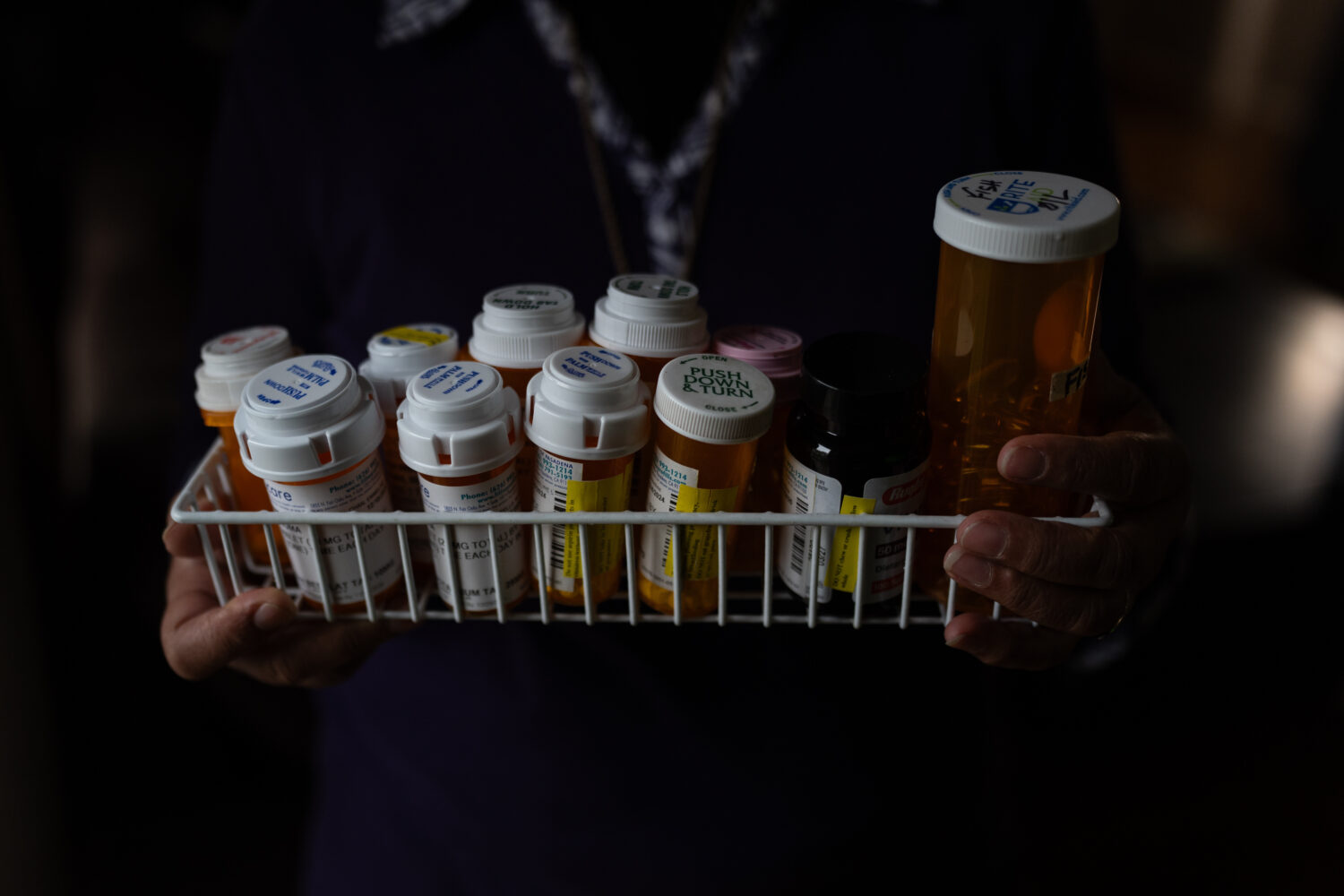
Masuma Khan, an immigrant from Bangladesh who was held at an immigration detention facility in California City the previous year, holds the medications she takes daily, in Altadena, Calif., April 21, 2026. (AP Photo/Jae C. Hong)
Credit: AP Photo/Jae C. Hong
(AP Photo/Jae C. Hong)

An investigation by KFF Health News and The Associated Press has found that hundreds of detainees across at least 33 states allege immigration detention facilities are failing to provide adequate medical care.
Detainees allege they didn’t receive medications on time — or at all — for conditions including high blood pressure, diabetes, depression, epilepsy, Parkinson’s and HIV. Requests for help went unanswered for weeks. Blood sugars rose. Infections festered. Cancers remained untreated. Detainees collapsed and had seizures.
U.S. jails and immigration detention centers have long struggled to meet the medical needs of the people in their charge. But the system is sagging under an influx of detentions since President Donald Trump returned to office: More than 75,000 immigrants were being detained by U.S. Immigration and Customs Enforcement as of mid-January, up from around 40,000 a year earlier.
KFF Health News and AP asked the Department of Homeland Security to respond to the findings six days before publication but it did not provide comment. DHS acting chief medical officer, Sean Conley, previously said “it is both policy and longstanding practice for aliens to receive timely and appropriate medical care from the moment they enter ICE custody” and that the department recruits healthcare professionals to maintain high standards. “This is better, more responsive healthcare than many aliens have ever received in their entire lives,” he has said.
Individual facilities and private prison companies contracting with DHS that responded to requests for comment on this story said they follow ICE standards and detainees receive adequate medical care when it is required. Some said they were unfamiliar with the allegations outlined in court documents; others blamed the detainees themselves for lapses in their medical care.
KFF Health News and AP analyzed thousands of court cases filed since Trump’s second inauguration that use a legal route known as habeas corpus to argue people are being held illegally by ICE. The records offer a rare window into how those detained say — often under penalty of perjury — ICE is handling their medical needs. Reporters also interviewed more than 50 detainees, family members and lawyers.
The investigation revealed that medical neglect is alleged across the sprawling detention system, including in offices not designed to house people, county jails and quickly staged sites with nicknames such as “Alligator Alcatraz.”
The full story can be read here. Here are the takeaways:
Previously, detainees with serious medical needs would likely have been released on humanitarian parole, in part to avoid the cost of their care, Vermont attorney Andrew Pelcher said.
Now, under “mandatory detention,” people are staying locked up with serious — and expensive — conditions.
A Romanian citizen underwent several heart surgeries, including an emergency triple bypass in April 2025, before he was arrested in July. As part of his recovery, the 52-year-old was required to take 16 daily medications. While detained by ICE in Baltimore, his court filings allege, he went two days without any medication before officials moved him to a facility in New Jersey.
The AP and KFF Health News are not naming anyone identified in court documents without their consent.
He was hospitalized three times with chest pains, in part because the detention center did not provide all his medications despite “countless requests,” medical records and court documents say. Hospital discharge papers cited by his lawyer show he received only eight of the 16 medications after his second release from the hospital.
Several weeks later in August, he had a stroke while on a video call with his daughter, according to court filings. “He was struggling to breathe, and was pointing at his chest where he was again experiencing pain, and suddenly stopped speaking.” His daughter screamed for help through the video monitor, according to his petition. “Eventually an officer came in to assist him and cut the feed.”
The man lost his ability to speak for four days, the document says. He was returned to detention, where he remained until a federal judge ordered his release in November.
Detainees receiving inadequate healthcare have little recourse. The Department of Homeland Security last year gutted the Office of the Immigration Detention Ombudsman. In early May, they shut the office entirely arguing that Congress didn’t fund it.
Ombudsman staffers used to help facilitate medical care or investigate complaints of neglect, according to Matt Boles, an immigration attorney in Georgia. Now, he said, there’s no one to call.
Meanwhile, detainees’ families said they feel helpless, making desperate calls to facilities, the government and their legislators while watching their loved ones deteriorate.
Riya Khan saw her mother get sicker at the California City Detention Facility, which is owned by CoreCivic, a private prison company. When she visited a week after her mother arrived at the facility in the Mojave Desert, Riya said, the 64-year-old woman was shaking as she stumbled into her seat. Her breathing was labored.
Masuma Khan came to the U.S. from Bangladesh in 1997. Like 70% of those in detention, Khan has no criminal history. She was detained in October when she showed up for her regular ICE check-in.
For the month she was detained, according to her daughter, she only intermittently received her medications for conditions including high blood pressure, hypothyroidism and prediabetes.
CoreCivic treats chronic conditions in line with applicable medical standards, spokesperson Brian Todd said.
“Nothing matters more to CoreCivic than the health, safety and well-being of the people in our care,” Todd said.
Khan said she got her asthma medication for the first time two days before she was released and her eye drops for glaucoma never arrived. Staffers told Khan she needed to buy some of her medications from the commissary but it didn’t stock them, her daughter said.
Dora Schriro, who worked for ICE and now serves as a special adviser to the American Bar Association, said case law requires the government to treat people in immigration detention with the same care it affords those in traditional jails awaiting trial. But administrators are granted discretion and medical care standards vary.
Detainees are frequently moved across the country, often without warning, interrupting treatment. A woman from El Salvador said she missed a week of HIV medication when she was transferred from Colorado to a county jail in Wyoming.
A Russian man wrote that, while detained in Texas, he saw a gastroenterologist about his painful gallstones and scheduled an appointment with a surgeon. “Unfortunately, I never got to see him, due to my being moved around various detention centers.”
Advocates say that even obvious disabilities, like legal blindness, are ignored.
A detainee who lost one eye and had severe glaucoma in the other required twice-daily drops to maintain what vision remained. But, he said, some days the drops never came.
He wrote that his vision was quickly deteriorating, and he was scared he’d lose it entirely and never be able to see his infant son again.
___
Associated Press journalists Garance Burke, Valerie Gonzalez and Tim Sullivan as well as KFF Health News correspondent Kate Wells contributed to this report.
This report is a collaboration between The Associated Press and KFF Health News.