Trump wants to cancel more funding during the shutdown. Courts have hampered his earlier efforts
Oct 27, 2025, 10:21 AM
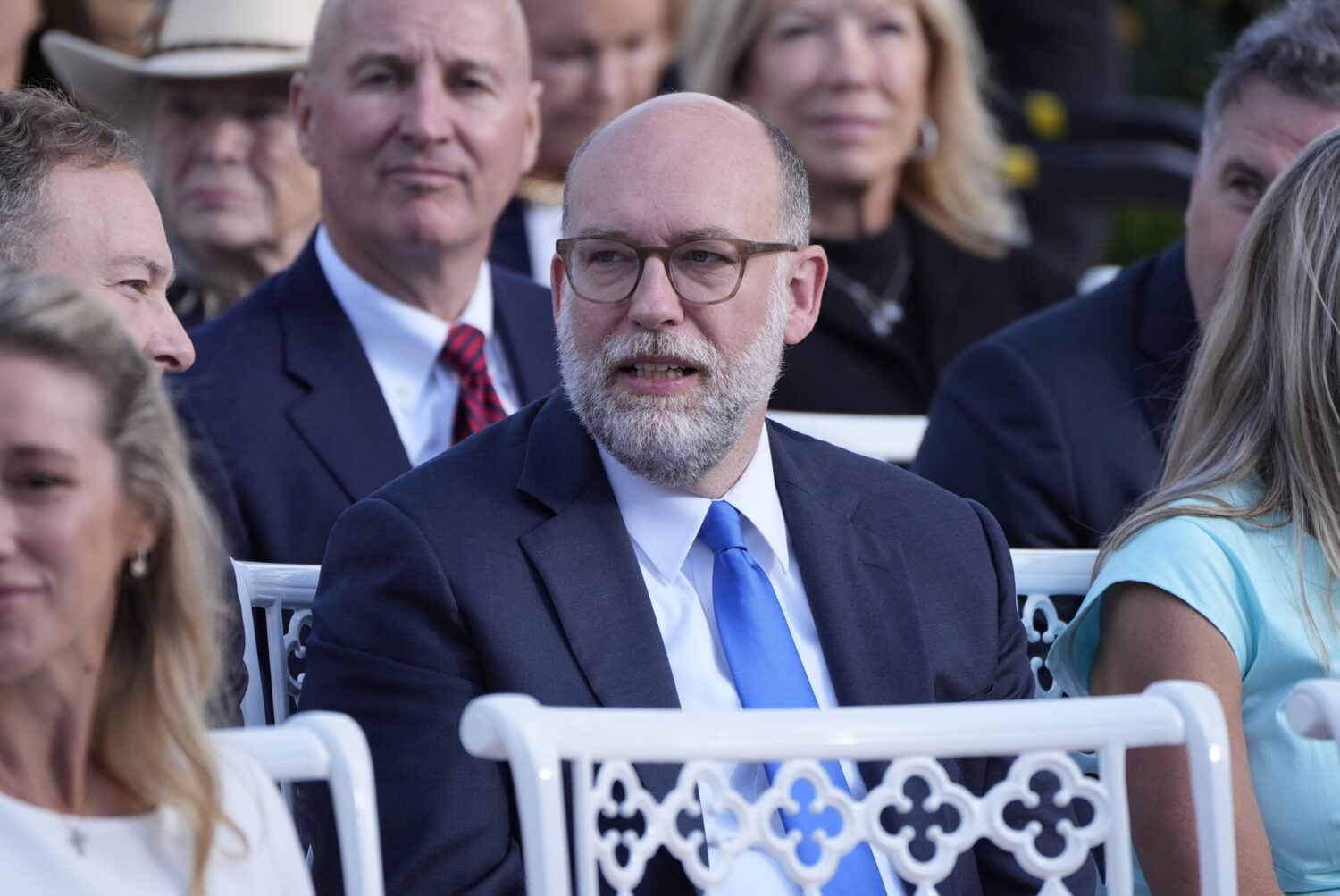
Russell Vought, Director of the Office of Management and Budget, attends a ceremony where President Donald Trump will present the Presidential Medal of Freedom for Charlie Kirk to his widow Erika Kirk in the Rose Garden of the White House, Tuesday, Oct. 14, 2025, in Washington. (AP Photo/Mark Schiefelbein)
Credit: ASSOCIATED PRESS
(AP Photo/Mark Schiefelbein)

Congress has the constitutional power of the purse, but President Donald Trump’s robust assertion of executive authority is testing even that basic tenet of U.S. democracy.
His administration has already canceled or threatened to cancel billions of dollars of previously approved federal spending and now wants to go after even more funding during the government shutdown.
States, cities, nonprofits and other groups have responded with more than 150 lawsuits accusing the Republican administration of an unlawful power grab.
An Associated Press analysis shows that so far, those suits are mostly succeeding in blocking the Republican president’s spending moves, at least temporarily. But most of the legal battles are far from over, and the Supreme Court, where Trump so far has been more successful, could have the final word on at least some of them.
The court’s conservative majority has been receptive at least in preliminary rulings to many emergency appeals from the administration. Legal experts say a pair of recent decisions by the court may bode well for the administration’s push to gain more control over government spending. Here’s a look at the current legal score and what could lie ahead:
As of early October, court orders were at least temporarily blocking the Trump administration’s decisions in 66 of 152 lawsuits over federal spending, an AP analysis shows. In 37 of those cases, courts had allowed the administration to proceed. In 26 of the cases, a judge had yet to rule on the matter. The remaining 23 had either been dropped or consolidated.
The count reflects decisions by district courts, appeals courts and the U.S. Supreme Court and will almost certainly change as the cases progress.
The flurry of litigation reflects not only the administration’s aggressive effort to wrest control of spending, but the Republican-controlled Congress’ unwillingness to push back, said Zachary Price, a constitutional law professor at the University of California College of the Law, San Francisco.
“Congress seems to be following its partisan interests more than its institutional interests, and that puts a lot of pressure on courts,” he said.
Government watchdogs say the administration is blatantly ignoring a requirement in the 1974 Impoundment Control Act to report funding freezes to Congress.
Research by Democrats on the House and Senate Appropriations Committees estimated the administration was freezing, canceling or seeking to block a total of $410 billion as of early September. That’s equivalent to about 6% of the federal budget for the year that ended on Sept. 30.
The administration has disputed that number.
Since the shutdown started this month, the administration has targeted even more funding, primarily in places represented by Democrats.
Legal scholars say no president has attempted massive, unilateral cuts like these since Richard Nixon. The moves reflect an expansive view of executive power that is at odds with the Impoundment Control Act, court rulings and the Constitution, which grants Congress supremacy over spending, experts say.
“The power they’ve claimed is the power to delay and withhold funds throughout the year without input from Congress,” said Cerin Lindgrensavage, counsel with Protect Democracy, which is involved in multiple lawsuits against the administration. “That’s a theft of Congress’ power of the purse.”
In a message to Congress earlier this year, the White House said it was “committed to getting America’s fiscal house in order by cutting government spending that is woke, weaponized, and wasteful.”
White House budget director Russ Vought, a proponent of withholding federal funds, has argued presidents long had the power to spend less money than Congress appropriated if they could cut waste or be more efficient, and that power is needed to address the country’s massive debt.
The government shutdown opened up a new opportunity to cut spending, he said this month on “The Charlie Kirk Show.”
“If I can only work on saving money, then I’m going to do everything I can to look for opportunities to downsize in areas where this administration has thought, ‘This is our way towards a balanced budget.’”
The 152 cases the AP identified challenge the closure of government agencies and offices, the cancellation of grants and other assistance and the attachment of new conditions on federal funding.
The administration has used the cuts, or threat of cuts, to try to impose its policies on gender, race, immigration and other issues.
But it’s not just money on the line. The funds supported jobs, school lunches, health programs, scientific research, infrastructure projects, foreign assistance, disaster preparedness, education initiatives and other programs.
Some notable rulings against the administration include the restoration of funding to 14 states that filed suit over nearly $2 billion withheld for electric car chargers and a block on potentially broad funding cuts to some of the country’s largest cities over their “sanctuary” immigration policies.
Judges who have ruled against the administration have often found strong reason to conclude the cuts, or threat of cuts, would violate the Constitution’s separation of powers by usurping Congress’ authority over spending.
They have also ruled the moves were most likely arbitrary under the Administrative Procedure Act, a law that governs the process by which federal agencies develop and issue regulations.
Judges who have sided with the administration have likened at least some of the legal claims before them to contract disputes that belong in a different court: the U.S. Court of Federal Claims.
That court, which traces its origins to the mid-1800s, handles lawsuits by citizens seeking money from the federal government. Referred to as “the People’s Court,” it is separate from the district courts that are handling most of the high-profile litigation against the administration.
The high court’s conservative justices have allowed the administration to move ahead for now with plans to shutter the Education Department, freeze $5 billion in foreign aid and cut hundreds of millions of dollars for teacher training and research supported by the National Institutes of Health.
Those decisions may make it harder to challenge the administration’s spending cuts, though the high court has not yet considered their ultimate legality or overturned lower court rulings.
In the National Institutes of Health case, the high court ruled 5-4 in August that lawsuits over the cancellation of grant funding generally cannot be handled entirely by federal district courts. Instead, plaintiffs must sue in federal claims court for any money and turn to the district courts if they want to challenge the guidance that led to the grant terminations.
The impact of the Supreme Court’s decision is still unfolding, but it could force plaintiffs in the grant funding cases to start over in a new courtroom. In some cases, plaintiffs might have to decide if they want to sue on two fronts.
In the foreign aid case, the Supreme Court in a 6-3 decision in September suggested the Impoundment Control Act did not give private parties the right to sue over so-called pocket rescissions.
That’s when the president submits a request to Congress not to spend approved money, but does it so late in the fiscal year that Congress doesn’t have time to act and the funds go unspent.
Trump notified House Speaker Mike Johnson in August of a pocket rescission for the $5 billion in congressionally approved foreign aid, effectively cutting the budget without going through the legislative branch.
Though the Supreme Court stressed its decision was preliminary, legal experts say it could make it easier for the Trump administration to use the tactic again.
___
Associated Press writer Lindsay Whitehurst contributed to this report.