What to know about the Lindsay Clancy murder trial
Aug 27, 2026, 9:58 AM
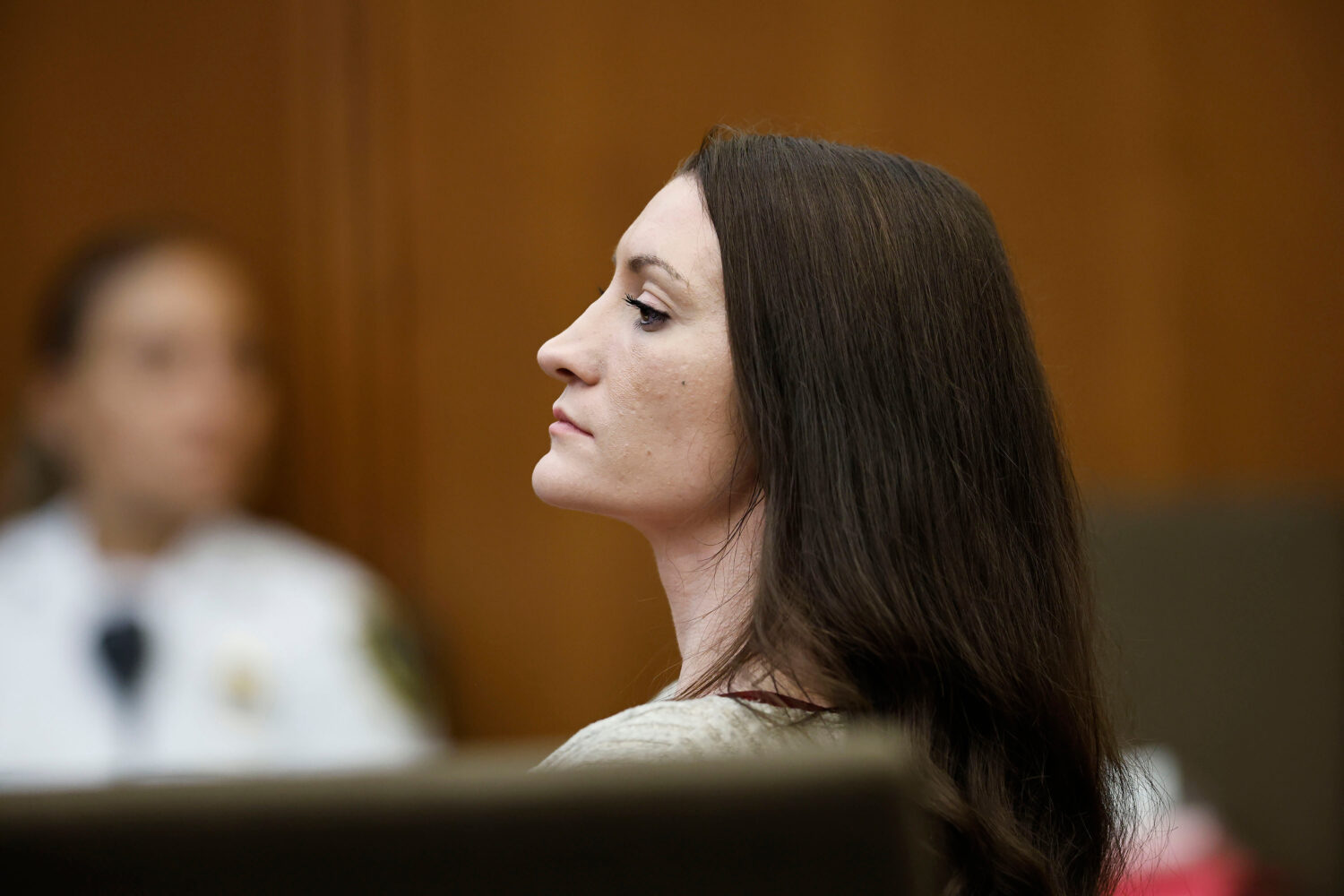
Lindsay Clancy listens to testimony during her murder trial in Plymouth Superior Court, on Wednesday, Aug. 26, 2026 in Plymouth, Mass. (Greg Derr /The Patriot Ledger via AP, Pool)
Credit: Greg Derr/The Patriot Ledger/Pool The Patriot Ledger via AP
(Greg Derr /The Patriot Ledger via AP, Pool)

Lindsay Clancy’s murder trial is in the hands of a jury after a month of searing testimony about the deaths of her three children in 2023 and the psychiatric problems she experienced before she killed them. Closing arguments concluded Thursday in the case, which has sparked debate online and demonstrations outside the courthouse over maternal well-being and the mental health system. The jury was sent off to deliberate at around 12:30 p.m. Here are some basics about the case.
Clancy, 36, is a Massachusetts woman who is charged with murder in the deaths of her children: Cora, 5, Dawson, 3, and Callan, 8 months. She hasn’t disputed killing them but has pleaded not guilty to murder by reason of lack of criminal responsibility.
Clancy was on maternity leave from her job as a labor and delivery nurse when the children were strangled on Jan. 24, 2023. She has been in custody since.
The children were strangled with exercise bands in their home in coastal Duxbury, Massachusetts. Their father, Patrick Clancy, discovered them in the basement when he returned from errands Lindsay Clancy had asked him to run. He found her badly injured in the yard, where she landed after jumping from a second-story window. She remains paralyzed from the waist down and uses a wheelchair.
___
EDITOR’S NOTE: This story includes discussion of suicide. If you or someone you know needs help, the national suicide and crisis lifeline in the U.S. is available by calling or texting 988.
___
The trial hinges on Lindsay Clancy’s mental health and whether she understood that killing the children was wrong.
Prosecutors contend that she did and that she acted intentionally. They noted she was involved in everyday activities the day of the killings, such as taking her children to the doctor and playing with them in the snow. The prosecution claims she deliberately sent her then-husband on errands to get him out of the house, and prosecutors have questioned the seriousness of her suicide attempt.
Clancy’s lawyer, Kevin Reddington, maintains that she was so mentally ill that she shouldn’t be held criminally responsible for the killings. According to her defense, she had bipolar disorder and postpartum psychosis and, ultimately, it led her to believe she heard a voice telling her to kill the children so she could end her own life.
In diary entries Clancy wrote in the months before the killings, she described feeling anxious, overwhelmed, preoccupied with the details of her infant’s care, beset by “brain fog,” and “desperate to get a mental break from taking care of everyone.”
Both the prosecution and the defense have drawn on expert testimony to support their contrasting views of Clancy’s mental state at the time of the killings.
One forensic psychiatrist, testifying for the defense, said Clancy was “clearly psychotic” and held a delusional belief that her children would be better off dying with her than being left behind. The prosecution’s experts agreed that she had serious psychological problems, but said she wasn’t psychotic. They also questioned Clancy’s account of being commanded by a voice and asserted that she knew right from wrong and had control of her behavior.
It’s a rare and serious condition that can cause disorganized thinking, delusions, hallucinations and other symptoms. It affects an estimated 1 to 2 out of 1,000 women after childbirth, but the risk is somewhat higher for people with certain mental health conditions such as bipolar disorder.
Postpartum psychosis is different from postpartum depression, a more common mood disorder.
According to court testimony and exhibits, Clancy’s psychiatric decline began about three months after Callan was born, as she looked ahead to returning to work. Starting in September 2022, she sought help from multiple providers and programs, even checking herself into a psychiatric hospital for several days in early January 2023.
Her defense maintains that her care was disjointed and that her medications were poorly managed or even improper. Clancy and her husband have separately sued several people who treated her. Those claims haven’t yet played out in civil court.
Prosecutors sought to underscore that Clancy had ample access to care but sometimes disregarded providers’ advice, switched among providers and stopped taking certain medications. The clinicians testified that although she reported feeling suicidal, she denied having a plan to harm herself or anyone else and didn’t exhibit signs of mania or psychosis.
According to Clancy’s mother, however, Clancy told her mom and then-husband in December 2022 that she thought about harming the children.
She chose not to take the witness stand. She watched the proceedings from the defense table, occasionally weeping, as when prosecutors showed autopsy photos of the children to the jury.
If Clancy is convicted, her sentence could be as severe as life in prison without the possibility of parole. If she’s found not guilty due to a lack of criminal responsibility, the court will decide whether she can be released from custody or should remain confined in a state mental health facility.
If the jury can’t reach a verdict, prosecutors would have to decide whether to retry the case. If a mistrial were declared for some other reason, the next steps could depend on the circumstances.