What to know about Trump’s 50% tariffs on Canadian goods that just went into effect
Aug 22, 2026, 1:36 PM
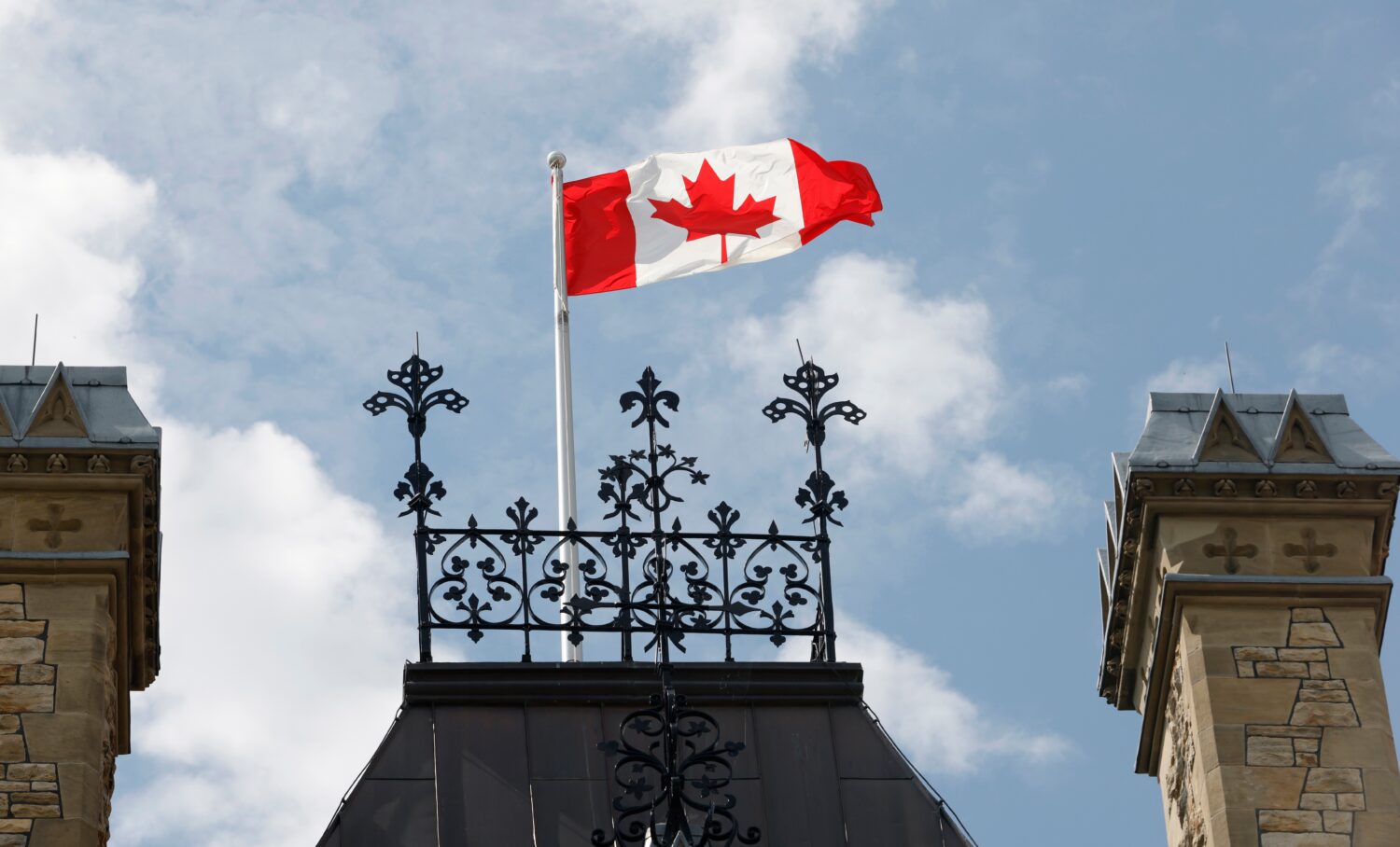
A Canadian flag flies on Parliament Hill in Ottawa on Saturday, Aug. 22, 2026. (Patrick Doyle/The Canadian Press via AP)
Credit: PATRICK DOYLE/The Canadian Press via AP
(Patrick Doyle/The Canadian Press via AP)

CHICAGO (AP) — After trade negotiations crumbled at the eleventh hour, U.S. President Donald Trump’s 50% tariffs on scores of Canadian imports kicked in Saturday.
The new levies are expected to affect about 5% of Canada’s annual exports to the U.S., roughly $20 billion in goods ranging from hockey sticks to agricultural products. Canada’s Prime Minister Mark Carney quickly promised Saturday that his government would roll out “dollar for dollar” retaliatory measures starting Sept. 8.
No further talks are scheduled. The latest escalation between the two countries — which once held one of the world’s most durable trade alliances — plunges them deeper into a trade war that has kept both sides of the border on edge throughout Trump’s second term in office. Experts warn steeper tariffs raise costs for businesses and almost always trickle down to households in the form of higher prices.
“Nearly all industries and professions are likely to see downstream effects from this spiraling trade dispute,” said Augustine Lo, of law firm Dorsey & Whitney, whose work includes advising clients on international trade.
Here’s what we know.
Again, the 50% tariffs from the U.S. are set to affect $20 billion of Canadian goods.
Canada sends the vast majority of its goods exports to the U.S. (72% last year), and Trump administration says the new taxes will be levied on products ranging from hockey sticks to wine and cement. The list is long. According to documents published by the White House, other goods subject to the tax include honey, seeds and agricultural products — as well as select makeup, perfumes, clothing, jewelry, furniture, cameras, fabric and more.
The 50% levy also applies to some products that were previously protected under the US-Mexico-Canada Agreement, a trade pact from Trump’s first term. That marks a shift from past levies — and further underlines questions around the future of the USMCA overall.
To impose these 50% tariffs, Trump reached back to a long-dormant Great Depression-era law: Section 338 of the Tariff Act of 1930.
When the U.S. and world economies were in collapse nearly a century ago, Congress passed the 1930 law as part of broader “Smoot-Hawley” legislation (named after its congressional sponsors). The act raised tariffs more generally across the board, and became notorious among economists for limiting world commerce and making the Great Depression worse. But Section 338 — which authorizes the president to slap import taxes of up to 50% on imports from countries that have discriminated against U.S. businesses — has never been used specifically to raise tariffs until now.
No investigation is required to justify the levies. Nor is there any limit on how long they can stay in place. Since there’s no precedent, however, the latest tariffs may also see more legal challenges.
When announcing his planned tariffs last month, Trump claimed that Canada was unfairly discriminating against U.S. exports of automobiles, alcohol and dairy products. The president expressed anger over Canada’s retaliation against his own tariffs last year — noting Canadian imports of American alcohol and cars started to fall last spring.
Canada’s Carney quickly promised to match the new levies “dollar for dollar” — later announcing retaliation would begin Sept. 8. He noted Canada’s tariff increases would target steel, dairy, appliances, agricultural equipment, pulp and paper and electronics.
The prime minister said Canada was willing to drop remaining retaliatory tariffs on steel, aluminum and autos if the U.S. substantially lowered its own, and to encourage provinces to restore U.S. alcohol sales. But eventually, he said Washington’s final demands went too far.
Carney accused Washington of using “economic integration as a weapon,” and that Canada had been “attacked” by the latest U.S. tariffs. He said his country had the reserves and resilience to respond.
Trump’s top trade negotiator, Jamieson Greer, pledged additional measures to respond to Canada’s retaliation — without immediately specifying what that would look like. In a Saturday interview with “Fox & Friends Weekend,” Greer also claimed the administration offered to cut tariffs on steel, autos and lumber, but Canada “didn’t want” the deal.
Tariffs are taxes paid by importers, or businesses that buy goods from abroad. That typically trickles down to consumers through higher prices — and, as seen over the last year, can also create uncertainty for workers across affected sectors.
North America now has a “new tariff landscape,” Dave Townsend, a partner at law firm Dorsey & Whitney, said Saturday. He noted a big question is whether the latest levies prove to be temporary.
The 50% tariffs come on top of previously-imposed levies, including a 10% rate Trump slapped on Canada just last month ostensibly for failing to do enough to prevent imports produced by forced labor and separate sectoral levies impacting trading partners globally.
The growing trade sanctions on Canada underscore Trump’s willingness to risk breaking established alliances. And Canada’s reluctance to accept a deal may reflect recent experience.
Trump has repeatedly targeted Canada, even after instances where it made concessions following his demands. Some tolls on the newly opened Gordie Howe Bridge will be shared for 15 years, despite the fact that Canadians paid for the span linking Detroit and Windsor. Canada also withdrew a digital services tax last year. All the while, Trump has threatened more tariffs over everything from a TV ad criticizing his trade policies (later pulled by Ontario’s government ) to wildfires that blackened skies across North America.
Steeper tariffs have already contributed to higher inflation — but appeared to level off some in recent months, Supreme Court in February struck down some of Trump’s most sweeping levies.
Still, Saturday’s taxes against Canada mark the latest instance of Trump turning to other laws to impose tariffs. And more recently, Washington’s war with Iran has driven prices even higher. With the cost of living at the center of many voters’ minds in a midterm election year, political ramifications could mount for the Republican president in the coming months.
_____
AP Writers Paul Wiseman in Washington and Rob Gillies in Toronto contributed.