Why Taiwan and the South China Sea matter to the US and the world
Aug 20, 2026, 3:05 AM
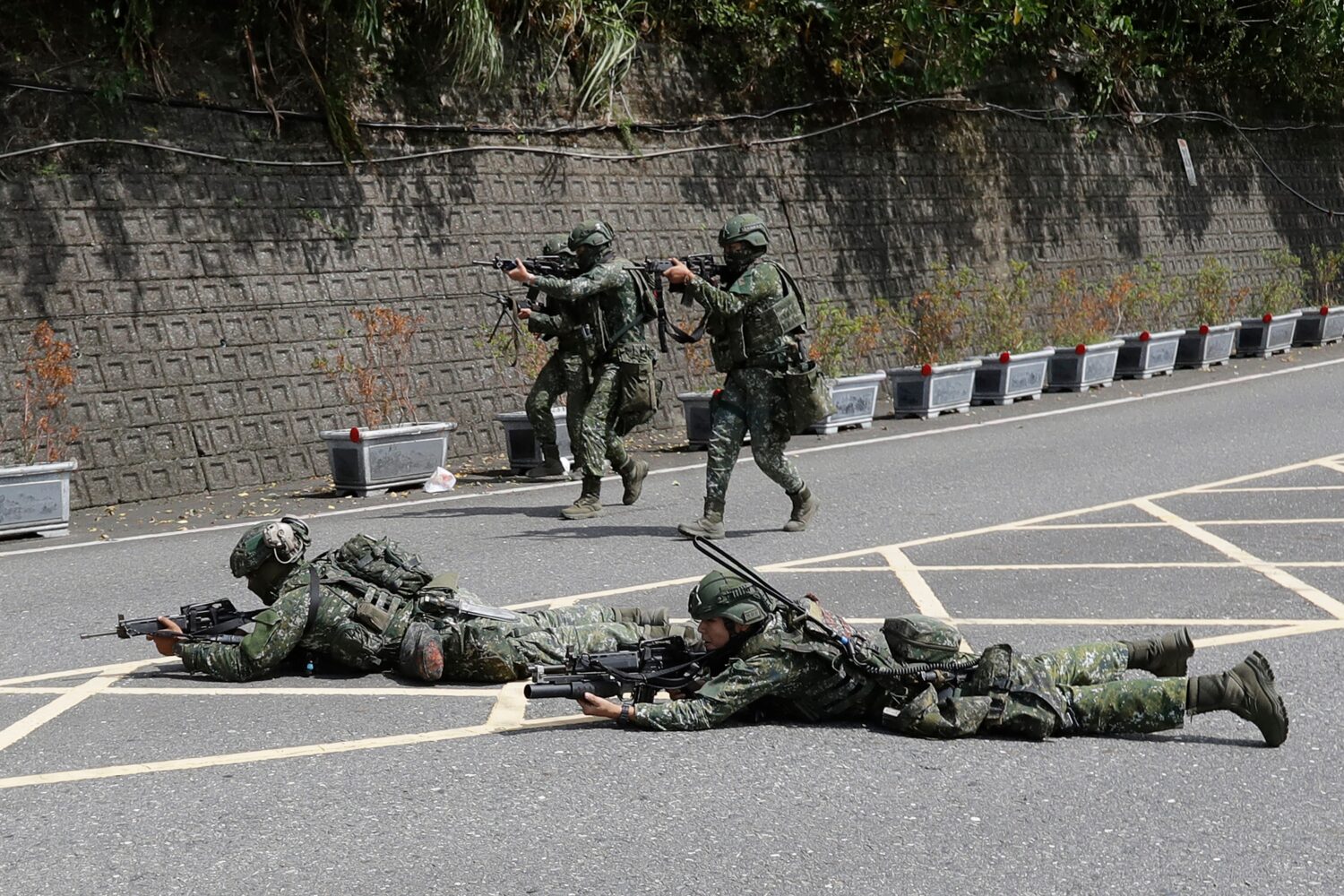
Soldiers participate in the annual Han Kuang military exercises in Yilan, northeastern Taiwan, Monday, Aug. 10, 2026. (AP Photo/Chiang Ying-ying, Pool)
Credit: AP Photo/Chiang Ying-ying
(AP Photo/Chiang Ying-ying, Pool)

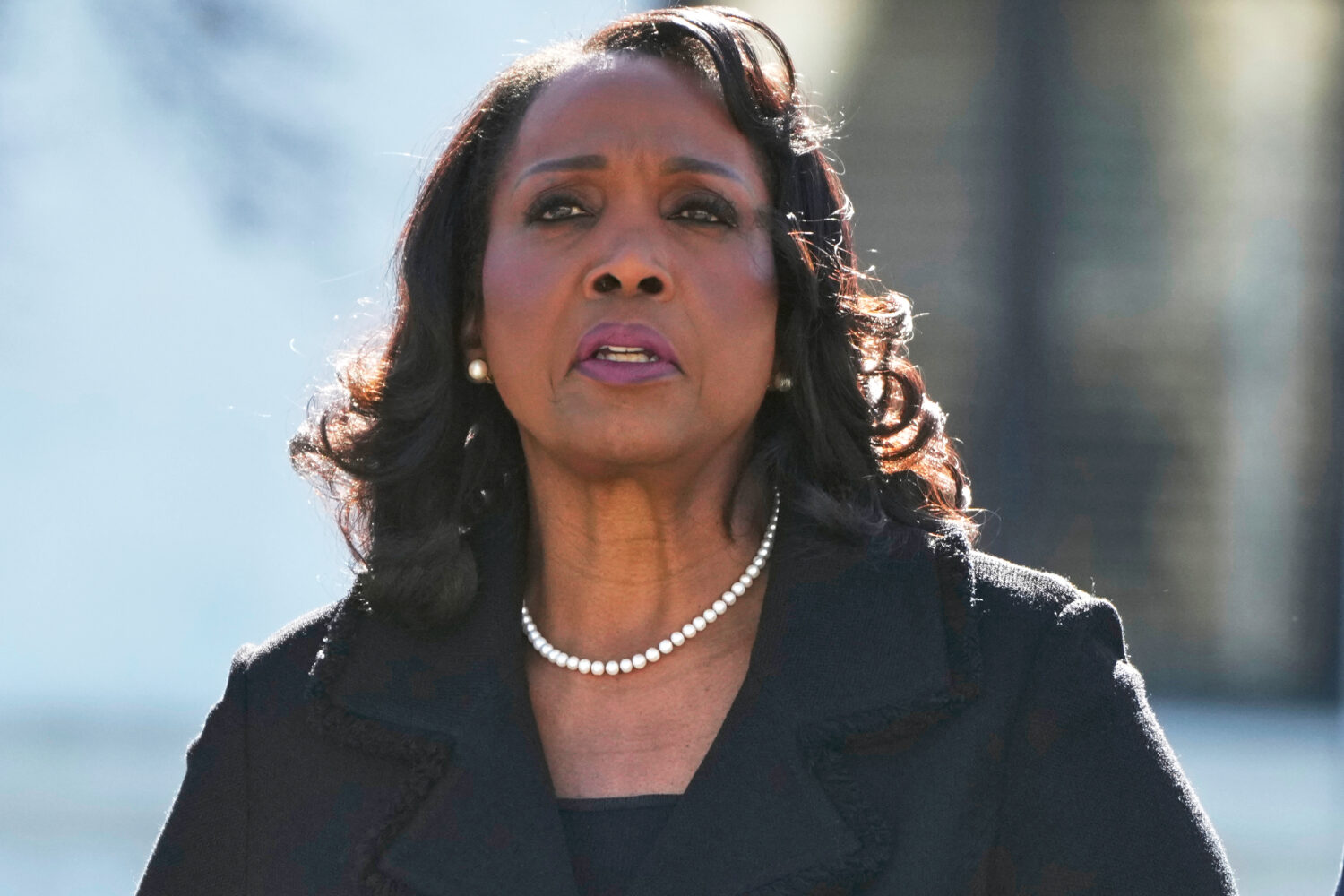
When U.S. Sen. Darline Graham struggled to answer in a debate whether the U.S. has a national security interest in Taiwan and the South China Sea, she drew criticism for saying national security was “not my thing.”
Taiwan and the South China Sea have long been major issues in U.S. foreign policy, and tensions involving China have kept both in the news in recent months. Beijing claims Taiwan as its own territory and asserts sovereignty over virtually the entire South China Sea, bringing it into confrontation with U.S. allies and partners in the region.
What happens in Taiwan and the South China Sea could have an impact not only on the region but around the world, given their importance to global trade.
The South China Sea, a large body of water bordered by several nations, including China, the Philippines and Vietnam, is one of the world’s key maritime trade routes. Taiwan produces the majority of the world’s advanced semiconductors.
“The two are very much connected,” said Hunter S. Marston, director of the Southeast Asia Program at the Lowy Institute in Australia. “If China were to blockade or seek to forcibly retake Taiwan from the mainland, the South China Sea could quickly see spillover effects.”
Here’s a look at why Taiwan and the South China Sea are important and how the two are connected strategically:
The South Carolina senator Darline Graham is seeking a full Senate term after being appointed to the seat of her late brother, Lindsey Graham, who was known for his foreign policy involvement and made several foreign trips, including to Taiwan.
Taiwan is a self-ruled democracy that China claims as its own territory, and Beijing has not renounced the use of force to bring it under its control. After China and Taiwan split amid civil war in 1949, it became a thorny international issue.
China sends military aircraft, coast guard ships and other vessels around Taiwan on a near-daily basis and periodically conducts large-scale military exercises. Taiwan also regularly holds military drills, including its annual Han Kuang exercises.
The U.S. does not have formal diplomatic relations with Taiwan, but maintains extensive unofficial relations and is required under U.S. law to provide Taiwan with the means to defend itself.
Under that framework, the U.S. has long been Taiwan’s main informal backer and arms supplier, a relationship that has been a persistent source of tensions with Beijing.
During U.S. President Donald Trump’s latest visit to Beijing in May, Chinese President Xi Jinping made clear that Taiwan remains the most important issue in the bilateral relationship. Xi warned that mishandling U.S. ties with the island could lead to confrontation between the two countries.
Trump did not publicly address Taiwan during the trip. But on his way back to the United States, he said arms sales to Taiwan were a “very good negotiating chip” with China, comments that stirred anxieties on the island.
“If China were able to take control of Taiwan, or if the United States clarified that it would not come to Taiwan’s defense in the event of a conflict, China would be able to project its military power (particularly submarine capabilities) far into the South China Sea and beyond the first island chain into the Pacific,” said Marston, from the Lowy Institute.
A conflict over Taiwan would have direct consequences for Southeast Asia. Marston said that nearly 1 million citizens of the countries in Association of Southeast Asian Nations or ASEAN, would need to be evacuated. A conflict could also bring U.S. and Chinese military forces through the South China Sea and put pressure on regional governments to navigate between the two powers.
But China asserts sovereignty over much of the South China Sea, despite a 2016 international arbitration ruling that invalidated Beijing’s expansive maritime claims.
In July, on the 10th anniversary of the ruling, the U.S., the United Kingdom and 12 other countries reiterated that China’s expansive claims have no legal basis. Beijing responded by insisting it would neither accept nor recognize the arbitration decision.
Confrontations in the disputed waters have become more frequent in recent years, particularly involving Chinese, Philippine and Vietnamese forces and fishing fleets.
Chinese coast guard ships and other vessels have used powerful water cannons, military-grade lasers and dangerous blocking maneuvers against Philippine forces and fishermen from other claimant countries. Such confrontations have led to collisions at sea and high-risk encounters in the air.
China has also carried out military drills this month near Scarborough Shoal, a disputed area claimed by both China and the Philippines.
In April, the United States and the Philippines kicked off the annual Balikatan military exercises. The drills included mock battle scenarios and live-fire exercises in Philippine provinces facing the disputed South China Sea and the Taiwan Strait.
The Center for Strategic and International Studies has said that because the South China Sea is one of the world’s most important maritime commercial corridors, “ a conflict could cause major disruptions to the flow of trade.” The sea is connected to surrounding waters through several strategic chokepoints, including the Malacca Strait, which links it to the Indian Ocean, and the Taiwan Strait, which connects it to the East China Sea.
What would be the main U.S. interests in the region? For Marston, from the Lowy Institute, said “the primary objective is preventing China from gaining regional hegemony and dominating the Pacific.”
“The security of Taiwan and its allies such as the Philippines, as well as defense of the first island chain, are integral to this overarching goal,” he said.
But the U.S. military’s ability to maintain its presence in the western Pacific has been tested by demands elsewhere.
The USS George Washington aircraft carrier is leaving the Pacific to replace the USS Abraham Lincoln in the Middle East, where the Lincoln’s deployment was extended to support U.S. operations against Iran. The move will temporarily leave the western Pacific without a U.S. aircraft carrier at a time of rising tensions with China, and as the Trump administration retreats from the Asia-Pacific region to focus on the Western Hemisphere.