Volunteers turn a fan’s recordings of 10,000 concerts into an online treasure trove
Apr 7, 2026, 9:02 PM
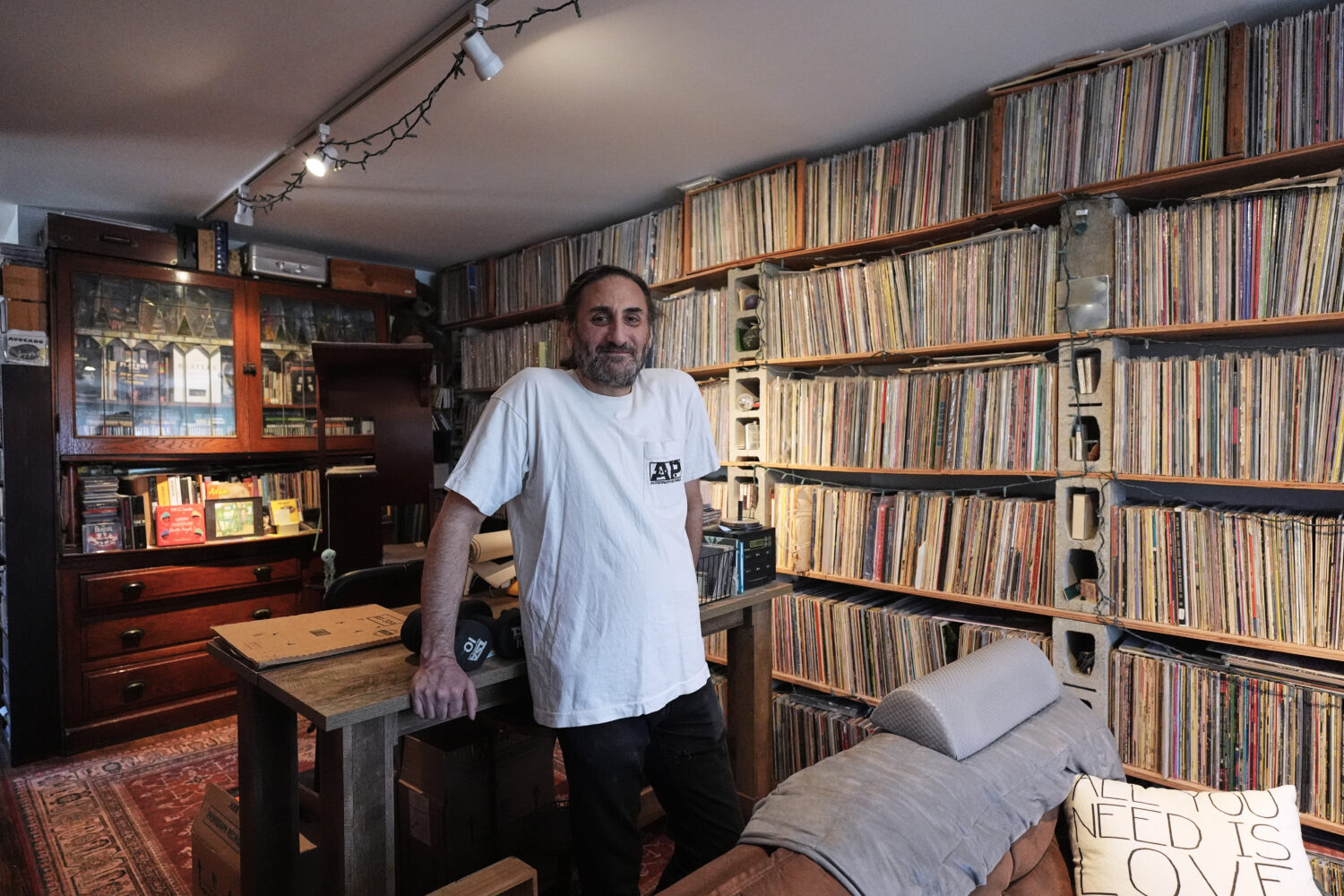
Aadam Jacobs poses in front of LP (long play) record storage bookcase at his home in Chicago, Thursday, March 19, 2026. (AP Photo/Nam Y. Huh)
Credit: ASSOCIATED PRESS
(AP Photo/Nam Y. Huh)

On July 8, 1989, a young music fan named Aadam Jacobs, with a compact Sony cassette recorder in his pocket, went to see an up-and-coming rock band from Washington for their debut show in Chicago.
After a blast of guitar feedback, 20-year-old Kurt Cobain politely announced to the crowd at the small club called Dreamerz: “Hello, we’re Nirvana. We’re from Seattle.” With that, the band, then a quartet, launched into the riff-heavy first song, “School.”
Jacobs surreptitiously recorded the performance, documenting the fledgling band in raw, fiery form more than two years before Nirvana’s global breakthrough with the album “Nevermind.”
Jacobs went on to record more than 10,000 concerts, with increasingly sophisticated equipment, over four decades in Chicago and other cities. Now a group of devoted volunteers in the U.S. and Europe is methodically cataloging, digitizing and uploading them one by one.
The growing Aadam Jacobs Collection is an internet treasure trove for music lovers, especially for fans of indie and punk rock during the 1980s through the early 2000s, when the scene blossomed and became mainstream. The collection features early-in-their-career performances from alternative and experimental artists like R.E.M., The Cure, The Pixies, The Replacements, Depeche Mode, Stereolab, Sonic Youth and Björk.
There’s also a smattering of hip-hop, including a 1988 concert by rap pioneers Boogie Down Productions. Devotees of Phish were thrilled to discover that a previously uncirculated 1990 show by the jam band is included. And there are hundreds of sets by smaller artists who are unlikely to be known to even fans with the most obscure tastes.
All of it is slowly becoming available for streaming and free download at the nonprofit online repository Internet Archive, including that nascent Nirvana show recording, with the audio from Jacobs’ cassette recorder cleaned up.
By the time Jacobs snuck his tape recorder into that Nirvana gig, he had been recording concerts for five years already. As a teen discovering music, Jacobs began taping songs off the radio.
“And I eventually met a fellow who said, ‘You can just take a tape recorder into a show with you, just sneak it in, record the show.’ And I thought, ‘Wow, that’s cool.’ So I got started,” Jacobs, now 59, recalled.
He doesn’t remember offhand what that first concert was in 1984, but he taped it with a tiny Dictaphone-type device that he borrowed from his grandmother. A short time later, he bought the Sony Walkman-style tape recorder. When that broke, he briefly used his home console cassette machine stuffed in a backpack that a generous soundman let him plug in.
“I was using, at times, pretty lackluster equipment, simply because I had no money to buy anything better,” he said. Later, he moved on to digital audio tape, or DAT, and, as technology progressed, to solid-state digital recorders.
Jacobs doesn’t consider himself obsessive or, as many call him, an archivist. He says he’s just a music fan. He figured if he was going to attend a few concerts a week anyway, why not document them? In the early years, he contended with contentious club owners who tried to prevent him from taping. But they eventually relented as he became a fixture in the music scene, and many began letting the “taper guy” in for free.
Author Bob Mehr, who wrote about Jacobs in 2004 for the Chicago Reader, calls him one of the city’s cultural institutions.
“He’s a character. I think you have to be, to do what he does,” Mehr said. “But I think he proved over time that his intentions were really pure.”
After a local filmmaker made a documentary about Jacobs in 2023, a volunteer with the Internet Archive reached out to suggest his collection be preserved. “Before all the tapes started not working because of time, just disintegrating, I finally said yes,” he said.
Once a month, Brian Emerick makes the trip from the Chicago suburbs to Jacobs’ house in the city to pick up 10 or 20 boxes each stuffed with 50 or 100 tapes. Emerick’s job is to transfer — in real time — the analog recordings to digital files that can be sent to other volunteers who mix and master the shows for upload to the archive. Emerick has a room devoted to his setup of outdated cassette and DAT decks.
“So many of the machines I find are broken. They’re trashed. And so I learned how to fix those, get them running again,” said Emerick. “Currently, I have 10 working cassette decks, and I run those all simultaneously.”
Emerick estimates he’s digitized at least 5,500 shows since late 2024 and that it will take another few years to complete the project. The digital files are claimed by a dozen or so volunteer-engineers in the U.S, U.K. and Germany who provide the metadata and clean up the audio. Among them is Neil deMause in Brooklyn, who said he’s constantly impressed by the audio fidelity of the original tapes, especially considering Jacobs was using “weird RadioShack mics” and other primitive equipment.
“Especially after the first couple years, he’s got it so dialed in that some of these recordings, on, like, crappy little cassette tapes from the early 90s, sound incredible,” deMause said.
Emerick pointed to a 1984 James Brown concert as a gem he discovered in the stacks.
Often, the hardest job is figuring out song titles. Occasionally, Jacobs kept helpful notes, but the volunteers frequently spend days consulting each other, searching and even reaching out to artists to make sure the setlists are accurately documented.
Jacobs said the majority of the artists he recorded are pleased to have their work preserved. As for copyright concerns, he’s happy to remove recordings if requested, but added that only one or two musicians so far have asked that their material be taken down.
“I think that the general consensus is, it’s easier to say I’m sorry than to ask for permission,” he said. The Internet Archive declined to comment for this story. David Nimmer, a longtime copyright attorney who also teaches at UCLA, said that under anti-bootlegging laws, the artists technically own the original compositions and live recordings. But since neither Jacobs nor the archive are profiting from the endeavor, lawsuits seem unlikely.
The Replacements, a foundational punk-alternative band, were so happy with Jacobs’ tape of a 1986 show that they mixed some of it in with a soundboard recording. They released it in 2023 as a live album as part of a box set produced by Mehr.
Jacobs stopped recording a few years ago as worsening health problems sapped his desire to go out and see concerts. But he still enjoys experiencing live music he finds online, much of it recorded by a new generation of fans.
“Since everybody’s got a cellphone, anybody can record a concert,” he said.