Hear an emergency alert Thursday? It’s the Great ShakeOut drill
Oct 15, 2026, 5:45 AM | Updated: 8:46 am

A graphic indicating what to do when an earthquake strikes. (Photo courtesy of Washington State Emergency Management)
(Photo courtesy of Washington State Emergency Management)
This Thursday, Oct. 15, is the worldwide Great ShakeOut earthquake and tsunami drill. More than 1.5 million in Washington have already registered to participate in this annual drill. Have you registered to join the fun? You can register on the Washington State Great ShakeOut registration page in just a few minutes.
Those who have already registered include families, businesses, schools, health care facilities, faith-based organizations, neighborhood groups, and more.
The Great ShakeOut is not just a Washington event, but a worldwide event. Millions around the globe will participate by practicing drop, cover, and hold under a desk, table, or other sturdy items in case of an earthquake.
This drill will help people practice what to do if a real earthquake strikes. In recent years, many have had fun at work, school, or elsewhere by taking photos and videos while under a table or desk and posting them on social media.
How the drill begins
The drill will begin when the Emergency Alert System (EAS) activates at 10:15 a.m. The National Weather Service’s NOAA Weather Radio network will broadcast it statewide, and all radio and TV broadcasters and cable systems will air it, including KIRO FM 97.3, Seattle Sports 710 AM, and 770 Seattle Red.
Earthquakes are no-notice events as opposed to significant weather events. They can happen at any time of day, whether you’re at home, at work, on the road, in school, or wherever you and your family may be.
For instance, people spend about a third of their lives asleep.
If in bed, stay there and cover your head with a pillow until the shaking stops. Have a pair of hard-soled shoes under the bed to put on after the quake. Many injuries happen when you walk barefoot in the dark. Also consider a flashlight, gloves, light sticks, and even a hard hat under your bed.
Daily life also occurs at work, school, shopping, or while traveling. Schools use this event as their October monthly emergency drill.
It is crucial to consider earthquake safety actions wherever you are when a quake strikes. Communication with loved ones and work staff is also important. Phone systems will likely be overwhelmed or out of service after a quake.
Having a backup communication plan can be critical. The Great ShakeOut drill offers the chance to practice your backup communication plan. Know in advance who to contact and how to reach them if phone and power systems go out of service, which is likely.
Also, if you haven’t already, download and use the ShakeAlert app for quakes farther away. The alert will give you a short window to prepare before the shaking begins.
Washington is earthquake country
Recent smaller earthquakes around Vancouver Island and across Western Washington are reminders that Washington is earthquake country, the second most threatened state in the nation behind California. Many earthquake faults run through the region, including the Tacoma fault, the Seattle fault, and the South Whidbey Island fault, and geologic history shows they can all produce 7.0 magnitude quakes or greater.
Then there is the Cascadia Subduction Zone, about 100 miles off the coast, stretching from northern Vancouver Island to northern California. The last time that earthquake zone “let go” was on January 26, 1700, with an estimated 9.0 magnitude tremor. Shaking lasted up to five minutes and generated a Pacific-wide tsunami, with waves inundating coastal regions and reaching into Western Washington’s interior waters.
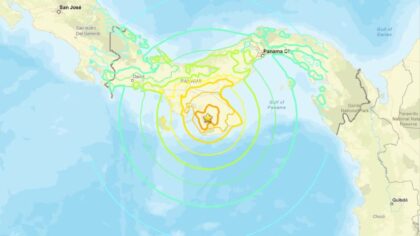
Geologists indicate this earthquake source releases pressure about every 300 to 500 years, meaning it could happen at any time. This subduction zone is similar to others around the Pacific Ocean basin, including the one off the coast of Japan that produced a major earthquake and tsunami in March 2011, and recently off eastern Russia and in Panama.
RELATED STORIES

Practice tsunami response during the Great ShakeOut
When a big earthquake occurs, it is also essential to know if you are in a low-lying coastal tsunami inundation hazard zone. Significant ground shaking may be the only warning before tsunami waves arrive.
Knowing evacuation routes in advance and where to go to higher ground, including vertical evacuation in multi-story buildings or towers, is imperative. Many outer Washington coastal schools, residents, and others also plan to practice walking their tsunami evacuation plans after the earthquake drill.
As part of the Great ShakeOut, the outdoor tsunami sirens will be tested with the actual ‘wailing’ sound on Thursday at 10:15 a.m. Emergency management authorities ask that you do not call 911 in response to the tsunami sirens.
Readiness tips
The annual Great Shakeout is an essential time to learn and practice the drop, cover, and hold response to an earthquake, and have fun doing it. In tsunami inundation regions, also practice the evacuation route by walking to higher ground.
For tips on easy steps to take to be more prepared for an earthquake, tsunami, significant weather, or other hazardous events, visit the Washington State Emergency Management’s 12 steps to Prepare in a Year Guide.
Also sign up for local alerts and learn more about earthquake early warning at mil.wa.gov/alerts.
Even simple steps to prepare for the next earthquake will help you prepare for the next major weather event as well.
To participate and learn more about the Great ShakeOut this Thursday, Oct. 15 at 10:15 a.m., register here.
Ted Buehner is the KIRO Newsradio meteorologist. Follow him on X and Bluesky. Read more of his stories here.