Where and when to watch the Perseid Meteor Shower
Aug 10, 2023, 9:30 AM | Updated: Aug 14, 2023, 2:13 pm
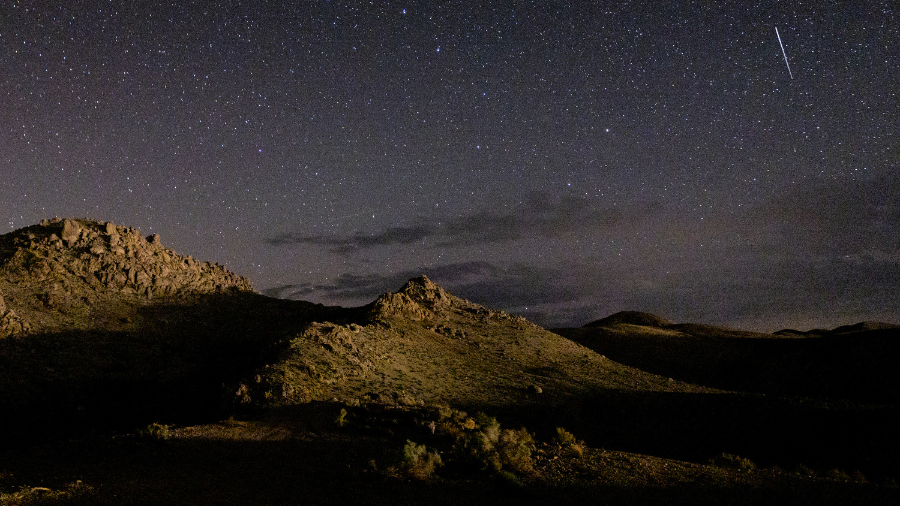
A meteor steaks across the sky over the Alabama Hills, near the eastern Sierras, during the annual Perseid meteor shower on August 20, 2022 near Lone Pine, California. The celestial event is seen each year from mid-July to late August. (Photo by David McNew/Getty Images)
(Photo by David McNew/Getty Images)
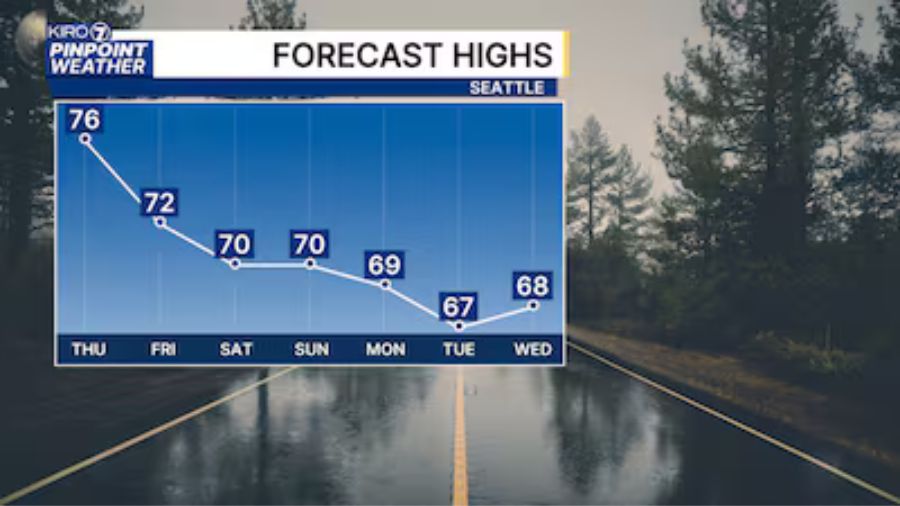
With clear skies and temperatures warming up again this weekend, night sky conditions will be ideal to view the peak of the Perseid meteor shower. Earth’s rotation around the sun carries the planet through the Perseids during the period of about July 17 through August 24.
However, the peak period to see the meteor shower occurs this weekend, on August 12 and 13.
More on Seattle weather: Seattle has ‘air-conditioned weather’ compared to rest of US
According to NASA, given Earth’s trajectory into the meteor stream, Perseid meteors will start to be seen hitting the planet’s atmosphere in the mid-to-late evening hours, peaking toward dawn. The best time of night to see the meteors is from midnight to near sunrise. To top it off, a waning crescent moon will allow for even the dimmest shooting stars to shine.
No special equipment is needed. Just find a wide-open sky and, even better, away from city lights. Your eyes may take as long as 20 minutes to adapt to the dark. In a dark sky, you may see up to 60 meteors per hour. Hang in there for at least an hour since the meteors tend to come in spurts interspersed with lulls.
Bring along a lounge chair with a blanket or a lawn blanket. A warm drink in a thermos may be helpful to tag along as well.
How the Perseid meteors got their name
The Perseid meteors are traced to the constellation Perseus, and hence the name of the meteor shower in honor of the constellation Perseus the Hero. In ancient Greek star lore, Perseus is the son of the god Zeus and the mortal Danaë. The Perseid shower commemorates the time when Zeus visited Danaë, the mother of Perseus, in a shower of gold. Quite the love story!
The stars in Perseus are light years away. There is no threat of the meteors reaching the Earth’s surface. The meteors are quite small and burn up about 60 miles above the planet’s surface, leaving wonderful streaks of light across the night sky.
More from Ted Buehner: A look at those behind the curtain supporting Seafair
So with the clear skies and little moonlight, there cannot be any more perfect conditions to view the Northern Hemisphere’s most popular meteor event – the Perseid meteor shower – than right now if you can’t view it this weekend, no worries. The meteor shower continues as it tapers off for the rest of this month.