SEATTLE NEWS ARCHIVES & FEATURES
Alternatives to spending $54 billion on more light rail
Sep 1, 2016, 8:54 AM | Updated: 10:26 am
Let me make the case real clear: Rejecting the Sound Transit 3 light rail proposition on Nov. 8 is not saying “no” to transit, it’s only saying no to a $54 billion bloated monstrosity that costs nearly twice the state budget. The plan is not convenient, it does not provide transit throughout, it does not carry a lot of people, it is not cost effective.
But you’ve heard me complain about all this before, and rather than dwell on the problem of the Sound Transit 3 plan, let’s look at the fact that there has simply got to be a better solution. Or better solutions.
Related: What to expect for Labor Day weekend ferry travel
The Sound 3 plan promises 62-miles of light rail over a 25-year period. It “also establishes bus rapid transit on I-405/SR 518 and SR 522/NE 145th; expands capacity and service of the Sounder south rail line; includes ST Express bus service; improves access to stations for bicyclists, pedestrians, drivers, and pick-up and drop-off services, and expands parking at stations.” And, did I mention, it will cost taxpayers $54 billion?
I asked Mark Ahlers, from the website Smarter Transit, about some alternatives to Sound Transit’s plan. Ahlers is not a professional. He’s not a government official. What he is is someone who loves urban planning and is a certified fan of transit. He’s traveled to 35 countries around the world to study their modes of transit.
Like me, Ahlers doesn’t believe that Sound Transit’s primary goal is to move people efficiently, nor is it cost effective. Ahlers compares Seattle’s costs to multiple other cities, including Vancouver. Ahlers calculated that light rail cuts Vancouver’s operating costs by 65 percent compared to buses, while Seattle light rail increases costs by 74 percent compared to bus travel. He found that the Canada line is 4.2-times cheaper to build per ride than Seattle Central Link Light Rail. And, what’s more remarkable, the construction conditions were phenomenally more difficult in Vancouver.
“When Vancouver builds light rail, they do it to reduce the operating cost,” Ahlers told me. “Sound Transit builds light rail and it increases the operating cost per passenger mile. That’s unheard of. I’ve searched to find other cities where the same thing happens.”
Ahlers recommends Seattle instead consider the transit models used in areas such as Brisbane, Australia, and Portland. Here’s what Ahlers would do:
1. Like in Brisbane, take the outside lanes of the freeway and turn them into bus lanes, building a bunch of stations along the way. Brisbane is moving 160,000 daily riders. Central link has 38,000 daily weekday riders.
2. Double-decker buses: They’re more economical than a traditional bus. Maintenance costs are less and the travel is more comfortable with the airplane, high-back seats. The 80-seat buses have a similar capacity to a light-rail train car and cost about $1 million, as opposed to the $6 million for a single light-rail car.
3. Vanpools: These have the lowest operating and maintenance costs of any option — 4.3-times cheaper than light rail and three-times less than express buses.
In Ahlers’ world, Seattle would feature dedicated bike areas and self-driving cars that would lead people to bus-rapid transit areas that are serviced by double-decker buses. This would cut costs tremendously and more than quadruple capacity of the current train system.
Not a bad thought, right?
Driverless cars
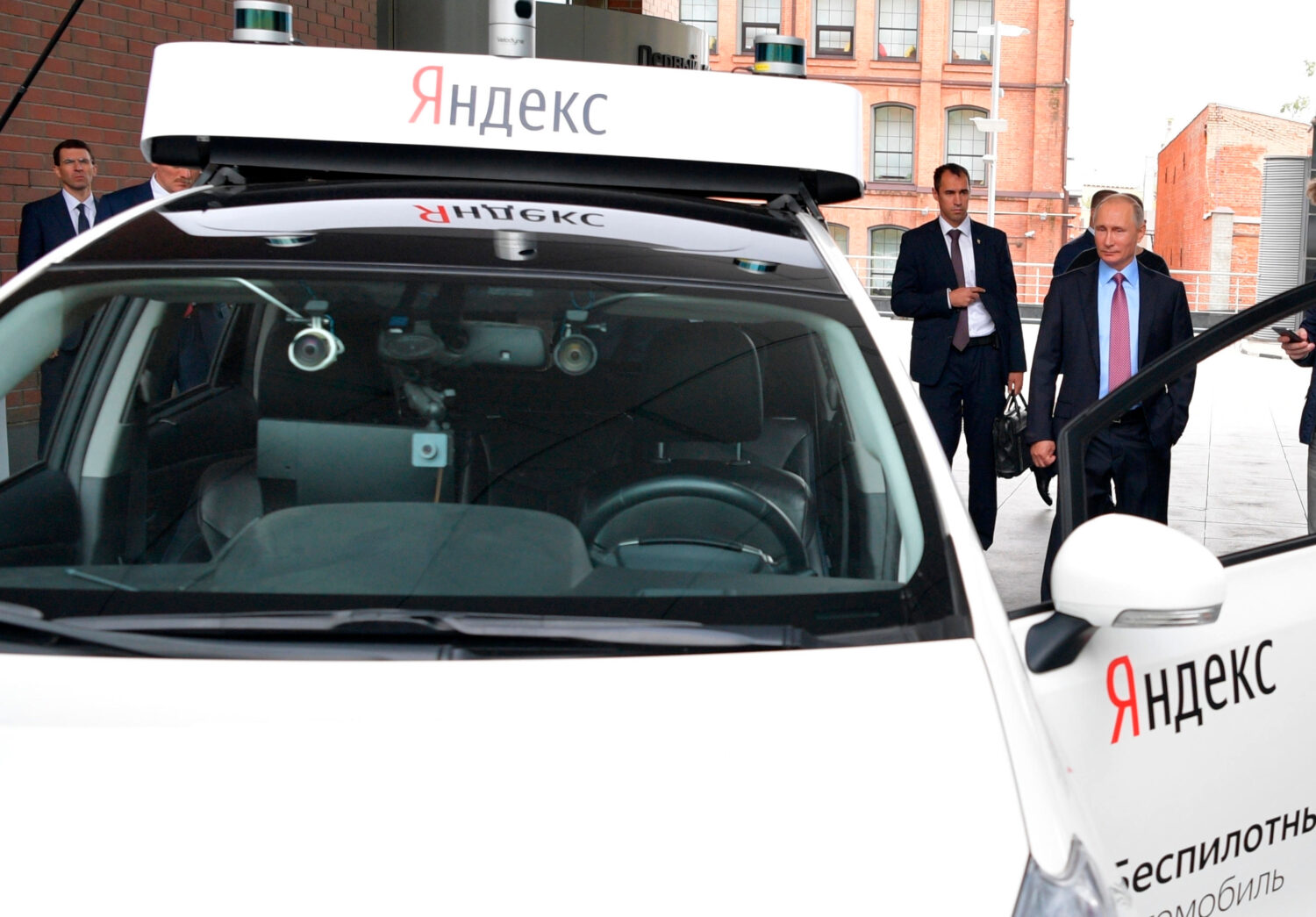
To me, it’s Ahlers’ thoughts on the driverless cars that throw the biggest wrench into Sound Transit’s plan.
In my opinion, the purpose of this rail is to ensure government jobs — highly inflated government jobs. Part of that reasoning is because city officials see driverless cars coming around the bend. Ahlers explained that one of North America’s biggest transit problems is that most areas don’t have enough adequate population density, which makes the cost of moving people very high. That makes sense, as I often see 40-seat buses go by on rush-hour with five people aboard. It’s a waste. The driverless technology is already here and is a potentially huge cost-saver. Some countries are already using driverless buses. As Ahlers explained, driverless cars better match capacities with people.
“It’s absolutely going to revolutionize transit, making it much more cost-effective,” he said.
So instead of investing our future in the past, I say we redirect — let’s get into being the technology leader that we are. We’ve got Google, Facebook, Microsoft and Uber up here. Let’s be the leaders to use these driverless cars to get people out of their neighborhoods, to make short trips or van pools, to move people into feeder areas and then onto bus rapid-transit. Ahlers says we could immobilize bus rapid transit with those double decker buses two or three years – rather than 40 years.
And, if driverless cars already blow your mind, let me lay one more crazy notion: In our time, we will see flying cars. You think that’s George Jetson, but you will see small, tiny landing airports, where people fly in with their flying cars from Redmond, Woodinville or North Bend and land at little Microsoft mini ports. Consider that future compared to fixed rail, which will be paying for forever.
Remember, once those tracks are laid, we’re stuck.