As the US and China form AI blocs, countries are increasingly torn between them
Oct 24, 2026, 9:05 PM
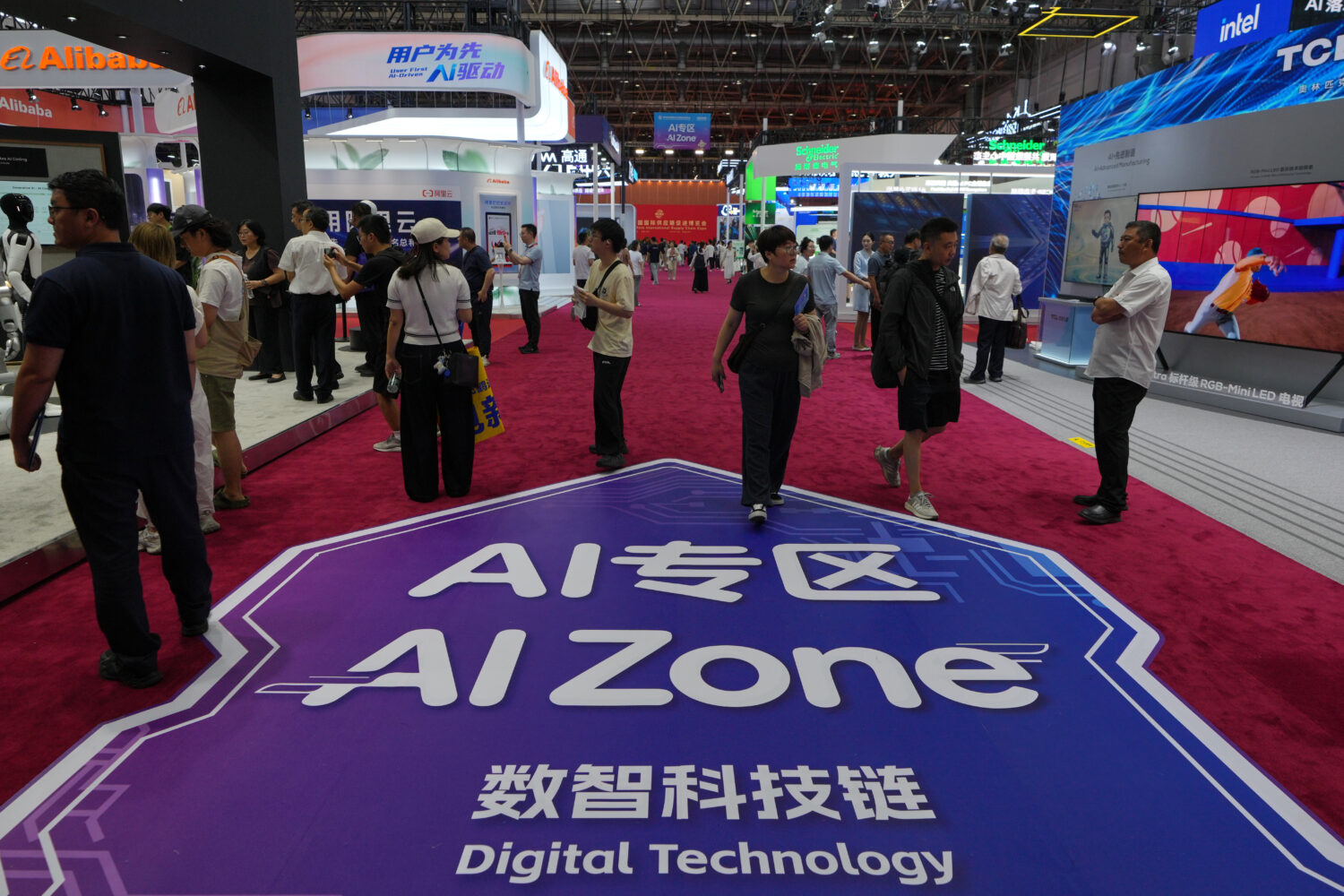
FILE - Visitors tour the exhibition booths operated with Artificial Intelligence (AI) at the China International Supply Chain Expo in Beijing on June 25, 2026. (AP Photo/Andy Wong, File)
Credit: AP Photo/Andy Wong
(AP Photo/Andy Wong, File)

HONG KONG (AP) — With the two leading AI powers, the United States and China, forming their own AI blocs, other countries are maneuvering to harness the strengths of both groupings and avoid losing out.
As the rivalry intensifies, experts say the window for countries to be able to choose freely between the two AI superpowers may be narrowing, forcing them to at one point pick between the U.S.-led Pax Silica and the China-inspired World AI Cooperation Organization.
That could put many countries in a dilemma: Do they go with the U.S.’s most advanced chips and AI technologies, or join China’s more affordable, open-source AI systems?
Kazakhstan, a Central Asia nation of about 21 million people, is a rare example of a country that has sought to bridge that gap.
Just three weeks after its AI minister Zhaslan Madiyev visited Washington in June to join the U.S. group working to strengthen AI supply chains, he headed to Shanghai for a signing ceremony making the Central Asian country a founding member of China’s initiative to shape the global AI agenda.
Being in Pax Silica means more technological partnerships, high-tech manufacturing jobs and a place in global AI supply chains. At the same time, as part of China’s World AI Cooperation Organization alongside 28 other initial founding countries including Pakistan and Russia, Kazakhstan hopes to also have a voice in setting regional and global AI standards.
“Everyone is hedging,” said Dana Masalimova, a former Kazakhstan diplomat and independent scholar and center associate at the Kathryn W. and Shelby Cullom Davis Center for Russian and Eurasian Studies at Harvard University.
“We don’t want this binary choice,” Masalimova said.
Kazakhstan is benefiting from both U.S. and Chinese investments, but is in a “very precarious spot,” she said,
It has rich critical mineral resources essential to AI development and has cheap electricity to power data centers, which have become politically fraught in the U.S.
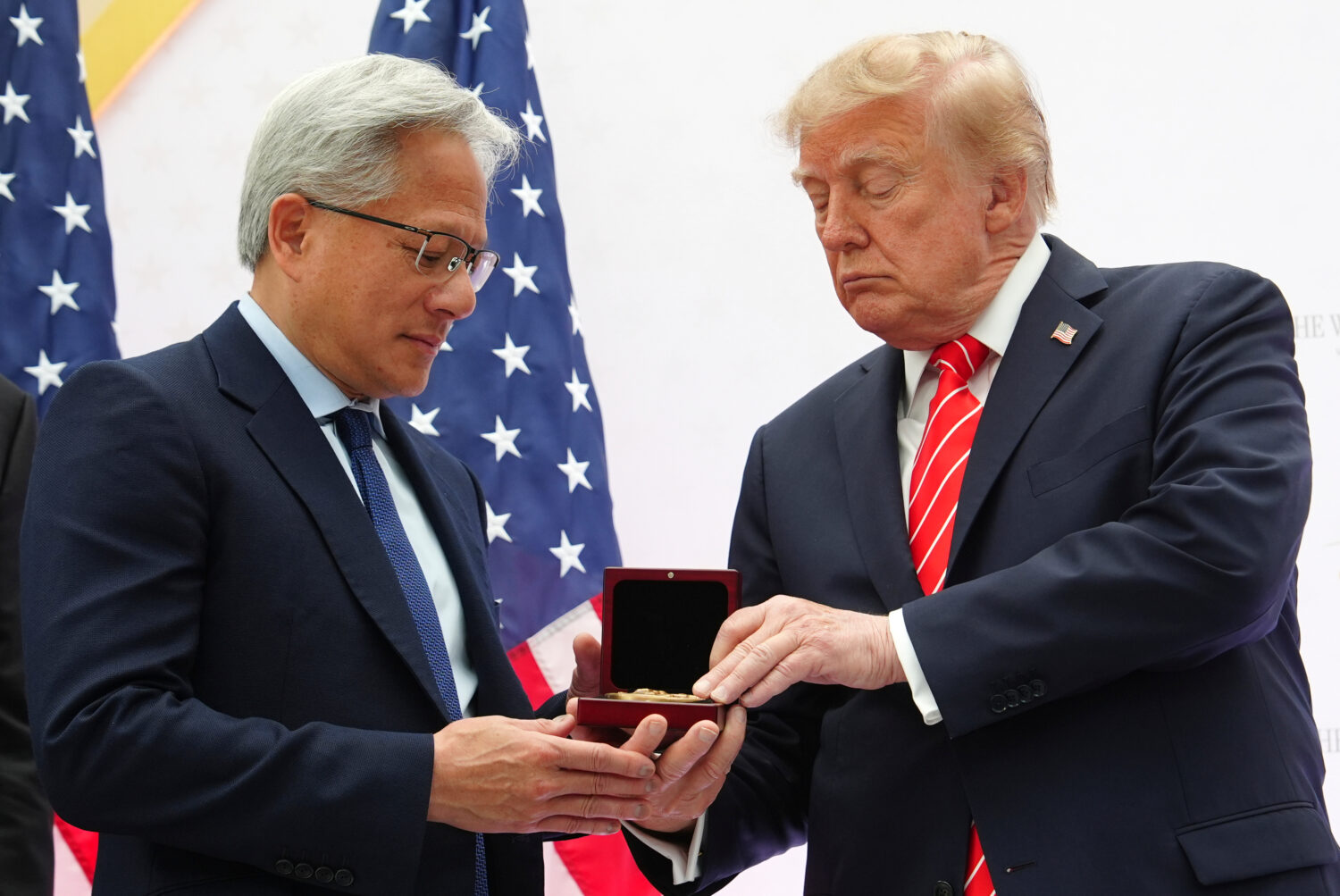
Earlier this year, Kazakhstan’s government signed an investment deal worth up to $10 billion involving Nvidia to build a “data center valley” in the country.
Meanwhile, more Chinese companies are investing in Kazakhstan. Local officials say Chinese foreign direct investment in Kazakhstan reached a record $2.8 billion in 2025. Chinese leader Xi Jinping met with Kazakh President Kassym-Jomart Tokayev in July to expand cooperation under China’s global infrastructure building Belt and Road initiative.
Both China and the U.S. are leveraging access to AI to increase their global influence.
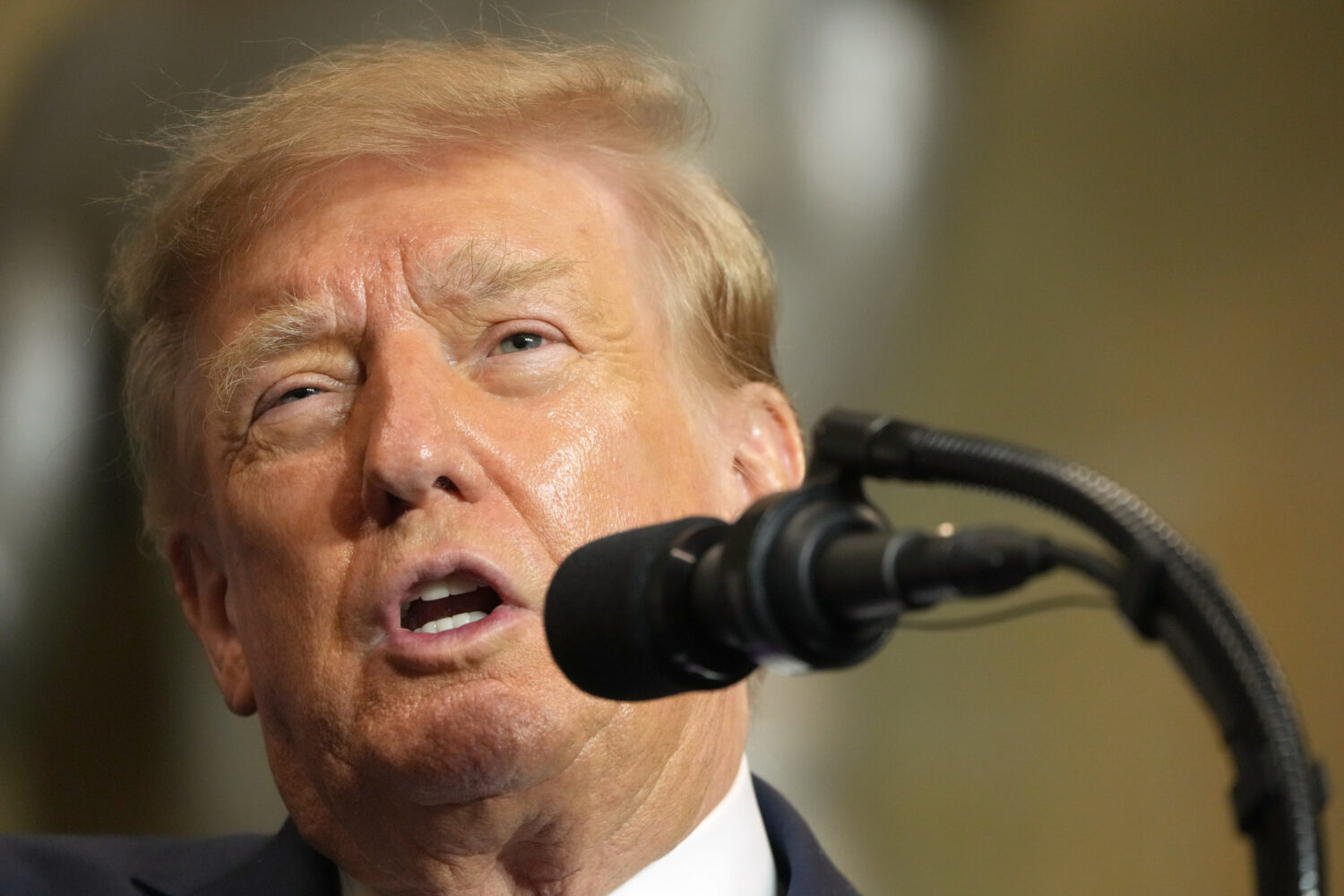
President Donald Trump insisted last month that “whoever wins AI, wins.” U.S. officials and AI companies have accused China of large-scale “distillation,” or extraction of capabilities, from frontier American models.
Beijing has rejected those claims and says the U.S. is pursuing an AI monopoly while restricting China’s access to some of the world’s most cutting-edge AI chips and chipmaking machinery.
Washington has signaled that Pax Silica — with China as its implicit target — is only for the trusted.
“Countries can’t be trusted partners in Pax Silica while substantively engaging in initiatives that advance a competing vision for super intelligence,” the U.S. State Department said, using the Trump administration’s new preferred term for AI.
For its part, Beijing touts the openness and inclusiveness of its World AI Cooperation Organization. “As both major countries in AI, China and the United States should leverage respective strengths in AI rather than guarding against each other,” the Chinese embassy in Washington said in a statement. “AI should not be owned by major countries.”
The two AI powers have different messaging largely because Beijing needs to court third countries in its bid to build an alternative coalition, whereas Washington already has a powerful network of allies, said Kyle Chan, a fellow at The Brookings Institution’s John L. Thornton China Center.
That lends power to what he described as “swing countries.”
Like Kazakhstan, Indonesia has resources vital for AI and other technologies, such as nickel and copper. It’s also seeking to make the most of both AI powers, having joined China’s World AI Cooperation Organization.
Indonesia wants to benefit from both, Mari Pangestu, Indonesian National Economic Council’s vice chair, told reporters at a University of Hong Kong Business School event. “We should be able to be part of both, put it that way. And choose the best system.”
U.S. AI firms are bringing investments to other countries like Singapore, where Anthropic is setting up its latest Asia office. The city-state says it is also considering joining China’s AI organization.
In Saudi Arabia, the AI startup Humain unveiled in September a platform built on an open model by a Chinese AI company. The kingdom also has a deal with Nvidia to expand AI computing with its advanced chips.
France, one of the most ambitious AI developers aside from the U.S. and China, is attempting to go its own way with its startup Mistral, whose new model released this month outperforms some advanced Chinese models.
Japan is closely aligned with the U.S. on strategic and security issues, including advanced semiconductors, trusted AI and standards. But it will not reject the more affordable Chinese AI models for “lower-risk applications,” said Takahiro Tsuchiya, a professor at Kyoto’s University of Foreign Studies.
For countries like the U.K. and Germany which have substantial economic and military capacity but no self-developed powerful frontier AI models of their own, aligning with the U.S. may be vital for their access to data centers and chip deals with U.S. companies, said Anton Leicht and Sam Winter-Levy at the Carnegie Endowment for International Peace.
Essentially, their access to advanced AI systems “depends on the whims of policymakers in Washington and Beijing,” they said, while those countries may have limited influence over AI’s future.
China, meanwhile, has been closing the technology gap with the U.S. when it comes to chipmaking and advanced AI capabilities, but it still trails top U.S. technological capabilities, at least for now.
Also, Beijing’s open-source approach allows countries to be less reliant on the U.S., and China has been providing funding for developing countries to develop their own AI ecosystems, said Alberto Lemma, a research fellow at the think tank ODI Global.
To date, China has provided official sector grants and loans for project and activities that use or enable AI technologies in at least 77 low- and middle-income countries, according to the AidData research lab at William & Mary, a public university in Virginia. Some top recipients include Nigeria, Zambia, Ghana, Bangladesh, Senegal, Cameroon, and Kenya. Public perceptions are also changing. Recent study results from Pew Research Center have shown that people in middle-income countries are becoming more positive and trusting of China when it comes to AI and the technology’s regulation.
All things considered, many countries “don’t want to pick a side … because there are advantages and disadvantages to each technology stack,” said Aalok Mehta, director of the Wadhwani AI Center at the Center for Strategic and International Studies.
Most countries may eventually lack a good option since they cannot compete on building AI frontier models, but “every country in the world in some way or another is thinking about AI sovereignty,” he said. After all, “maybe no other country than the U.S. and China can really build these very large, powerful models.”
___
Tang reported from Washington.