Here are the Iran war’s biggest unknowns, from Tehran’s new leader to oil prices
Mar 9, 2026, 11:25 AM
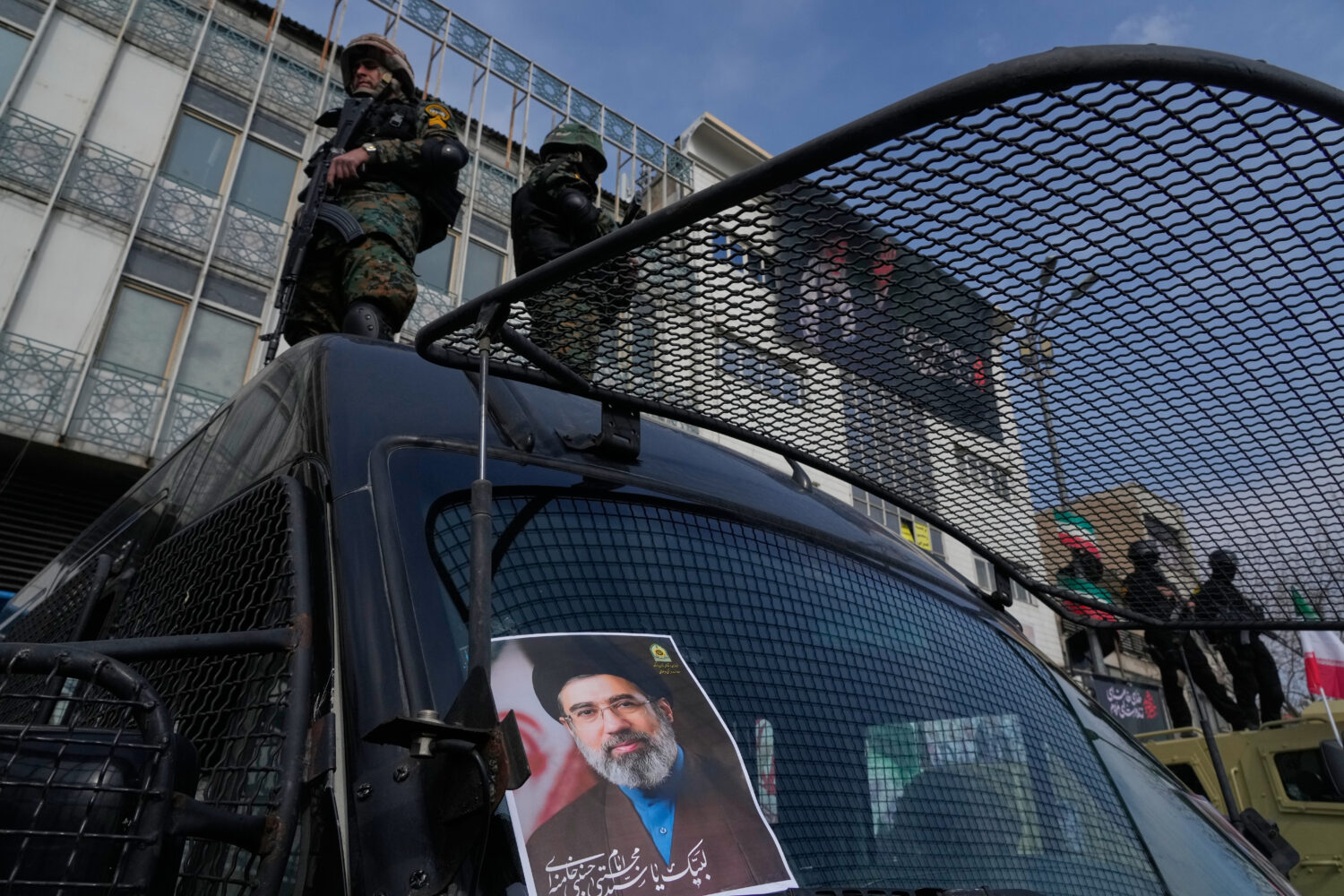
A poster of Ayatollah Mojtaba Khamenei, the successor to his late father Ayatollah Ali Khamenei as supreme leader is placed on an anti-riot police car as policemen stand on top of the car, during a rally to support him in Tehran, Iran, Monday, March 9, 2026. (AP Photo/Vahid Salemi)
Credit: ASSOCIATED PRESS
(AP Photo/Vahid Salemi)

TEL AVIV, Israel (AP) — How long will the Iran war last? What do all sides want to achieve? And how high will oil prices go? Big questions remain as fighting enters week two.
Israel and the United States keep pounding Iran. And Iran keeps carrying out retaliatory attacks against Israel, U.S. military assets in the Middle East and its Arab neighbors.
Here’s what we know about the war, and don’t.
The U.S. and Israel attacked Iran on Feb. 28, and there is no sign of the fighting ending soon. Iran’s president has said mediation was underway, although he didn’t give details.
Iran’s new supreme leader is the son of the previous one and seen as more hard-line, with close ties to the Revolutionary Guard, the nation’s most powerful armed force. Mojtaba Khamenei worked closely with his father, who was killed in the war’s opening strikes along with the younger Khamenei’s wife. He has not been seen or heard publicly in his new role, making it difficult to know whether he has interest in talks or in defiance.
Iran’s war strategy of causing regional chaos shows no change. Persian Gulf countries still report areas being attacked, including oil facilities and airports, that are well away from U.S. military assets.
The war’s length depends in part on Iran’s stockpile of missiles and drones and countries’ capability to deflect them. Israel’s military on Monday said Iran was firing barrages with dozens of missiles in the early days, but now there are less than 10 or 20 at a time.
Israeli army spokesperson Lt. Col. Nadav Shoshani said Iran still has “a significant amount” of missiles. Experts say Iran could be holding missiles in reserve, perhaps hoping that interceptors run low.
Iran has not provided information about military losses. Israel says it is focused on destroying long-range missiles while the U.S. focuses on short-range ones threatening the Gulf. Israel estimates that 60% of both types of launchers have been destroyed.
Israel’s military is bulking up. It said about 50 cargo aircraft carrying over 1,000 tons of weaponry, military equipment and munitions have landed in the past 10 days, and cited the U.S. and Germany as partners in an effort that is “expected to scale up.”
Ahead of the attacks, the U.S. military built up its largest force of warships and aircraft in the Middle East in decades. The Central Command on Monday said “there is no shortage of American military will.”
The Trump administration and Israel have said the war will go as long as needed, but public frustration over oil prices and other economic pain could intensify pressure to wind down the conflict.
Iran has said it wants an end to the war, not a ceasefire.
An official with knowledge of the war’s operations said Israel is not in charge of the postwar plan, but the goal is to remove the regime and let Iranians “grasp their fate.” The official spoke on condition of anonymity because they were not authorized to speak to the media. Israel is also attacking Iranian-backed proxies like Hezbollah.
U.S. President Donald Trump has made conflicting statements. The war has been about Iran’s nuclear program and concerns that it could take a short technical step to enrich uranium to weapons grade. But it also has been about eradicating the threat from the country’s ballistic missiles, which Secretary of State Marco Rubio says the U.S. is “well on our way” to achieving.
Trump has also said he doesn’t seek regime change, but prioritized taking out several layers of Iran’s top leadership and has encouraged Iranians to “take over” their government.
There is no sign of that happening in Iran, with no strong organized opposition, evidence of high-level defections or street protests. Internet restrictions are complicating views of what’s happening.
Saudi Arabia has issued a sharp statement saying Tehran would be the “biggest loser” if it continues to attack Arab states. Azerbaijan threatened “retaliatory measures” after it said Iranian drones hit its territory.
There is big risk in joining the U.S. and Israel’s attacks, and no country has announced taking that step. Already, they have been targeted by hundreds of Iranian missiles and drones.
Iran has exposed the fragility of the global economy by targeting key energy and other infrastructure. A drone strike on a desalination plant in Bahrain underscored the vulnerability of Gulf nations, which rely heavily on such facilities for drinking water.
Meanwhile, France is sending military vessels to the Middle East to help deter Iran’s attacks. Britain and Germany also have said they would help reduce Iran’s ability to launch them. And Ukraine is sending experts to help in countering drones.
This is especially complicated, as both Israel and the United States have threatened whoever Iran puts in charge. Trump called the younger Khamenei “unacceptable” even before his elevation to supreme leader.
It is not clear who would be acceptable, and negotiating the war’s end seems out of reach for now.
Trust will be difficult, since this war and last year’s were launched during indirect talks between Iran and the United States.
As Iran announced its new supreme leader, crude oil prices were soaring above $100 a barrel. They spiked near $120 before falling Monday.
The Strait of Hormuz off Iran is a choke point, with about 20% of the world’s oil supply normally transiting daily. Cargo ships are now backed up there.
Saudi Arabia has intercepted attacks aimed at its vast Shaybah oil field. Bahrain’s national oil company has declared force majeure for shipments, unable to meet obligations because of extraordinary circumstances after an attack on its refinery complex. Iraq, Kuwait and the United Arab Emirates have cut oil production as storage tanks fill.
Iran’s oil facilities are also targets. Israel struck depots over the weekend.
Countries are scrambling. France, currently leading the Group of Seven nations, says they could dip into emergency stockpiles. South Korea says it will cap oil prices. China says everyone has a responsibility “to ensure stable and smooth energy supplies.”
Alex Kuptsikevich, chief market analyst at FxPro, said it “would not be surprising” if oil prices briefly push above $150 as early as next week.
___
Anna reported from Lowville, New York. Wyatte Grantham-Philips in New York and Melanie Lidman in Jerusalem contributed.