Iran’s rial currency falls to near-record lows on European ‘snapback’ sanctions threat
Aug 28, 2025, 1:22 AM | Updated: 1:34 pm
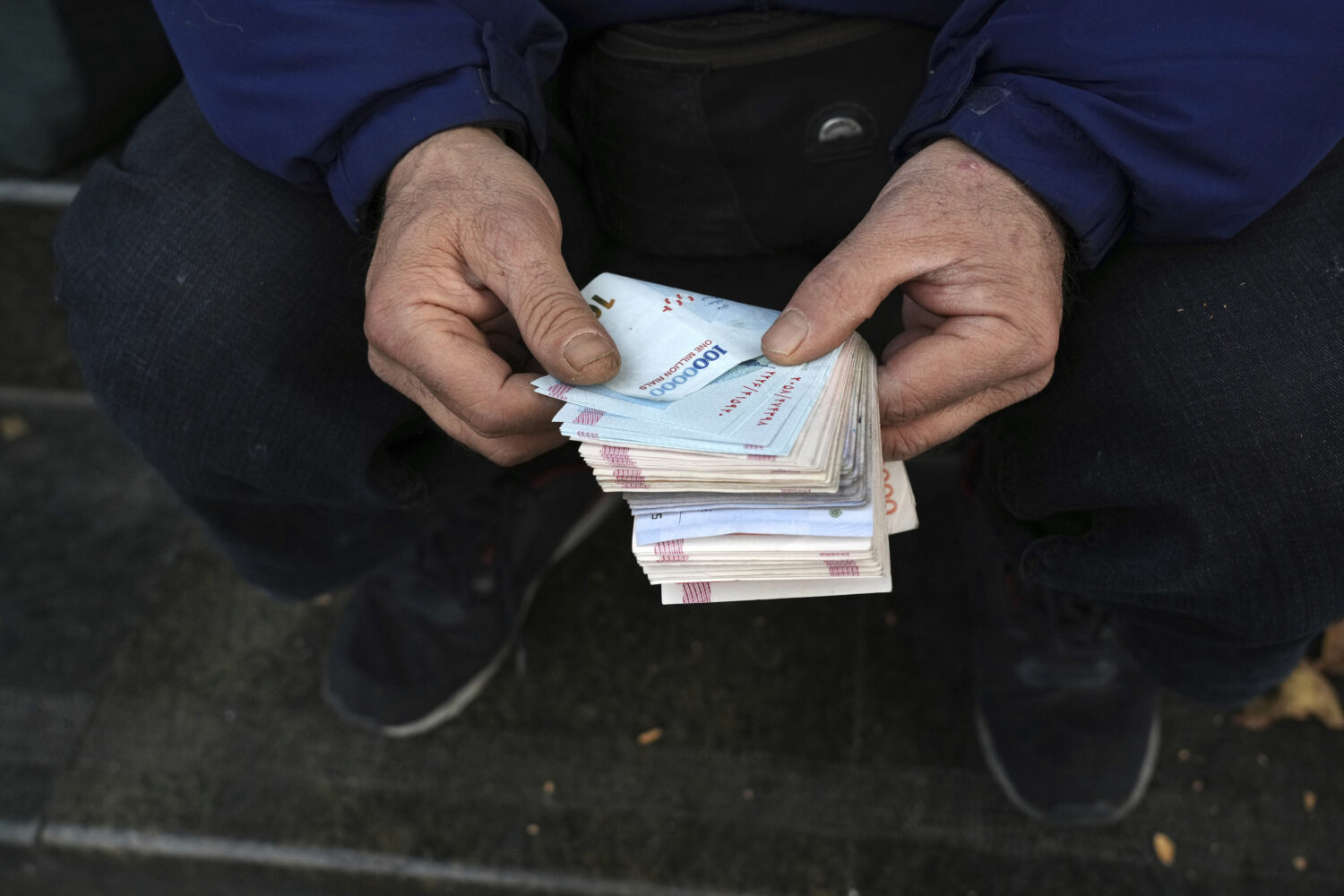
FILE - A street money exchanger poses for a photo without showing his face as he counts Iranian banknotes at a commercial district in downtown Tehran, Iran, Friday, Dec. 23, 2022. (AP Photo/Vahid Salemi, File)
Credit: ASSOCIATED PRESS
(AP Photo/Vahid Salemi, File)

DUBAI, United Arab Emirates (AP) — Iran’s rial currency fell to near-record lows Thursday as concerns grew in Tehran that European nations will start a process to reimpose United Nations sanctions on the Islamic Republic over its nuclear program, further squeezing the country’s ailing economy.
The move, termed the “snapback” mechanism by the diplomats who negotiated it into Iran’s 2015 nuclear deal with world powers, was designed to be veto-proof before the world body and would be likely to go into effect after a 30-day window. If implemented, the measure would again freeze Iranian assets abroad, halt arms deals with Tehran and penalizes any development of its ballistic missile program, among other measures.
In Tehran on Thursday, the rial traded at over 1 million to $1. At the time of the 2015 accord, it traded at 32,000 to $1, showing the currency’s precipitous collapse in the time since. The rial hit its lowest point ever in April at 1,043,000 rials to $1.
France, Germany and the United Kingdom warned Aug. 8 that Iran could trigger snapback when it halted inspections by the International Atomic Energy Agency after Israeli strikes at the start of the two countries’ 12-day war in June. Israeli attacks then killed Tehran’s top military leaders and saw Supreme Leader Ayatollah Ali Khamenei go into hiding.
Seeking to use the “snapback” mechanism likely will raise tensions further between Iran and the West in a Mideast still burning over the Israel-Hamas war in the Gaza Strip.
“The U.S. and its European partners see invoking the ‘snapback’ as a means of keeping Iran strategically weak and unable to reconstitute the nuclear program damaged by the U.S. and Israeli strikes,” the New York-based Soufan Center think tank said Thursday.
“Iranian leaders perceive a sanctions snapback as a Western effort to weaken Iran’s economy indefinitely and perhaps stimulate sufficient popular unrest to unseat Iran’s regime.”
Iran initially downplayed the threat of renewed sanctions and engaged in little visible diplomacy for weeks after Europe’s warning, but has engaged in a brief diplomatic push in recent days, highlighting the chaos gripping its theocracy.
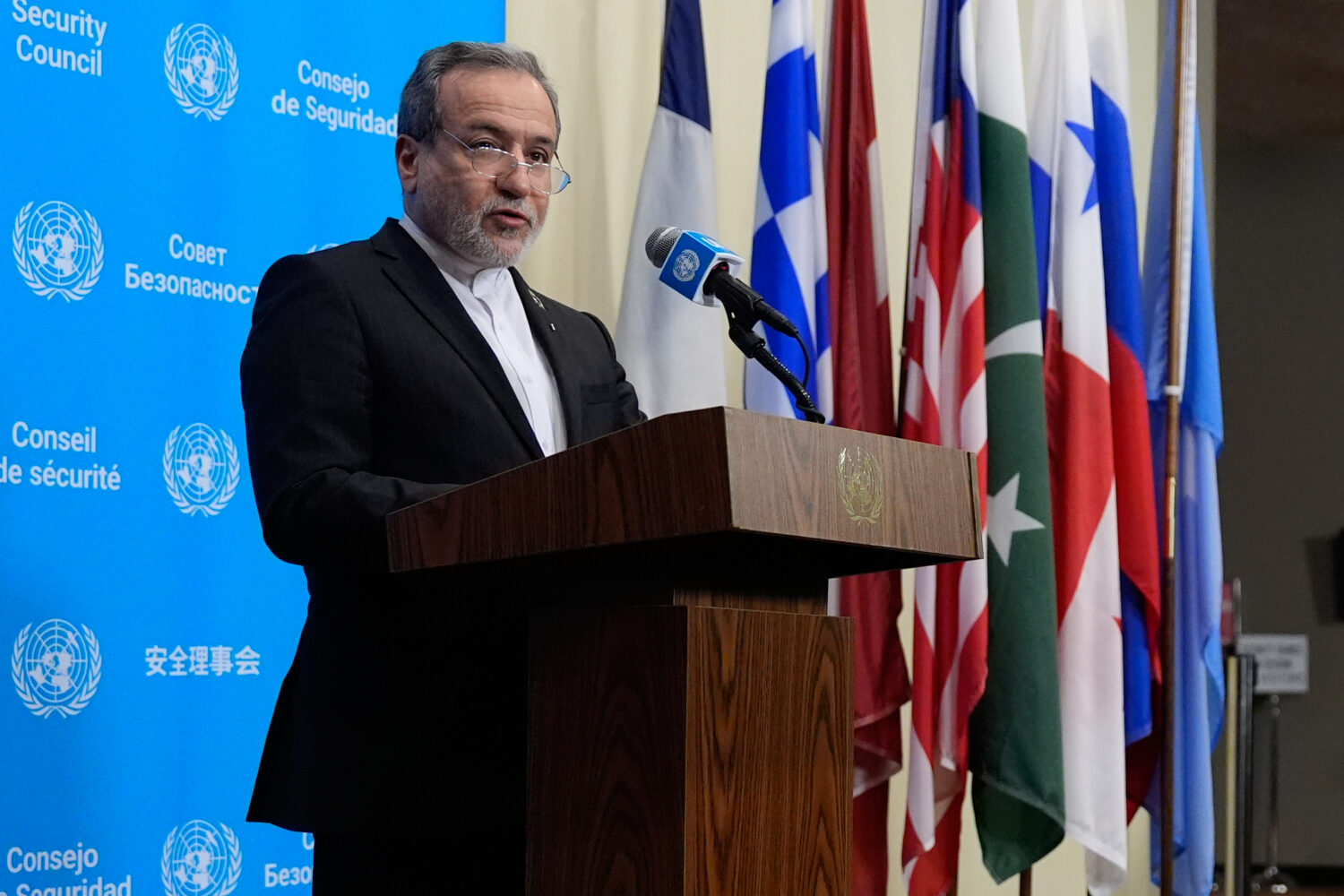
Foreign Minister Abbas Araghchi, speaking last week, signaled Iran’s fatalistic view of its diplomacy with the West, particularly as the Israelis started the war just as a sixth round of negotiations with the United States were due to take place.
“Weren’t we in the talks when the war happened? So, negotiation alone cannot prevent war,” Araghchi told the state-run IRNA news agency. “Sometimes war is inevitable and diplomacy alone is not able to prevent it.”
Before the war in June, Iran was enriching uranium up to 60% purity, a short, technical step away from weapons-grade levels of 90%. It also built a stockpile containing enough highly enriched uranium to build multiple atomic bombs, should it choose to do so.
Iran long has insisted its program is peaceful, though Western nations and the IAEA assess Tehran had an active nuclear weapons program up until 2003.
It remains unclear just how much the Israel and U.S. strikes on nuclear sites during the war disrupted Iran’s program.
Under the 2015 deal, Iran agreed to allow the IAEA even greater access to its nuclear program than those the agency has in other member nations. That included permanently installing cameras and sensors at nuclear sites. Other devices, known as online enrichment monitors, measured the uranium enrichment level at Iran’s Natanz nuclear facility.
The IAEA also regularly sent inspectors into Iranian sites to conduct surveys, sometimes collecting environmental samples with cotton clothes and swabs that would be tested at IAEA labs back in Austria. Others monitor Iranian sites via satellite images.
But IAEA inspectors, who faced increasing restrictions on their activities since the U.S. unilaterally withdrew from Iran’s nuclear deal in 2018, have yet to access those sites. Meanwhile, Iran has said it moved uranium and other equipment out prior to the strikes — possibly to new, undeclared sites that raise the risk that monitors could lose track of the program’s status.
On Wednesday, IAEA inspectors were on hand to watch a fuel replacement at Iran’s Bushehr nuclear reactor, which is run with Russian technical assistance.
In their Aug. 8 letter, the three European nations warned Iran they would proceed with “snapback” by the end of August if Tehran didn’t reach a “satisfactory solution” to the nuclear issues. That’s left little time for Iran to likely reach any agreement with the Europeans, who have grown increasingly skeptical of Iran over years of inconclusive negotiations over its nuclear program.
The deal’s snapback mechanism would expire Oct. 18, which put the three European nations in a situation where they likely feel now is the time to act. Under snapback, any party to the deal can find Iran in noncompliance, triggering renewed sanctions.
After it expires, any sanctions effort would face a veto from U.N. Security Council members China and Russia, nations that have provided some support to Iran in the past but stayed out of the June war. China as well has remained a major buyer of Iranian crude oil, something that could be affected in “snapback” happens.
Russia in recent days has floated a proposal to extend the life of the U.N. resolution granting the “snapback” power. Russia also is due to take the presidency of the U.N. Security Council in October, likely putting additional pressure on the Europeans to act.
___
Associated Press writer Amir Vahdat in Tehran, Iran, contributed to this report.
___
The Associated Press receives support for nuclear security coverage from the Carnegie Corporation of New York and Outrider Foundation. The AP is solely responsible for all content.
___
Additional AP coverage of the nuclear landscape: https://apnews.com/projects/the-new-nuclear-landscape/