Mexico resumes livestock sales to US under tight controls over screwworm risk
Aug 22, 2026, 2:59 AM
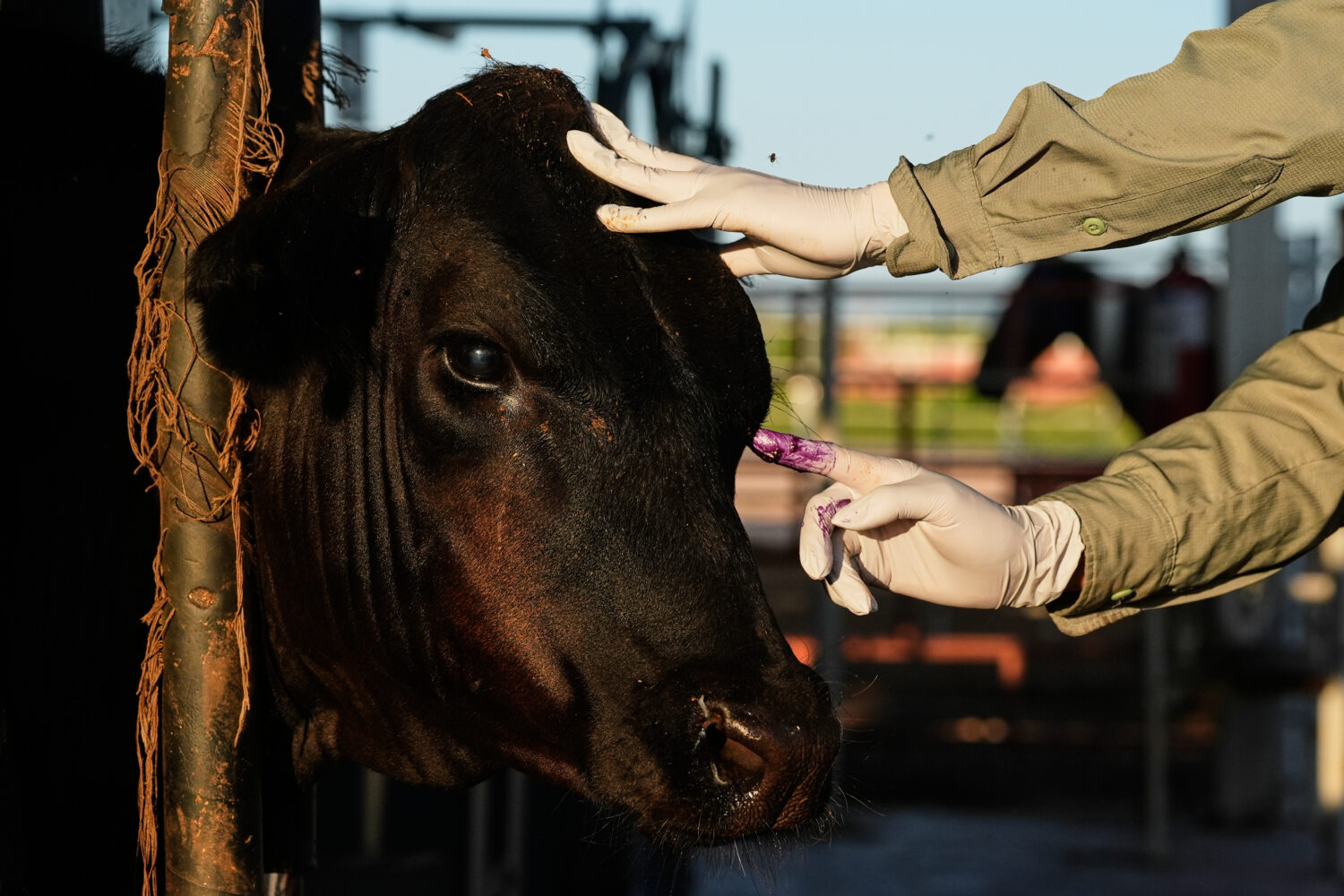
A veterinarian applies antibiotics to a calf's injured eye during an inspection for export to the United States at a regional cattle ranchers' association in Hermosillo, Mexico, on Tuesday, Aug. 18, 2026. (AP Photo/Fernando Llano)
Credit: AP Photo/Fernando Llano
(AP Photo/Fernando Llano)

HERMOSILLO, Mexico (AP) — At daybreak, rancher Martín Alfonso Ibarra takes advantage of the cooler hours in northern Mexico’s desert to oversee the milking of his cows and tend to 16 prized calves. Soon, he hopes, they will be headed north to the United States as a yearlong ban on Mexican cattle imports comes to an end.
The ban, imposed over concerns about a flesh-eating parasite known as the New World screwworm fly, dealt a blow to cattle and beef industries on both sides of the border, exacerbating a livestock shortage in the U.S. and hurting a Mexican ranching sector already weakened by drought and a cattle export business that generated $1.2 billion for Mexico last year.
Now, the U.S. is set to resume livestock imports from Mexico beginning Aug. 24 at the Douglas, Arizona, border crossing, which borders Agua Prieta in Mexico’s Sonora state. If the reopening goes smoothly, the U.S. Department of Agriculture could allow imports through additional ports, though shipments will initially be subject to restrictions aimed at preventing the spread of the parasite — which has already crossed the border, with authorities battling cases in Texas and New Mexico.
The screwworm gets its name from the maggots’ habit of burrowing — or screwing — into a wound, according to the USDA Animal and Plant Health Inspection Service. Any warm-blooded animal, including wildlife, pets and occasionally even humans, can be infested.
In Mexico, the screwworm outbreak was detected in November 2024 and has spread to 30 of the 32 states — most recently in Sonora, where the first case was reported Wednesday in the community of Munihuasa, near the borders with Chihuahua and Sinaloa, states where infections have also proliferated.
To date, Mexico has 1,969 active screwworm cases, which represent less than half of the infections reported a year ago, a decline that authorities say shows progress in containing the outbreak. Still, they acknowledge eradication will take time.
Against that backdrop, Ibarra and thousands of other ranchers in the northern state of Sonora are preparing to resume live cattle exports. But optimism is tempered by new U.S. controls expected to slow shipments across the border.
“This is not over yet,” said the 58-year-old rancher, adding that the export halt cut his income by 40% last year.
According to the protocol defined by U.S. authorities, in the first week of reopening, only 700 cattle per day will be allowed through; this will rise to 900 in the second week and will gradually increase until reaching 1,300 cattle per day, veterinarian Arturo Ruiz, responsible for animal health for the state of Sonora, told The Associated Press.
The new rules also require cattle to be fitted with radio-frequency identification tags in their ears and screened by electronic readers and trained dogs. Officials from the U.S. Department of Agriculture will conduct the inspections before allowing the Mexican cattle to cross into Arizona, Ruiz explained.
Mexico accepted the U.S. protocols, but the restrictions have frustrated some local ranchers.
“We are at a complicated moment when we need authorities to think less politically and more technically and reasonably,” said Juan Carlos Ochoa, president of the Regional Livestock Union of Sonora, referring to tensions between the Mexican and U.S. governments when the ban was first imposed in May 2025.
Ochoa said the new U.S. restrictions would limit shipments and argued that a greater flow of cattle across the border is needed to address supply shortages in both countries.
Although both countries felt the effects of Washington’s decision, the impact was greater in the U.S., particularly for consumers facing record-high beef prices that led some to cut back on meat.
Juan Carlos Anaya, general director of agricultural consulting firm Grupo Consultor de Mercados Agrícolas, said U.S. ranchers were unable to make up the supply shortfall, contributing to closures at some meat-processing plants and hurting feedlot operations.
Before the border closure, Mexico exported about 1.2 million head of cattle to the United States each year, mainly from its northern states. When exports were suspended, Mexican ranchers turned to the domestic market, where they sold their cattle for nearly 40% less than they had received in the U.S. — a loss of income that forced many to sell some of their cattle or cut spending and investment.
Back in Sonora, in the stifling August heat of the capital, Hermosillo, Ibarra was cautiously optimistic about finally sending his 16 calves to the U.S. But he said he would temper his expectations until October, when the cattle have gained enough weight and the sale could be finalized.
“There’s no need to get too excited,” he said.
___
Follow AP’s coverage of Latin America and the Caribbean at https://apnews.com/hub/latin-america