Trump banned citizens of 12 countries from entering the U.S. Here’s what to know
Jun 5, 2025, 5:10 AM | Updated: Jun 8, 2025, 11:00 pm
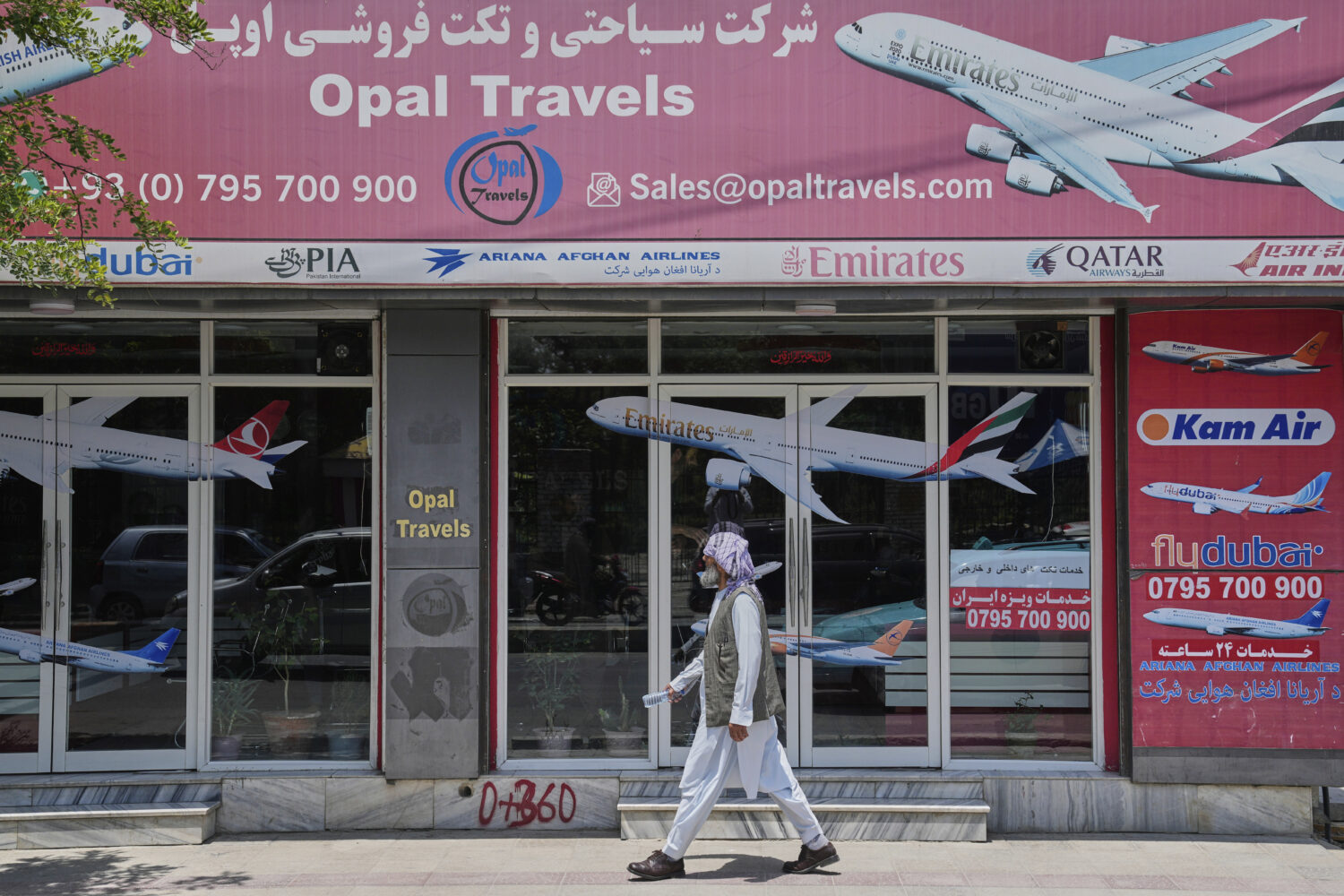
An Afghan person passes in front of an air travel agency in Kabul, Afghanistan, Thursday, June 5, 2025. (AP Photo/Ebrahim Noroozi)
Credit: ASSOCIATED PRESS
(AP Photo/Ebrahim Noroozi)

DAKAR, Senegal (AP) — Citing national security concerns, President Donald Trump on Wednesday banned citizens of 12 countries, primarily in Africa and the Middle East, from entering the United States and restricted access for citizens of seven other nations, resurrecting and expanding a hallmark policy of his first term.
The travel ban applies to citizens of Afghanistan, Myanmar, Chad, the Republic of Congo, Equatorial Guinea, Eritrea, Haiti, Iran, Libya, Somalia, Sudan and Yemen.
The policy change restricts entry for citizens of Burundi, Cuba, Laos, Sierra Leone, Togo, Turkmenistan and Venezuela who are outside the U.S. and do not hold a valid visa.
The policy takes effect Monday at 12:01 a.m. and does not have an end date.
Here’s what to know about the new rules:
Since returning to the White House, Trump has launched an unprecedented campaign of immigration enforcement that has pushed the limits of executive power and clashed with federal judges trying to restrain him.
The travel ban results from a Jan. 20 executive order Trump issued requiring the departments of State and Homeland Security and the Director of National Intelligence to compile a report on “hostile attitudes” toward the U.S.
The aim is to “protect its citizens from aliens who intend to commit terrorist attacks, threaten our national security, espouse hateful ideology, or otherwise exploit the immigration laws for malevolent purposes,” the administration said.
In a video released on social media, Trump tied the new ban to a terror attack Sunday in Boulder, Colorado, saying it underscored the dangers posed by some visitors who overstay visas. The suspect in the attack is from Egypt, a country that is not on Trump’s restricted list. The Department of Homeland Security says he overstayed a tourist visa.
1. Lawful residents: citizens of designated countries who have obtained legal residency in the U.S.;
2. Dual citizens: U.S. citizens who also have citizenship of one of the banned countries;
3. Some athletes: athletes and their coaches traveling to the U.S. for the World Cup, Olympics or other major sporting event as determined by the Secretary of State;
4. Afghans who worked for the U.S. government or its allies in Afghanistan and are holders of Afghan Special Immigrant Visas;
5. Iranians belonging to an ethnic or religious minority who are fleeing prosecution;
6. Certain foreign national employees of the U.S. government who have served abroad for at least 15 years and their spouses and children;
7. Refugees: Those who were granted asylum or admitted to the U.S. as refugees before the ban entered into force;
8. Individuals with U.S. family members who apply for visas in connection to their spouses, children or parents;
9. Diplomats and foreign government officials on official visits;
10. Those transiting the U.S. to the U.N. headquarters solely for official business related to the U.N.;
11. Representatives of international organizations and NATO on official visits in the U.S.;
12. Children adopted by U.S. citizens.
Trump said nationals of countries included in the ban pose “terrorism-related” and “public-safety” risks, as well as risks of overystaying their visas. He also said some of these countries had “deficient” screening and vetting or have historically refused to take back their own citizens.
His findings rely extensively on an annual Homeland Security report of visa overstays of tourists, business visitors and students who arrive by air and sea, singling out countries with high percentages of remaining after their visas expired.
“We don’t want them,” Trump said.
The inclusion of Afghanistan angered some supporters who have worked to resettle its people. The ban makes exceptions for Afghans on Special Immigrant Visas, generally people who worked most closely with the U.S. government during the two-decade war there.
The list can be changed, the administration said in a document circulated Wednesday evening, if authorities of designated countries make “material improvements” to their own rules and procedures. New countries can be added “as threats emerge around the world.”
International aid groups and refugee resettlement organizations roundly condemned the new ban.
“This policy is not about national security — it is about sowing division and vilifying communities that are seeking safety and opportunity in the United States,” said Abby Maxman, president of Oxfam America.
The African Union Commission expressed concern Thursday about the “the potential negative impact” of the ban on educational exchanges, business ties and broader diplomatic relations.
“The African Union Commission respectfully calls upon the U.S. administration to consider adopting a more consultative approach and to engage in constructive dialogue with the countries concerned,” the commission said in a statement.
During his first term, Trump issued an executive order in January 2017 banning travel to the U.S. by citizens of seven predominantly Muslim countries including Iraq, Syria, Iran, Sudan, Libya, Somalia and Yemen.
It was one of the most chaotic and confusing moments of his young presidency. Travelers from those nations were either barred from getting on their flights to the U.S. or detained at U.S. airports after they landed. They included students and faculty, as well as businesspeople, tourists and people visiting friends and family.
The order, often referred to as the “Muslim ban” or the “travel ban,” was retooled amid legal challenges until a version was upheld by the Supreme Court in 2018.
The ban affected various categories of travelers and immigrants from Iran, Somalia, Yemen, Syria and Libya, plus North Koreans and some Venezuelan government officials and their families.