What to know about the deal between Israel and Lebanon extending their shaky ceasefire
Jun 4, 2026, 6:11 AM | Updated: 5:26 pm
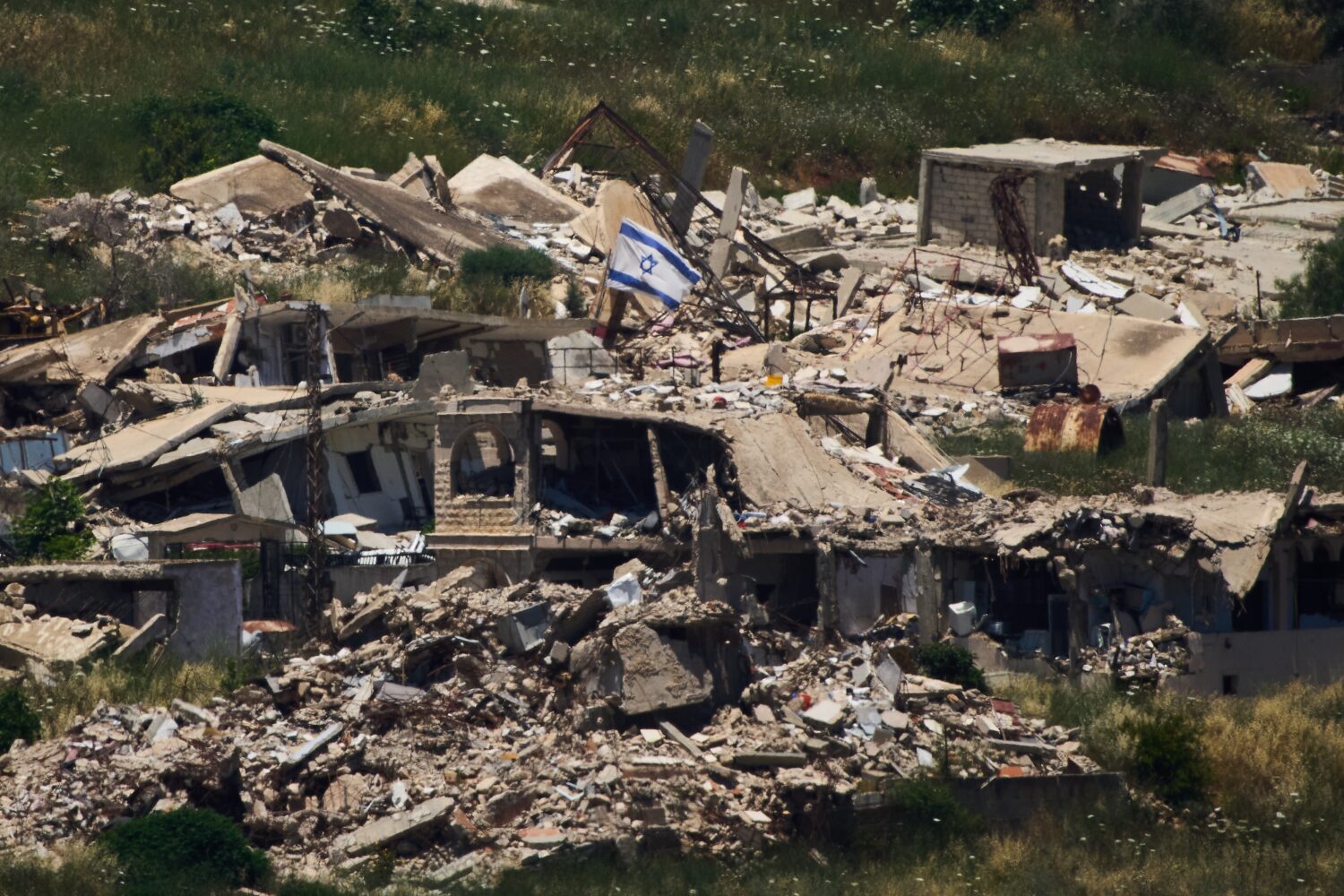
An Israeli flag hangs on a destroyed building in southern Lebanon as seen from northern Israel, Thursday June 4, 2026. (AP Photo/Ariel Schalit)
Credit: AP Photo/Ariel Schalit
(AP Photo/Ariel Schalit)

BEIRUT, Lebanon (AP) — Israel and Lebanon have agreed to renew their shaky ceasefire, with an aim to continue talks later this month for a comprehensive peace deal.
The U.S.-brokered agreement, announced in a joint statement by the U.S., Israel and Lebanon Wednesday, comes after Israeli forces made their deepest incursion into Lebanon in more than a quarter century.
But it includes several contentious points, including the creation of “pilot” security zones inside Lebanon from which the Iran-backed Hezbollah militant group that Israel has been fighting would be banned, and a stipulation about the group’s eventual disbanding.
Lebanese President Joseph Aoun said Thursday the deal is the “last chance to enter a final and comprehensive ceasefire.” A November 2024 U.S.-brokered deal to end fighting between Hezbollah and Israel sparked by the war in Gaza failed to hold.
It comes days after a major escalation in the Lebanon conflict was narrowly averted, with a separate agreement reached Monday for Israel to refrain from its threatened strikes on Beirut’s southern suburbs and Hezbollah to halt attacks on northern Israel. But its details raise questions over whether it will hold.
Here are some key things to know about the Israel-Lebanon ceasefire deal.
The current deal builds on a ceasefire initially reached on April 17 between Israel and the Lebanese government.
But crucially, even though much of it hinges on what Hezbollah will do, the militant group was not officially involved in the talks. Hezbollah’s leader, Sheikh Naim Kassem, has instead relied on Iran’s leverage in its talks with Washington. Tehran has insisted any deal to end the Iran war must include Lebanon.
Kassem slammed the agreement Thursday, calling it “Satan’s dream in heaven.” He insisted on a complete ceasefire and Israeli troop withdrawal, saying the deal would destabilize Lebanon and create divisions among its people.
“The agreement allows Israel to take in politics what it couldn’t in war,” Kassem said. “As long as the occupation is still present, then the resistance will continue.”
Israel says it is at war with Hezbollah, which it has long considered to be a major threat, not with Lebanon itself. However, Israel has struck areas far from Hezbollah’s influence, including in the heart of the Lebanese capital.
The Shiite Muslim armed group emerged in 1982 in response to Israel’s then-occupation of southern Lebanon, and has grown to become one of the country’s most influential forces.
Underlining its view of the group as an existential threat, Israel said in Wednesday’s joint statement that its own security and respect for its territorial integrity “can only be achieved through the disarmament of Hezbollah and the dismantlement of its infrastructure throughout Lebanon.”
Lebanon signing a statement describing Hezbollah as a threat underscores the growing divide in the country over the group, and Beirut’s efforts to distance itself from Iran and improve ties with Gulf countries and Washington. It also risks alienating Hezbollah and its supporters, largely members of the Shiite community.
The joint statement says the ceasefire “is contingent on a complete cessation of Hezbollah fire and the evacuation of all Hezbollah operatives” from south of the Litani River. The river, located about 30 kilometers (20 miles) north of the border with Israel, forms the boundary of a 2006 U.N.-established buffer zone in which Hezbollah is banned. Israeli troops have currently pushed far past the Litani River into southern Lebanon, sending hundreds of thousands of Lebanese fleeing.
According to the statement, Lebanon and Israel agreed to “swiftly advance the creation of pilot zones in which the Lebanese Armed Forces will take exclusive control of the territory to the exclusion of all non-state actors.”
That piles pressure on Lebanon’s cash-strapped military to exert its presence in areas where Hezbollah is prominent. Lebanon fears a confrontational approach to disarming Hezbollah could risk conflict across the country, whereas Israel accuses Beirut of not being aggressive enough.
Israeli forces now control large areas in southern Lebanon and have demolished homes and historical sites.
The statement also said the negotiators discussed a security framework that would include “the dismantlement of non-state armed groups, and the prevention of their reemergence.”
But how exactly the pilot zones will be created, and how Hezbollah will be dismantled, remain very unclear. Aoun said a string of villages just north of the Litani could be the pilot zone.
Lebanon has become a major sticking point in attempts to extend the separate ceasefire in the Iran war. The joint statement said that “all parties condemned Iran’s attacks on countries in the region, and ongoing activities that undermine stability throughout the Middle East, whether through support for proxies and all other acts of aggression.”
It also included clear references seeking to separate the two conflicts.
“All countries reaffirmed that the future of the relationship between Israel and Lebanon must be decided by the two sovereign governments. They rejected any attempt, by any state or non-state actor, to hold Lebanon’s future hostage,” it said.
It added that “any agreement to cease hostilities must be reached directly between the two governments, brokered by the United States, and not through any separate track.”
The phrasing would aim to prevent Tehran from using Hezbollah and the conflict in Lebanon as a bargaining chip in its own ceasefire negotiations.
Despite the initial ceasefire deal in mid-April, fighting has continued, with Hezbollah resuming attacks after Israeli strikes in Lebanon that Israel characterized as self-defense.
That fighting shows few signs of abating. Israeli Defense Minister Israel Katz said Thursday the Israeli military would remain in what he described as a security zone in Lebanon, while continuing operations against Hezbollah infrastructure.
The military “will, at this stage, continue its fire and activity on the ground,” he said. Katz said the arrangements reflect “the reality we have created in Lebanon so far” and could eventually lead to a peace agreement with Lebanon and “real and lasting security” for residents of northern Israel.
On Thursday, the Israeli military issued a warning to residents of southern Lebanon that it was continuing to target Hezbollah “infrastructure located in and near the area south of the Zahrani River.” It said that “anyone who moves south of the river is putting their life at risk.” The Zahrani is located some 30 kilometers (18 miles) north of the Litani River.
___
Becatoros reported from Athens, Greece.