Investigators defend use of DNA sweep in Jenise Wright case
Aug 12, 2014, 7:55 AM | Updated: 12:11 pm
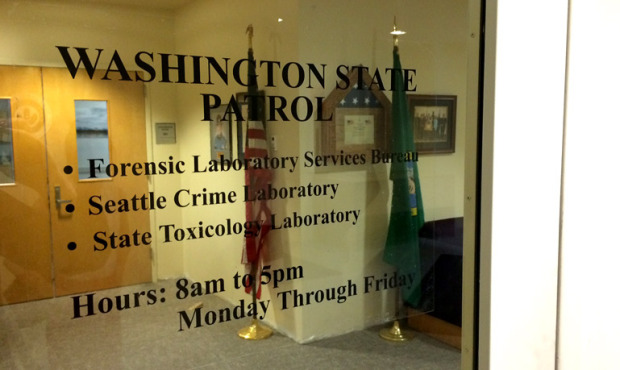

More than 100 DNA samples taken from residents of a Bremerton mobile home park during the investigation into a young girl’s rape and murder will not be entered into a criminal database, according to the Washington State Patrol Crime Lab.
Residents of the Steele Creek Mobile Home Park in East Bremerton were asked to submit voluntary cheek swabs as part of the probe into 6-year-old Jenise Wright’s disappearance.
The samples were used to create DNA profiles to match against forensic evidence in the case.
Jean Johnston, CODIS (Combined DNA Index System) laboratory manager at the state patrol lab on Airport Way South in Seattle, said profiles belonging to individuals cleared of wrongdoing in the Wright investigation will not be kept in a criminal database or used to solve other crimes. The swabs themselves will be sent back to the Kitsap County Sheriff’s Office to be stored as physical evidence.
“As an elimination sample, it is an actual piece of evidence,” she said. “Once the case is written up, all of those samples will be properly returned to the submitting agency and it will be up to them to follow their storage and/or destruction process in the future.”
DNA profiles generated from the swabs will remain part of the written case file, she said.
Johnston said collecting large numbers of voluntary elimination samples is a rarely used, but useful investigative tool.
“It’s not real common to have to take that approach,” she said. “But I know the detectives were trying to do everything they could to help solve this case, and that was one of the tools that they turned to.”
The tactic paid off.
Among those who voluntarily submitted samples was 17-year-old Gabriel Gaeta, whose DNA was a match for semen found in the young girl’s underwear, according to the Kitsap County Prosecutor’s Office.
Gaeta, who lived near the girl and was a frequent visitor to her home, was ordered held on $1 million bail Monday for investigation of first-degree murder and rape of a child.
Johnston noted that some individuals refuse to give voluntary DNA samples, even if they have nothing to hide.
“They have nothing to do with the crime, but have very strong feelings that their DNA is their private possession,” she said.
The use of voluntary DNA sweeps has been criticized in the past by civil rights groups.
The Canadian Civil Liberties Association blasted investigators in Ontario back in 2011 for attempting to gather voluntary DNA samples to solve a high-profile murder case.
“It is not appropriate for police to conduct criminal investigations by process of elimination,” Nathalie Des Rosiers with the CCLA told CBC News during an investigation into the death of 40-year-old Sonia Varaschin.
In the mid-2000’s, a professor at the University of Nebraska in Omaha called such sweeps “extremely unproductive” and rarely successful.
Professor Sam Walker studied 18 cases where voluntary DNA sweeps had been utilized, including five murders and eight rapes. Of the cases, only one was solved with a voluntary DNA sample, his report found.
“These are all very horrible crimes – serial murders or serial rapists,” Walker told The Wichita Eagle. “There’s a lot of emotion involved, a lot of community fear. Police departments are under a lot of pressure to do something, or at least appear to be doing something.”
The tactic was first used in the 1980’s by police in Kansas, who collected more than 200 blood samples in their search for the BTK serial killer, according to The Eagle.
Kitsap County Deputy Scott Wilson defended use of the tactic in the Jenise Wright investigation, saying it was “quick and painless” and 100 percent voluntary.
“It’s a tool and the FBI brought the tool with them and the suggestion that it was a possibility,” he said. “We had a distraught community. We had a lot of people who were worried that there was someone else out there who was going to snatch another child.”
Asked if residents would have felt obligated to give a voluntary sample, even if they didn’t want to, Wilson admitted that those who did not give a sample would have cast suspicion on themselves.
“That may have been something that may have been in the back of investigators’ minds when they decided to go this route,” Wilson said.
It was not immediately known whether residents who gave a sample signed any sort of paperwork, or otherwise agreed to how their DNA samples would be used and stored.