New documentary reveals why US has problem with breastfeeding
May 26, 2014, 10:52 AM | Updated: May 27, 2014, 10:21 am
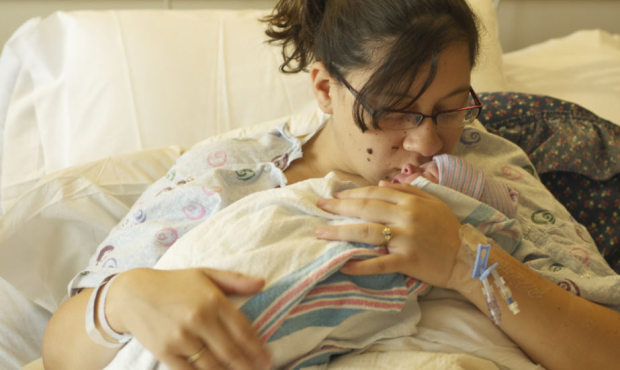
"So many hospitals take the baby away from the mom to go get weighed, to get washed, to have the medicines put in," says documentary producer Chantal Molnar. "It interrupts the feeding sequence that's triggered in the baby when the baby is plopped on the mom's belly, it interrupts a natural progression of physiological mechanisms that automatically get that baby to latch on."
America is one of only four countries in the world that does not have government-mandated paid maternity leave, and a new documentary says that’s one of many reasons why America has a low breastfeeding rate.
In the new documentary “The Milky Way,” producer Chantal Molnar lays out the case for how American culture sets up mothers to fail at breastfeeding.
Listen to We Think:Why America is failing at breastfeeding
“So many hospitals take the baby away from the mom to go get weighed, to get washed, to have the medicines put in,” Molnar says. “It interrupts the feeding sequence that’s triggered in the baby when the baby is plopped on the mom’s belly, it interrupts a natural progression of physiological mechanisms that automatically get that baby to latch on.”
She says it all starts when the baby is taken away from mother at birth. As a former nurse and a lactation consultant, Molnar has seen this practice played out for years and says it is the start of setting up mom and baby for failure.
“I still don’t quite get the logic behind why they started doing that, doctors in hospitals felt that they knew how better to care for babies than moms and so they started separating them and putting them into nurseries. Then enter the formula companies that give money for those hospitals to build hospitals where they separate moms and babies,” Molnar says.
In the process of making her documentary, Molnar found that formula companies donate architectural plans to hospitals that separate mom and baby.
“These formula companies are active helping hospitals create a need for their product,” she says.
These days though, more hospitals are getting away from nurseries and opting for what are called “mom and baby rooms” where there is no separation.
Molnar says that while Washington state has more progressive maternity centers, California, where she lives, had to pass a law requiring hospitals to be more baby-friendly.
She would also like to see hospitals stop handing out free formula samples to expectant and new mothers.
“It’s basically very clever formula marketing to and we go over this in the film to say ‘breast is best’ and then, ‘but we’re here for you at three in the morning when your baby is screaming’ they want to say ‘breast is best’ but oh my gosh best means perfect and how many moms can always, always every minute of the day do the perfect best thing for their child and so the formula companies also present themselves as a savior,”says Molnar .
Molnar traveled to Germany where, even in the case of c-section, the baby is never taken away from the mother.
In Sweden, mothers get 18 months of paid maternity leave. Fathers get two months of paternity leave. It’s also frowned upon to take anything less in that country. And, Sweden has the lowest infant mortality rate and the highest breastfeeding rate.
“U.S. kind of starts high in the first week or so, we have a high breastfeeding rate, but it drops drastically in the first couple of months and by six months we’re really low it’s down to like 14 percent,” Molnar says.
So says the breastfeeding failure rate here starts with the separation of mom and baby, continues with inadequate breastfeeding support at hospital and in our own mother-to-mother culture and then continues when mothers go back to work and can’t find the time or support to pump.
“I feel that isn’t all on the woman, I feel that I want to see a shift in culture so that we support keeping mothers and babies together, we want to honor the mother and make sure that we all understand as a culture that mothers can be trusted,” Molnar says.
You can find information on where to see “The Milky Way” at MilkyWayFoundation.org.
A full interview with Chantal Molnar can be found at Colleen O’Brien’s podcast “We Think.”