Study: Fossil fuels could cause clouds to disappear, rapid warming
Mar 18, 2019, 1:57 PM | Updated: 4:07 pm
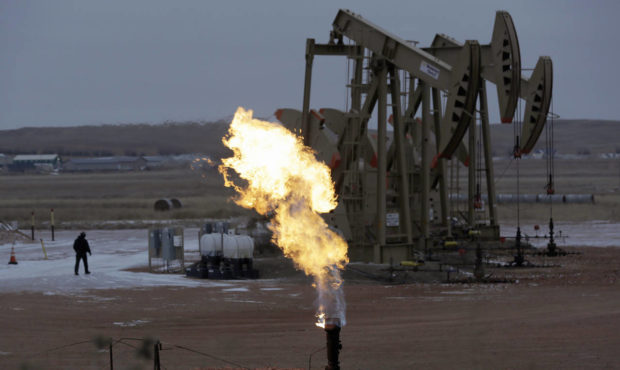
(AP photo/Eric Gay, File)
(AP photo/Eric Gay, File)
Staring at clouds and guessing what they look like may become a thing of the past, at least to a new study on climate change. Research suggests that fossil fuels could cause the cloud layer to disappear, which in turn would cause even more rapid and catastrophic warming that’s been predicted.
“My colleague Tapio Schneider form CalTech recently published a study in the Science Journal that aimed to look at what would happen to clouds when we raise carbon dioxide levels, when we raise greenhouse gases in the atmosphere a lot, a lot beyond where we hopefully will raise them in the next 50 years,” UW atmospheric scientist Chris Bretherton told Seattle’s Morning News with Dave Ross.
“What he found to his alarm is that as carbon dioxide levels were raised, the clouds start to go away and then suddenly disappear, which will amplify the amount of warming we get.”
RELATED: Scary picture of past global warming event painted in UW study
In the study, researchers looked at models for how clouds form off the coast of California, and compared that to a model of how high levels of carbon dioxide might impact their formation. Should that type of warming occur, the study painted a picture of what the world would might look like, based on what’s happened in the past.
“We did, at one point, 50 million years ago have crocodiles swimming in the arctic and redwood trees growing in the arctic, and what caused that?” Bretherton said. “We think it was carbon dioxide, in that case naturally produced by very large volcanic eruptions.”
RELATED: Students across Puget Sound skip school Friday to protest climate change
Bretherton acknowledges that for this study’s predictions to come to fruition, humans would have to take all the available fossil fuels and burn them at the highest of levels, and since no one is setting out to do that, clouds might be around for at least a little longer.
Still, he believes the study should be nonetheless taken as an early warning.
“I think the issue is that people have to take a very deliberate decision to move away from fossils fuels or we could end up in a situation like this in about a century.”
Follow @http://twitter.com/Mynorthwest


-
 Tune in to KIRO Newsradio weekdays at 5am for Dave Ross on Seattle's Morning News.