UW professor explains why crows don’t like Dori Monson
Feb 13, 2014, 12:27 PM | Updated: 2:04 pm
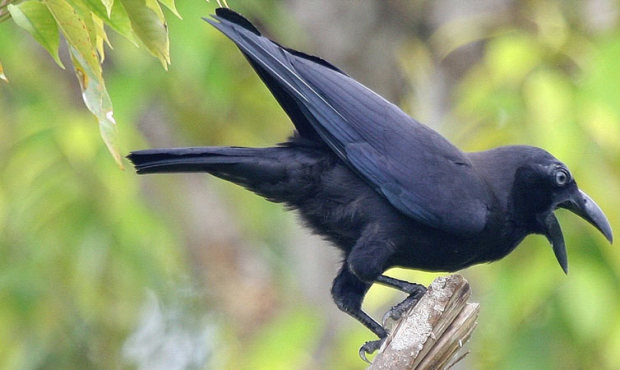
A University of Washington professor and crow expert says the birds' brains are more on par with monkeys than other birds. (AP Photo/Michigan State University, Philippe Verbelen)
(AP Photo/Michigan State University, Philippe Verbelen)
Twenty years ago, KIRO Radio’s Dori Monson did something he’s not proud of. After spending a good amount of money on growing a plush, green lawn he soon found something was tearing out chunks of it. After investigating, Dori determined the culprits were crows. So one day he got out a pellet gun and shot one of the offending birds. The bird died, but that wasn’t the end of it.
“When I would walk out of the house or go into my backyard, the crows would start screaming. You’d hear the echo of other screams from the trees for I don’t know how big a radius and they would come and circle me,” says Dori, who explains none of this would happen when any other members of his family would go outside.
Dori’s producer, Jake, was skeptical that crows would be capable of remembering such an event and holding an apparent grudge, but a University of Washington professor and crow expert Dr. John Marzloff confirms what Dori is talking about could easily happen.
“I’d say you’re lucky they only followed you for three months,” says Marzloff.
When they captured birds or disturbed nests for studies, Marzloff says the birds would remember the specific person who made contact.
“We’ve done experiments on the university campus and the birds there remember the person who captured them eight years ago,” says Marzloff. “Still, the moment that guy steps out of the building, they’re on him just as you described.”
And once a bird has recognized a person or place as a potential danger, they will not only record it in their own mind, but they’ll also try to alert other birds to the risks, Marzloff says.
“It’s called mobbing. The one individual has learned through seeing you actually kill the bird or up near the bird that was dead. Some bird in the area or several learned to associate your face, your person, with that action and now every time they see your person again, they basically sound the alarm because it’s also very likely you were going to shoot another bird or cause harm in another way,” says Marzloff. “You are basically synonymous with danger.”
The reason the birds gathered, circling over Dori’s head, Marzloff explains, is because the bird sounding the alarm is calling other birds to help potentially mediate and also witness the potential source of danger.
“The way they respond to danger like this is to rally the troops, as you say, and use that force to try to move that particular danger out of the area, get you moving along, make sure you understand that they know you’re there and therefore, you can’t surprise them, and also to teach all the others in the area who don’t know that you’re bad.”
These types of behavior are not typical among other types of birds, says Marzloff who explains crows brains are different from other types of birds.
“Crows have very large brains for their body size. They’re more on par with monkeys than other birds and they especially have a large area in their brain that allows them to make these associations with rewards and actions or dangers and actions.”
Dori says the more he learns about crows, the more he regrets what he did. Marzloff says he should, but points out crows are doing a pretty good job holding their own with humans.
“The cool thing about it is that the reaction that you saw is the kind of thing that allows these birds to really make it with us,” says Marzloff. “They take advantage of any of that kind of experience as a learning event. That’s how they can live with people that are as unpredictable as we are, where some of your neighbors might feed the birds and others might shoot at them, so that’s the way they adapt. That’s their strategy to get along with us.”
Related:
Video: Crows are scary smart