Seattle business owners and homeless population grapple over concrete barriers
Dec 7, 2021, 4:00 PM
Credit Joe Wolf via Flickr
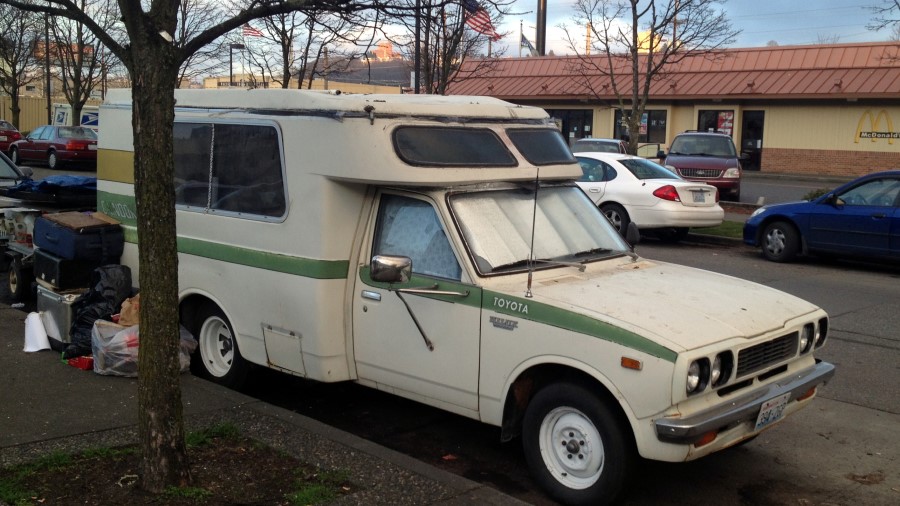
With an estimated 40% of Seattle’s homeless population living out of vehicles, the issue of where those recreational vehicles and cars are placed is a sore spot for the city. Some local business owners have taken the issue into their own hands by installing concrete barriers in front of their businesses to dissuade prospective campers.
The issue is most apparent in Seattle’s industrial areas. Fremont in particular has made liberal use of the so called “ecology blocks.” Fremont Brewing’s production facilities have previously been cited under Seattle’s municipal code for placement of such obstructions, as reported by PubliCola.
Employees and business owners in the area have been up front about their intent to use the barricades to avoid conflict with unhoused individuals living out of personal vehicles.
“We battle every day with these guys,” Bobby Williams, an employee on Northwest 47th Street, told KIRO 7 TV. “They leave garbage, needles, and everything else right here all day.”
The problem is that the tactic of installing concrete barriers, such as the ecology blocks, is explicitly condemned by the city, deemed a public nuisance under SMC 15.04.
Homeless advocates have pushed back against the tactic as well. They argue the city feigns ignorance as to who places the barriers as reason for their disinterest in leveling penalties against businesses such as Fremont Brewing for erecting the barriers.
“The city complains they do not know who put them there when its often obvious when its around a business,” Rev. Bill Kirlin-Hackett told KIRO 7 TV.
Kirlin-Hackett has filed a complaint with the city against the ecology blocks, but says Seattle has not acted on the issue and refuses to issue citations.
The blocks have proliferated in the city after its suspension of a 72-hour parking enforcement policy during the pandemic in April 2020. The suspension was lifted in October 2021, but many vehicles remain.
Seattle City Council has provisioned for the problem in 2022. They have transferred to the Regional Homelessness Authority (RHA) a project called “Safe Lots,” intended to create designated spaces for campers in areas which do not conflict with the community. The council’s 2022 budget has allocated $1.5 million for the project as well as vehicle resident outreach.
Follow @http://twitter.com/Mynorthwest