King County executive announces ‘multi-part strategy’ addressing fentanyl crisis
Mar 4, 2024, 5:14 PM
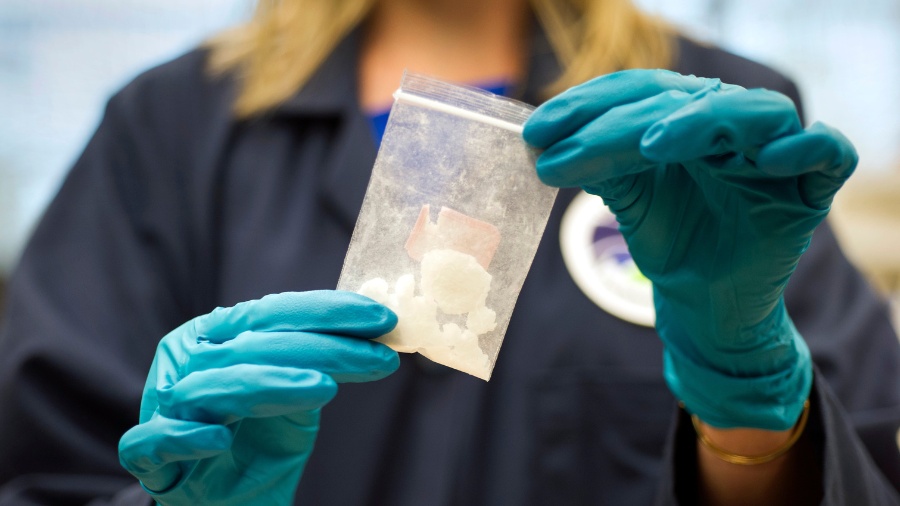
A bag of 4-fluoro isobutyryl fentanyl, which was seized in a drug raid, is displayed at the Drug Enforcement Administration (DEA) Special Testing and Research Laboratory in Sterling, Virginia, Aug. 9, 2016. (File photo: Cliff Owen, AP)
(File photo: Cliff Owen, AP)

King County Executive Dow Constantine announced a new strategy on Monday to tackle the surge in fentanyl overdoses.
Expanding residential treatment, a 24/7 buprenorphine prescribing line, new mobile crisis teams, a permanent sobering center, and more naloxone and testing strips are all included in the multi-part strategy, according to a news release from King County.
More on fentanyl: Bill proposing child removal from homes with fentanyl sparks charged debate
“Substance use disorder is complex, and there is not one single cause, nor one simple solution. That’s why King County is connecting people to treatment and lifesaving interventions that are proven to work, and clear paths to recovery for all,” said Constantine. “There is so much more to do, which is why King County is also working upstream to help prevent substance use disorder, inform and educate the community, elevate early intervention strategies, and provide services and treatment for anyone who needs it.”
The Department of Community and Human Services is working with Seattle and King County to address the fentanyl crisis.
The top five priorities for tackling the fentanyl crisis
Constantine said the No. 1 priority is “treatment and community-based, recovery-focused care for all.”
The second priority is behavioral health beds and facilities and the third is overdose medication and fentanyl testing. The fourth is a diverse behavioral health workforce and lastly reduced disproportionality in overdoses.
Constantine claims the county will add new facilities, new mobile and outreach teams and create more accessible naloxone and testing strips.
Currently, people can seek help at the Pioneer Human Services co-occurring facility in South Seattle. There is also the post-overdose recovery center in downtown Seattle.
“We know treatment works, and by prioritizing access to treatment, King County is leading with science, expertise, and compassion,” said Councilmember Teresa Mosqueda. “The plan outlined today does all of that and will produce tangible results which is why I’m proud to be partnering with the executive and my fellow councilmembers today.”
King County distributed over 100,000 fentanyl testing strips
Latest news: Lynnwood man charged in death of 27-year-old Wash. State Patrol Trooper
In 2023, King County worked with over 30,000 people through the MIDD Behavioral Health Sales Tax Fund. Over 13,000 people received medications for opioid use disorder. The county also distributed over 45,000 naloxone kits and over 100,000 fentanyl test strips, according to the release.
King County said the new strategy is being funded by “existing resources, including MIDD Behavioral Health Sales Tax, Crisis Care Centers Initiative, Medicaid, commercial insurance, and state and federal funds.”
Julia Dallas is a content editor at MyNorthwest. You can read her stories here. Follow Julia on X, formerly known as Twitter, here and email her here.