Crowdfunding sites getting big boost from medical emergencies
Jul 6, 2017, 5:41 AM
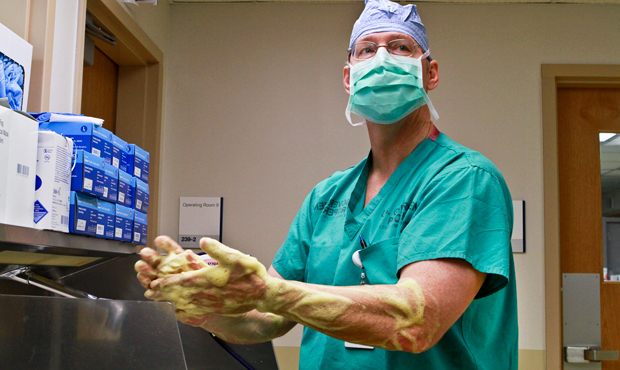
Doctor. (Army Medicine, Flickr)
(Army Medicine, Flickr)
Two University of Washington professors have an idea of what it takes to run a successful crowdfunding campaign.
“The key would be to have rich friends,” Lauren Berliner said. “One of the things we learned through our research is that campaigners we’ve studied tend to get their funding through networks they are already connected to; campaigns typically circulate though social media.”
Berliner and Nora Kenworthy are assistant professors at the University of Washington. They recently authored an article studying the trend of crowdfunding for medical reasons titled “Producing a Worthy Illness: Personal crowdfunding amidst a financial crisis.”
“Increasingly, we are seeing people use crowdfunding for medical and health care related expenses,” Kenworthy said. “That has ballooned in the last couple of years. Everything from needing assistance for basic medication costs and for folks who are uninsured, to people seeking elective treatments or experimental procedures.”
RELATED: Ron and Don help crowdfunding effort to cover Seattle cop’s medical costs
The nation currently awaits the Republican health care plan. Whatever the Republicans decide, there will likely be cuts to Medicaid and the individual mandate will be knocked down. A lot of plans may not be required to cover as many procedures. KIRO Radio’s Dave Ross wondered if such crowdfunding sites could be relied upon to fill in the gaps in medical coverage.
“That’s a really troubling notion,” Kenworthy said. “That opens the door to people picking and choosing who is deserving of health care and assistance. There are plenty of conditions out there that people might want to keep private or that are not seen as deserving that would lose out on a crowdfunding platform”
In fact, not everybody wins at crowdfunding. KIRO Radio has seen a few successful efforts, such as raising money for a service dog or an injured King County deputy. The Ron and Don Show helped out when the City of Seattle’s insurance company would not cover a life-saving procedure for one of its cops. While some efforts rise to the level of going viral or making headlines, the study found that more people failed to reach their funding goals.
“We did find that a lot of these campaigns are not as successful as people think they are going to be,” Kenworthy said. “There’s a real perception that if you set up a crowdfunding campaign and put it out there on the internet that it will go viral. Most people in our sample were raising less than $3,000 on average. And 90 percent of the campaigns didn’t reach their target goal.”
Another problem with relying on crowdfunding for medical coverage goes back to Berliner’s initial quip about having rich friends. People with wealthier networks — generally wealthy people themselves — have greater access to donations than poorer networks.
“We are also seeing how it maps social realities that already exist,” Berliner said. “One of our concerns is that crowdfunding reproduces social inequalities that are already existing with regard to wealth and income inequality. People who have social networks with people with money that they can share are more likely to raise some money toward their needs, whereas a lot of people who don’t have those networks are going to continue to struggle.”
Follow @http://twitter.com/Mynorthwest