SEATTLE NEWS ARCHIVES & FEATURES
Fight over discrimination case isn’t over for Washington florist
Nov 10, 2015, 6:34 PM | Updated: Nov 11, 2015, 7:07 am
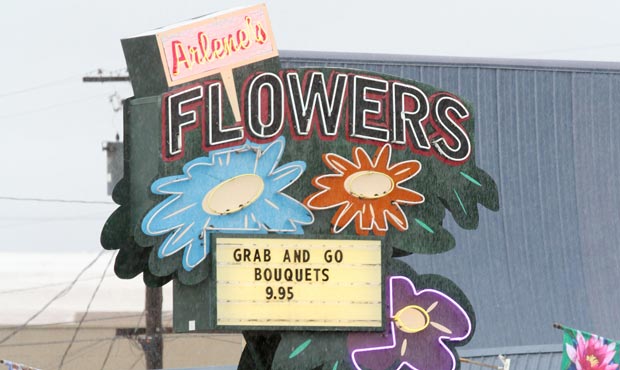
As the case of a Washington florist and her gay customers is appealed, both parties recently spoke out about their positions. The florist added her take on the Dori Monson Show. (AP)
(AP)
Is it about discrimination or religious freedom?
That’s the question posed to courts across the nation as legal same-sex marriages collide with the private industry. In Washington, a Tri-Cities florist became the focal point on the issue; serving as a local, legal example of the issue.
Barronelle Stutzman owns and operates Arlene’s Flowers. She served customer Robert Ingersoll for years before he came in for a special job — his wedding to Curt Freed. But Stutzman refused, citing her religious belief that marriage is only between a man and a woman — not between same-sex couples. She referred him to other florists who would take on the task.
But Washington’s attorney general, Bob Ferguson, soon brought legal action against Arlene’s Flowers for discrimination. The American Civil Liberties Union also came forth with a lawsuit.
“My understanding is that his partner put it on Facebook — it went viral. From there the attorney general got a hold of it, and the ACLU jumped in,” Stutzman told KIRO Radio’s Dori Monson.
The case was settled in February 2015. Benton County Superior Court Judge Alex Ekstrom ruled in favor of Ingersoll and Freed and the attorney general. But the matter is not settled. Stutzman is represented by the Alliance Defending Freedom, a conservative Christian organization that tackles its take on religious freedom issues in court. They have appealed the decision.
To further the matter, Freed and Ingersoll wrote an opinion piece for The Seattle Times about their lawsuit.
“We didn’t want Washington to become a state where gay and lesbian couples had to fear being turned away simply because of who they are,” the couple wrote in The Seattle Times. “We didn’t want gay and lesbian couples to be forced to seek out LGBT-friendly florists and bakeries, or drive to more tolerant communities because all the wedding venues in their hometowns have turned them away for being gay.”
“We cannot have marriage equality that is separate but equal,” they said.
Stutzman recently wrote a response, also in The Seattle Times. She told Monson that Freed and Ingersoll’s article was a “nice piece,” but she felt it was inaccurate.
“I did not turn down Rob because he was gay. I turned him down because of the event — because I have a different belief about marriage than he does,” Stutzman said. “I waited on him for 10 years, so obviously I didn’t turn him down for being gay.”
“Participating in a wedding is a totally different event. You take everything they want to do, you take the message they want to send, their love for each other and you combine this all in an expression with flowers. It says so much,” she said. “Then you go to the service, the wedding, and I talk to the guests and help them get dressed; I do so many things involved in a wedding. It’s a celebration. And I just could not celebrate a same-sex marriage.”
Stutzman said that she would have provided prearranged, generic flowers. She regrets that the issue has drawn national attention, and that she has come under harsh criticism.
“I love Rob and I enjoyed working with him. There was absolutely no hate involved,” she said. “To call me a bigot because I have a different belief — yet they want tolerance and acceptance, but they will not accept it from me.”
Stutzman’s attorney, Kristen Waggoner, argues that part of their appeal has to do with religious freedom — that the state is selectively choosing to protect the rights of certain people, but denying it to those with religious beliefs. Waggoner said the decision in Benton County Superior Court violates Washington’s constitutional protections of religious freedoms, as well as the First Amendment that protects the free exercise of religion and speech.
“The fact that they didn’t expect to encounter discrimination [at the flower shop] is because there isn’t a problem with discrimination in Washington state,” Waggoner said. “These laws are not being used to stop discrimination. They are being used to perpetuate it against people like Barronelle. This is about an ideology.”
“It is all about the ideology, and if you line up with what the government wants you to say,” she said.
But that is not Stutzman and Waggoner’s entire argument. They argue that a florist is an artistic occupation, and therefore, this case falls into the realm of freedom of speech. And they maintain that Stutzman’s religious freedom is being violated.
The courts may not see it that way. Benton County Judge Ekstrom’s previous decision states there is a difference between the free exercise of one’s religion, discrimination and commerce.
“For over 135 years, the Supreme Court of the United States has held that laws may prohibit religiously motivated action, as opposed to belief. In trade and commerce, and more particularly when seeking to prevent discrimination in public accommodations, the Courts have confirmed the power of the Legislative branch to prohibit conduct it deems discriminatory, even where the motivation for that conduct is grounded in religious believe,” Ekstrom wrote in his February decision.
Ekstrom further notes that Article I, Section 11 of the Washington State Constitution expressly states that religiously motivated conduct is limited by the police power of the state.