Epidemiologist: ‘Washington is a great example’ of reopening correctly
Aug 19, 2020, 9:21 AM | Updated: 9:23 am
In the United States, a lot of the decision making as to when and how to reopen has been left up to individual states to decide as the COVID-19 pandemic remains a threat. Arizona was a state that reopened quickly, but then saw a surge of new cases.
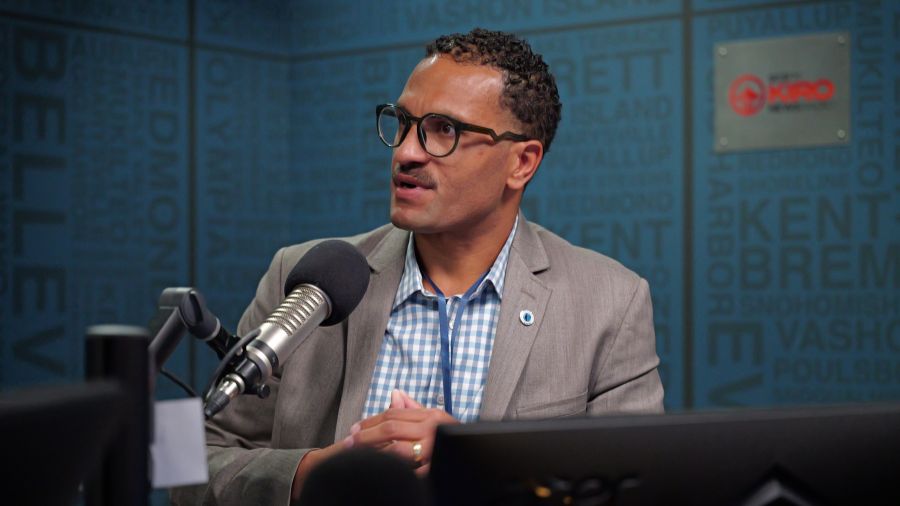
Dr. Saskia Popescu, epidemiologist, infection preventionist, and a professor in the Department of Epidemiology & Biostatistics at the University of Arizona, told KIRO Radio’s Gee & Ursula Show that Arizona is now doing better in terms of case counts, but the numbers are always changing.
Report: New COVID-19 cases flattening in ‘practically all counties’ in Washington
“I think one challenge we’ve been facing in Arizona, but really the U.S., is that once we see any decrease in cases, we get very anxious to open everything back up and very rapidly go back into the world,” Popescu said. “And Arizona’s the case study for why we don’t do that.”
Compared to Washington state, Arizona took a drastically different approach.
“Washington, really, it took its time, you [reopened] in a very slow, incremental process, as not to only avoid stressing the public health and health care systems, but also to very quickly be able to identify any upticks in cases and then be able to rapidly respond,” she said. “Versus in Arizona, we really went from zero to 60. So we not only reopened very prematurely without meeting any of the gating criteria to do so, but then did it so quickly that suddenly one week we had closures, and the next week everything was open again.”
The rapid reopening didn’t allow time to make sure that cases weren’t stressing the system.
“Unfortunately, there was a lot of messaging from our governor that we were well past COVID-19, this wasn’t that bad,” Popescu said. “And unfortunately, what we saw was a very, very large surge after that. So, to me, Washington is a great example, like New York, of how to do this correctly. And a lot of that involves patience and taking your time to do it right.”
Part of the issue in Arizona, and across the country, Popescu says, is fatigue for workers on the front lines. When the surge hit Arizona in late June, it became an even more difficult job.
“We’ve really been working very long hours preparing and responding since February, actually. So it was so exhausting when the huge surge happened,” Popescu said. “Our peak was late June, I believe June 29, and at that point, you can imagine the fatigue that everyone in health care and in public health is experiencing because we had been working so hard to avoid this and [were] still quite busy. And then to have that happen was just the ultimate gut punch.”
Everyone, Popescu said, is at various degrees of burn out.
“You can’t caffeinate away that fatigue after a while, where you have so many patients that are so critically ill, and at those peaks where it feels like there’s no end in sight, a lot of the question becomes, how are we going to sustain our response?”
While there seems to be a lull, she says the hope is no states make the mistake of reopening quickly and keep taking it day by day. She also hopes there’s more of an investment, locally and nationally, in the mental health of front-line workers.
“I think now is the time where a lot of people are really trying to focus … on well being and mental health because now is the time when we want to try and take a break, which sounds crazy when you think that Arizona still is having hundreds of cases a day and that somehow feels lighter,” she said.
Politicizing the pandemic
The other big challenge Popescu spoke to is that public health advice has been largely ignored.
“You have so many public health infectious disease experts who … have been shouting at the walls since early this year about the concerns that we’ve been seeing,” she said. “And unfortunately, this isn’t new. It’s not unheard of and, frankly, quite common that public health tends to not get the attention, the resources it deserves.”
“And there’s been so much politicization of this pandemic, of our response, and public health leaders that I think that’s been the hardest part is so much of what we’re seeing, whether it’s outbreaks in schools reopening, … all of this was very predictable,” she added.
Public health experts, she says, knew outbreaks would happen and tried to say something, but nobody listened. The situation has been amplified as there’s been a national push to reopen. She says it’s been painted as a false dichotomy of public health versus the economy, which is not the case.
“So when that happens, it allows public health to be driven by politics and not the other way around,” Popescu said. “We should really be making these decisions based off of best practice, what we’re seeing, and what experts in the field are saying and encouraging.”
Part of the driving force in ignoring specialists comes from the president, Popescu thinks.
“[We] have a president that has a long, unfortunate track record for being anti science, [who] from the very beginning was down playing the pandemic. Whether it was ‘testing is great’ when it wasn’t, or ‘we’re testing too much,’ when we’re not, and even from the very beginning saying, ‘this is going to be gone by April, this isn’t a problem, we need to move on, we need to focus on the economy.’ Not only does that set a very dangerous precedent at a national level, but it creates a norm in terms of people getting to use that dialogue to push more of the agenda about, ‘OK, let’s focus on reopening because the disease is fine.'”
Virologist encourages use of face masks with ‘multiple layers of fabric’
In Arizona, President Trump came to visit and met with the governor, and almost immediately after that was when the state reopened. Additionally, there was already a data modeling team from the University of Arizona that was let go and not allowed to present data anymore.
“So there’s a lot of concerns that there was already some politicizing of public health data, but then
when President Trump had come out to visit, this was right after he’s really pushing states to reopen,
and we reopened,” she said. “I think it’s really hard not to see that as the very push, pressure from the top down, and ultimately normalizing this dialogue that this isn’t a severe issue and we’re doing just fine when we simply aren’t.”
Listen to the Gee and Ursula Show weekday mornings from 9 a.m. – 12 p.m. on KIRO Radio, 97.3 FM. Subscribe to the podcast here.