‘Second worst snowpack we’ve had’: Climatologist says weekend storm won’t end Northwest drought
Mar 13, 2026, 3:47 PM | Updated: 3:48 pm

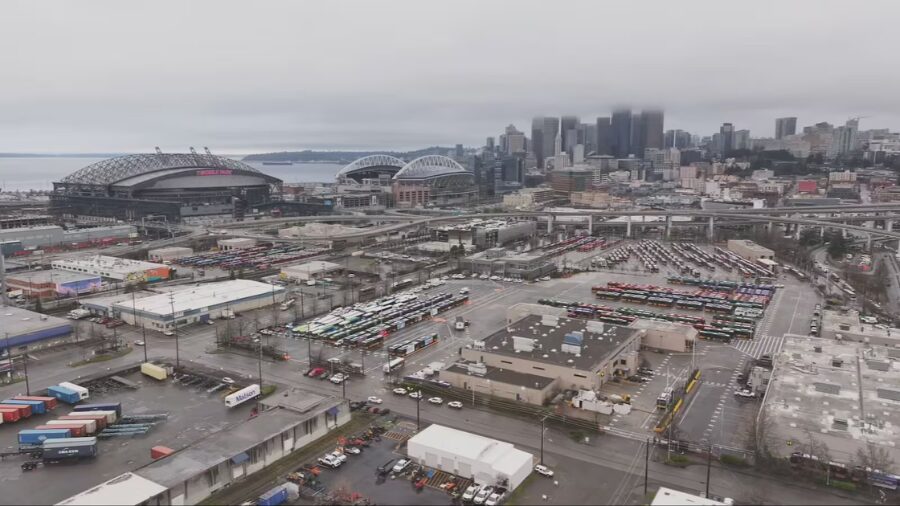
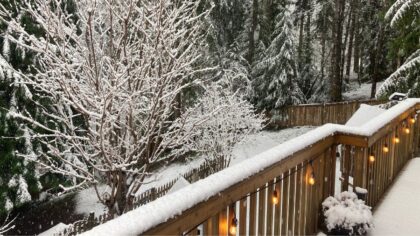
(Photo courtesy of KIRO 7)
(Photo courtesy of KIRO 7)
If you were up early this morning, for work, like me, maybe you had the same reaction I did, looking out the window, the sun not quite risen yet, and seeing a light dusting of snow. Pretty surprising, and honestly pretty beautiful. Seattle hasn’t seen snow like that in a while.
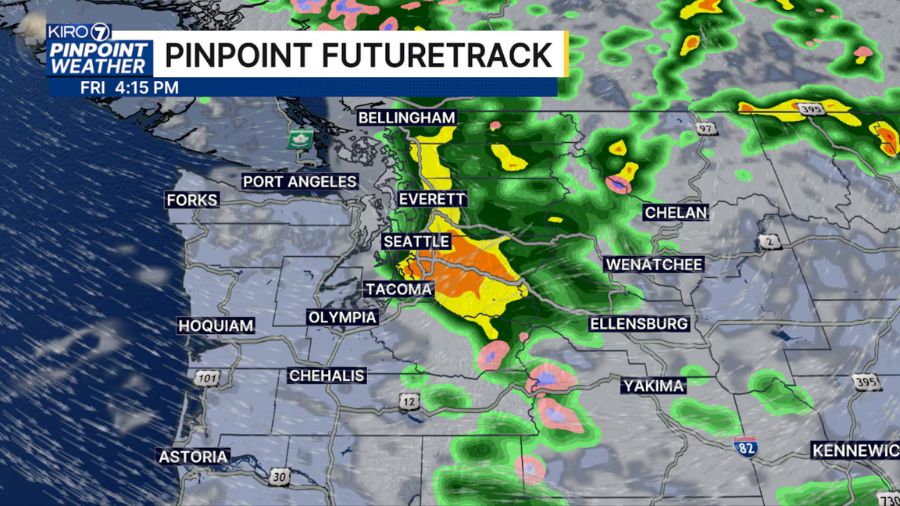
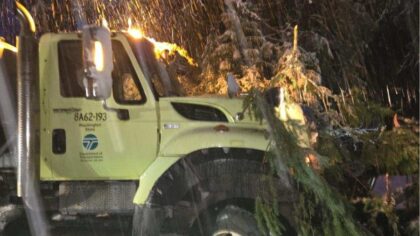
An hour later, everything changed. Rain and snow slammed into western Washington. Cars and trucks spun out from the lowlands to the mountain passes. The Washington State Department of Transportation and Washington State Patrol troopers shut down highways, including parts of I-90 at higher elevations. However, even with all this messy weather, there’s another concern.
Climatologist Larry O’Neill said all this precipitation still isn’t enough to put a dent in the region’s ongoing drought.
“Even though in western Washington and Oregon it may have seemed like it’s been much wetter than normal this winter, it’s actually been near normal to slightly below normal precipitation,” O’Neill told me from down in Eugene, where he also teaches at Oregon State University. “I mean, any bit helps, but this doesn’t sound like it’s nearly enough to start declaring victory and saying, ‘Hey, we’re going to have more snowpack, and we’re going to be just fine.’ No, and unfortunately, we’re so far behind where we should be at this time of year that it would have taken a historically unprecedented amount of snow from the storm to really catch back up.”
O’Neill said Washington and Oregon continue to be in a drought. The proof is in the lack of snowpack in the Cascades and the Olympic Mountains. All you have to do is look at any of those peaks (maybe not this weekend, but on a clear day) and you’ll see less snowpack and more jagged, granite nooks and crannies. And even though it’s snowing now, it’s still not good.
“The storm is beneficial in terms of precipitation,” O’Neill told me. “The fact that we’re not getting the snow means that drought conditions will probably get quite bad or could get quite bad going into the Spring and Summer.”
What low snowpack means for farms and power
O’Neill described a scenario this summer where our lack of snowpack in both states means less water in our rivers and streams and farmland.
“One thing that we are fairly certain of is that a lot of places that do a lot of agricultural and livestock production, those places face potential water shortages for their irrigation water for their crops and for their animals. And, so, that’s a big part of our food supply and our economy,” he explained.
O’Neill said he expects we could also see impacts to parts of our electricity grid that rely on hydropower. All we have to do is look back at one of the worst drought years on the books. In 2015, O’Neill said low snowpack and melt led to less water flowing through the Columbia River basin, and that affected the amount of hydropower we could generate.
“That year, the estimates were something like 10% or 15% less hydro power generation because of the fact we had so little water in the snowpack, and so, that’s a concern these days, obviously,” he explained.
And before you (like I did) think “well that was then and this is now,” you should also know, according to O’Neill, this winter Oregon has 30% lower than normal snowpack — the second worst snowpack in the state’s history.
The lack of snowpack appears to have become a disturbing trend in recent years. O’Neill explained the drought we’re experiencing right now is actually just a continuation of a multi-year drought where we’ve seen much less precipitation than normal, much warmer temperatures than normal, too.
RELATED STORIES
If conditions don’t improve, wildfire season could be more severe
O’Neill told me things could always turn around, of course. We could see more snowstorms before March ends, although no storms appear on the horizon. We could also experience a deluge of rain this spring. However, that’s nothing we can predict right now.
But if none of that happens, we might want to fast forward our preparation and thinking to August — wildfire season. If it’s warmer than normal (which he said it is right now) and it’s drier than normal (which, again, he said it is right now), that is a big indicator that wildfire season could be much more active than normal.
“It really depends,” O’Neill told me. “Sometimes we get these monsoonal pulses of thunderstorms and some precipitation and things like that. And those can really be beneficial for buying us a few more days here and there during the wildfire season, which is really a big deal to kind of reduce the number of days in which the landscape is, like, overly dry.”
During our interview, I thanked him for that wishful thinking. But he also told me the one tried and true way to prevent a wildfire is: “If you want a low activity wildfire season, you really would want to start with a good snowpack.”
Which, again, O’Neill said, we just don’t have.
Follow Luke Duecy on X. Read more of his stories here. Submit news tips here.