New Seattle policy aims to block retailers from using personal data to set grocery prices
Aug 7, 2026, 11:10 AM | Updated: 4:00 pm
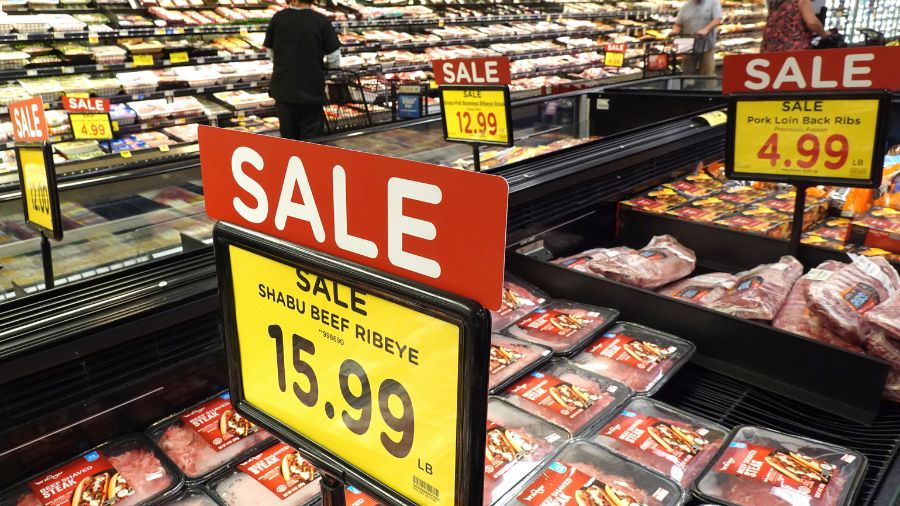
People shop near 'Sale' signs in the meats section of a grocery store. (Photo: Mario Tama, Getty Images)
(Photo: Mario Tama, Getty Images)
Seattle Mayor Katie Wilson and two city councilmembers announced a new affordability policy on Friday to eliminate price gouging, promote equal discounts, and make groceries more affordable overall.
Wilson announced the Fair and Transparent Policy alongside Seattle City Councilmembers Alexis Mercedes Rinck and Dionne Foster at the City Council Human Services, Labor, and Economic Development Committee.
The mayor’s office noted the “groundbreaking” policy would be the first of its kind in the country, prioritizing fairly priced groceries and essential goods.
“This policy stops corporations from using personal data to squeeze more money out of shoppers,” Wilson said. “They’re not compiling all this information about us to charge us less; they’re trying to maximize what they can charge. Businesses are free to set their prices in a fair and transparent manner. The same product, in the same store, should cost the same no matter who’s pushing the cart.”
RELATED STORIES



Measure preserves conventional coupons while targeting hidden pricing
The policy will block large online and brick-and-mortar grocery retailers from using sensitive personal information, including employment status, race, gender, social media posts, browsing history, chatbot conversations, or other data, to create varied prices for different customers. Additionally, all prices must be clearly visible and publicly available.
Any conventional coupons and discounts for seniors, veterans, or other similar groups will be protected by the policy, as are other forms of open and transparent discounts that were identified through conversations with advocates and local business owners.
“Groceries are getting more expensive for everyday Seattleites, while the buying, selling, and leveraging of our private information to manipulate prices is making big national grocery corporations millions in profits,” Rinck said. “This legislation is intended to put some guardrails on what big businesses can do with our personal information. At a time when SNAP reductions have rocked our community, and people have less to spend on food, this is an important step we can take to prevent AI-assisted price gouging and ensure fair discounts for everyone.”
The inspiration for the policy came from a large amount of evidence that indicated personal information was being used to “price-max” consumers by squeezing prices as high as the customer was willing to pay.
The mayor’s office included an example from a recent Consumer Reports investigation that included customers in Seattle. The investigation uncovered that Instacart used AI pricing experiments that involved different consumers being charged substantially different prices for the same product.
“When families are already paying more for groceries, people shouldn’t have to wonder whether they’re being charged extra because of an algorithm,” Foster said. “As a City, we must make certain that innovation serves the public, not the other way around, and that every Seattle resident can shop knowing they’re being treated fairly. Technology will continue to change the way we shop — our consumer protections must evolve alongside it.”
Follow @http://twitter.com/Mynorthwest