‘A gut punch’: Jake and Spike question what Tacoma can do after second Fred Meyer closure
Sep 2, 2026, 6:50 PM

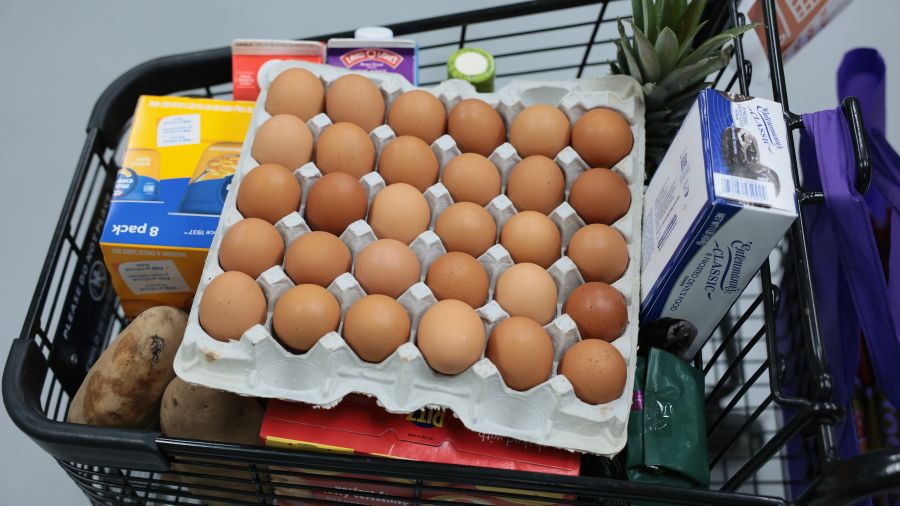
Fred Meyer confirmed it will close its James Center store in Tacoma, leaving the city with just one remaining location. The store at 6901 S 19th Street will remain open until Jan. 30, 2027, according to UFCW 367, the union representing roughly 100 workers at the store. Kroger, Fred Meyer’s parent company, cited a decision not to renew the building’s lease.
It is the second Tacoma Fred Meyer to close in as many years. The 72nd and Pacific Avenue location shut down in September 2025. The closures are part of Kroger’s broader plan to shutter 60 stores over an 18-month period.
Tacoma Mayor Anders Ibsen called the closure “a gut punch” and said the city would take steps to retain existing grocers and attract new ones. The nearest major grocery store to the James Center location is about a mile and a half away; the other Fred Meyer is at 4505 S 19th Street, which sits across the street from a Walmart.
Jake Skorheim and Spike O’Neill, co-hosts of “The Jake and Spike Show” on KIRO Newsradio, used the story as the basis for their question of the day: If you were mayor of Tacoma, what would you do to keep grocery stores from leaving?
Jake believes B&O taxes are eating grocery stores alive
Jake said he crunched the numbers and found that the combination of city and state B&O taxes can consume the majority of a grocery store’s already razor-thin profit margin.
“The average Fred Meyer is going to make somewhere like, in Tacoma, if you make less than $250,000, you’re exempt from the B&O tax in the city, which doesn’t sound like much,” Jake said. “However, their profit margins are like 1.4%. So if you make $70 million, your profit margin is like $1.4 million. The B&O tax is going to be $107,000 in Tacoma. And on top of that, there’s a state B&O tax, which is an additional $300,000. So it’s like up to 60% of your profit is already eaten up by B&O taxes.”
He also pointed to the failed Kroger-Albertsons merger, which then-Attorney General Bob Ferguson sued to block, as a contributing factor.
“Some of this could be pinned on Bob Ferguson for his time at the AG’s office when he sued to stop that merger,” Jake said. “They said, ‘If we can’t merge to compete in the growing grocery market where we now have to compete with Amazon delivery, Amazon Fresh, with Walmart’s delivery, then we’re going to have to shut locations down.’ And now we’re seeing the direct results of that.”
RELATED STORIES


Spike thinks the city should lead with tax incentives, not wait for threats
Spike agreed that the tax environment is the core issue but said the city’s approach to retention has been backward, reactive instead of proactive.
“Instead of waiting until someone’s threatening to leave and then offering them tax incentives, I’d lead with tax incentives,” Spike said. “Do the right thing because it’s the right thing to do, not because you have to, because they’re threatening to walk out the door.”
He also pushed back on the framing of the closure as creating a “food desert,” noting that the remaining Fred Meyer is about a mile and a half away.
“You can see the palm trees from this food desert,” Spike said. “They’re just over there next to the water source.”
But he acknowledged the deeper issue: that volume is the only way grocery stores survive, and that the proximity of a Walmart across from the remaining Fred Meyer makes the competitive math even harder.
“The only way to be competitive in the grocery industry is to be a volume retailer,” Spike said. “Distribution networks, multiple stores, that’s the model.”
Watch the full discussion in the video above.
Listen to “The Jake and Spike Show” weekdays from noon to 3 p.m. on KIRO Newsradio 97.3