‘They seem to think they know better’: WA Policy Center blasts Supreme Court for tossing voter-approved natural gas initiative
Sep 20, 2026, 5:00 AM

Washington voters approved Initiative 2066 to protect access to natural gas. The Washington State Supreme Court threw it out.
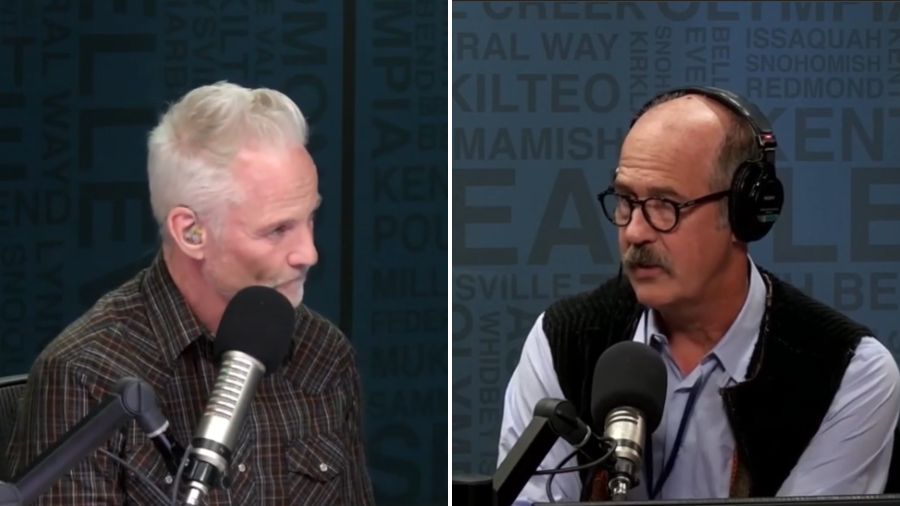
Todd Myers, vice president for research at the Washington Policy Center, joined “The John Curley Show” on KIRO Newsradio to break down the 6-3 ruling that invalidated the voter-approved initiative in its entirety.
Chief Justice Debra Stephens wrote for the majority that I-2066 violated the single-subject rule by combining “several provisions with markedly distinct purposes and regulatory effects.”
Myers didn’t hold back on what the ruling says about the court’s attitude toward voters.
“The Supreme Court is supposed to, when in doubt, give deference to the people,” Myers said. “The Supreme Court majority, in many cases, not just this, likes to find small technical reasons to overrule the will of the people because they seem to think they know better.”
‘Almost every law has some impact on another’
KIRO host Curley walked through the court’s reasoning: I-2066 was struck down because, the majority argued, voters might have supported one part of the initiative, keeping their gas stove, but not the cascading effects on building codes, utility regulations and air quality rules.
Myers pointed to the dissent’s rebuttal and read it on air.
“If we begin to use the incidental impacts that initiatives have on other laws as a measure of rational unity, almost every piece of legislation would fail,” Myers said, quoting the dissenting justices. “Almost every law has some impact on another.”
He argued the majority’s standard, if applied consistently, would gut the initiative process entirely. Curley agreed, noting this was at least the eleventh time the court has overridden a voter-approved initiative.
Myers added another recent example beyond the statewide initiative process. He pointed to Spokane, where voters overwhelmingly approved a local measure to ban homeless encampments near schools, and the state Supreme Court struck it down.
“The dissent in this case and the dissent in the local case said voters don’t have a say at either level,” Myers said. “That’s clearly ridiculous and unconstitutional, and frankly, un-American.”
The energy math that doesn’t add up
The conversation turned to what the ruling means for energy costs. Curley had done his own research on Washington’s energy mix and laid out the numbers: the state gets roughly 60 to 65% of its electricity from hydropower, about 10% from natural gas, 7 to 8% from nuclear, 4% from wind and a fraction of a percent from solar.
He compared Washington’s wind output to Texas, noting that Texas produces what Washington generates annually in wind energy in about three weeks.
“This idea that somehow the state of Washington is going to be super green, it just doesn’t work,” Curley said. “We don’t have the solar, and we don’t have the wind.”
Myers explained that the state’s own energy plan actually depends on building wind turbines in Wyoming and Montana because Pacific Northwest wind patterns are unreliable. The entire region can go through periods of “zero or near-zero wind.” At the same time, Wyoming is actively trying to block wind turbine construction. Running transmission lines from Montana to the Puget Sound area is expensive.
Myers also drew a critical distinction about how wind and solar costs are marketed to the public versus what they actually cost when it matters most.
“When you hear people say, ‘Oh, wind and solar, they’re so competitive’ … yes, on average,” Myers said. “When you need it, they’re unbelievably expensive.”
He explained the concept of “effective cost and capacity,” the price of energy at the moment demand peaks, such as a cold winter night. Solar is worthless in the dark. Wind tends to disappear during extreme cold and extreme heat. The only things you can switch on reliably are hydro and natural gas. The court just made natural gas’s future in Washington significantly less certain.
What it means for your electric bill
Curley asked whether eliminating natural gas as a heating source would drive up electricity costs. Myers said it already is.
“Puget Sound Energy, Seattle City Light, both are proposing huge increases for a variety of reasons to comply with the expected increase in demand,” he responded.
Myers doesn’t believe the increases are driven by data centers.
“People love to do the data center boogeyman,” he said.
The Washington Policy Center has documented the trend, with Myers blaming state climate mandates for much of the upward pressure on rates.
Removing natural gas as a buffer, he argued, widens the gap between the energy supply Washington knows it has and the energy it will need.
RELATED STORIES
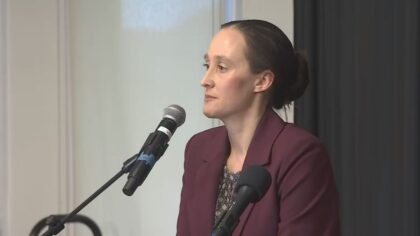

Five Supreme Court seats up for election
Both Curley and Myers pivoted to what voters can actually do about it. Five of the nine seats on the Washington Supreme Court are on the November ballot, an unprecedented wave of turnover driven by retirements and resignations.
“The number of people who don’t vote at all in this race is astronomical, and so every vote counts,” Myers said. “You have an opportunity to vote for candidates who will protect your right to be heard through the initiative. Pay attention, vote, turn in your vote. Don’t despair.”
Myers noted that the Washington Policy Center will be hosting debates for the Supreme Court candidates, giving voters a chance to judge the judicial candidates for themselves.
Curley acknowledged the frustration voters feel but argued the timing of the ruling actually works in their favor. The ruling came before the election, meaning voters can factor this decision directly into their Supreme Court votes in November.
“The nice thing about this happening before the election is that the people get a sense of how important it is,” Myers pointed out.
Curley also noted the history of the initiative process itself, which began in Washington in 1913, when farmers felt the railroad industry had too much control in Olympia. The initiative was designed as “the last chance for your voice to be heard.”
“You have the chance one more time to have your voice heard with the Supreme Court justices,” Curley said.
Watch the full discussion in the video above.
Listen to “The John Curley Show” weekdays from 3 p.m. to 7 p.m. on KIRO Newsradio 97.3 FM.
Follow @https://twitter.com/jcurleyshow

-
 Tune in to KIRO Newsradio weekdays at 3pm for The John Curley Show.