Trawl fishing catches huge amounts of seafood. It can also devastate the seafloor
Oct 9, 2026, 6:07 AM
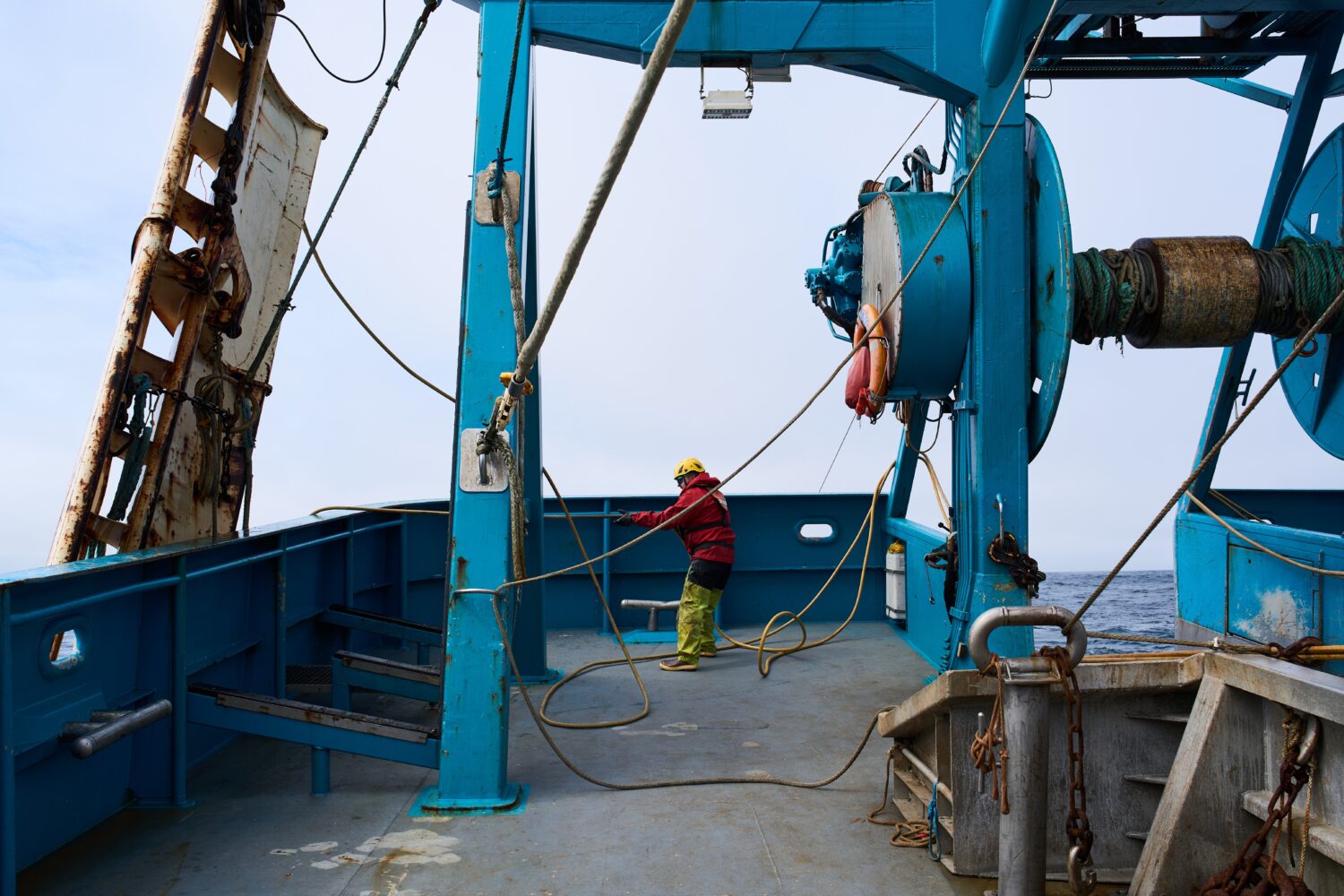
Deckhand Justin Schramm lifts trawl doors, which help spread the mouth of the net open, from the Bering Sea off the coast of Alaska, Thursday, July 23, 2026. (AP Photo/Annika Hammerschlag)
Credit: AP Photo/Annika Hammerschlag
(AP Photo/Annika Hammerschlag)

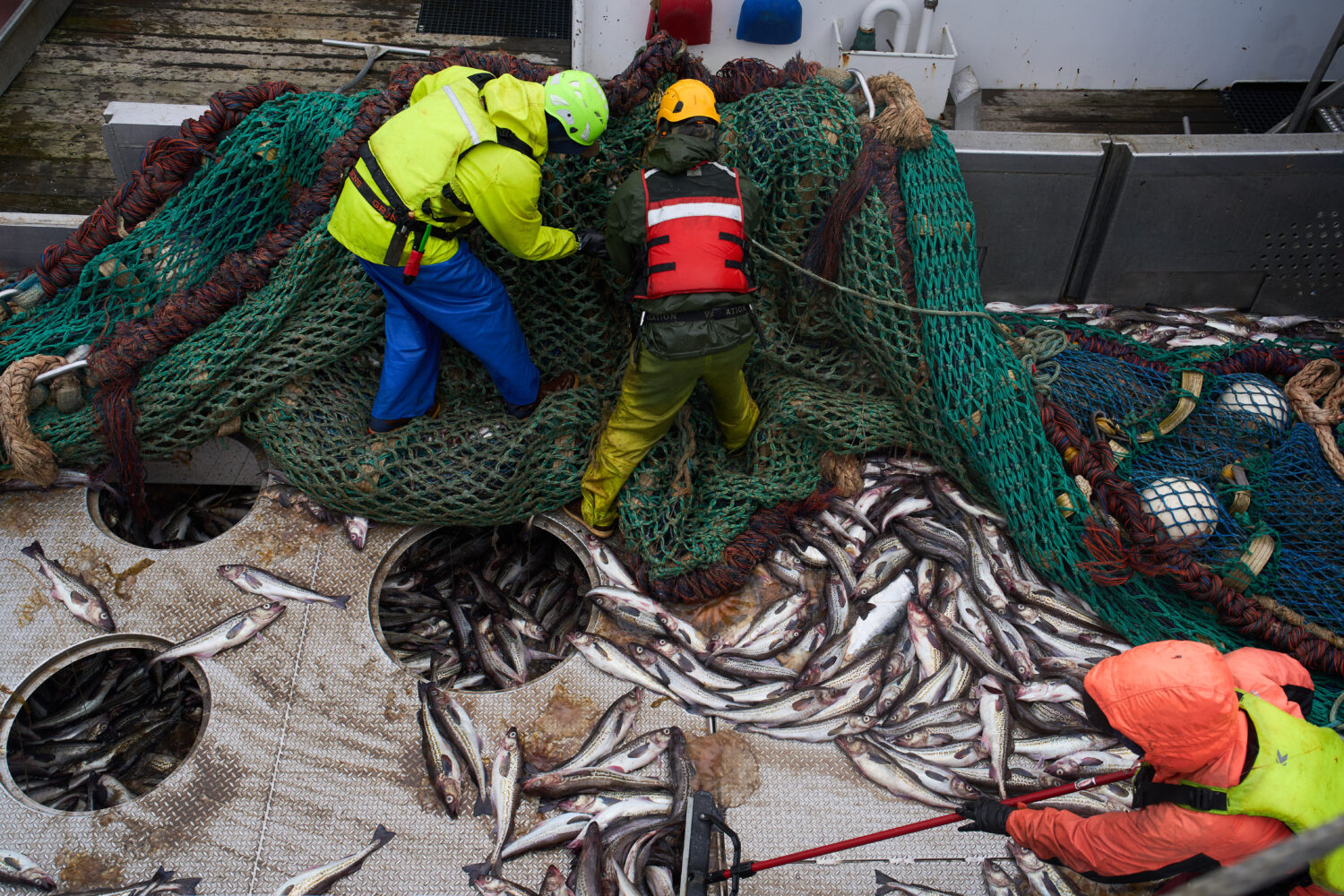
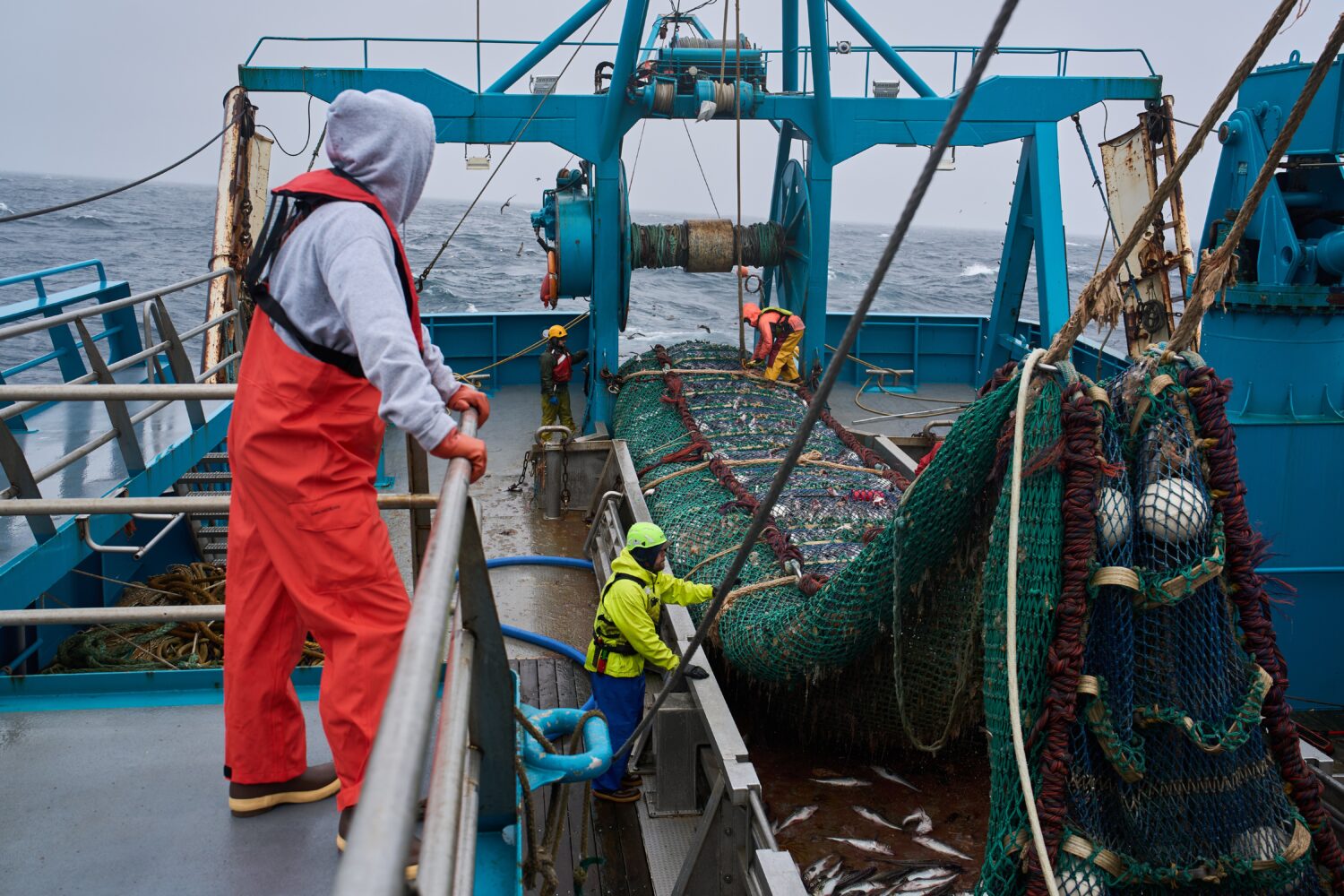
Behind a trawl fishing boat, a vast net can spend hours scraping the seafloor, funneling schools of fish toward a narrow bag at the back. A single tow can bring tens of thousands of pounds of seafood aboard.
That efficiency is why trawling has become central to some of the world’s largest commercial fisheries. But the gear that allows fishers to harvest large quantities at once can also catch unwanted marine life and harm seafloor ecosystems. Bottom trawling is the most extensive direct human physical disturbance to seabed habitats worldwide.
Trawls tow a large, funnel-shaped net through the ocean to catch fish and shellfish in bulk. Bottom trawls use heavy doors and a footrope — a chain-weighted line running along the bottom of the net’s opening — to scrape the seafloor for cod, sole, flounder, shrimp and other species. The gear is designed to stir up sediment as it herds fish into the net.
Bottom trawlers alone bring in about 42 billion pounds (19 million metric tons) of fish and invertebrates each year — roughly a quarter of the world’s wild marine catch.
Pelagic, or midwater, trawls are designed to fish higher in the water column for species such as pollock and herring. But when those fish gather close to the bottom, parts of pelagic gear can also drag along the seafloor. The Associated Press witnessed this method onboard the F/V Progress in July.
Industrial trawl nets can be several football fields long and span hundreds of feet wide.
Unintended catch, known as bycatch, is often discarded at sea, frequently dead.
Marine fisheries discarded more than 20 billion pounds (9 million metric tons) of catch annually from 2010 to 2014 — roughly 11% of total catch — according to a 2020 study based on United Nations Food and Agriculture Organization data. Trawl fisheries accounted for nearly 60% of those discards.
“There is a need for people to not treat the ocean as out of sight and out of mind,” said Simon Thrush, a marine science professor at the University of Auckland who studies seafloor ecosystems. “The footprint of trawling is really extensive.”
Some fisheries have adopted escape panels that let larger animals separate from the target catch before it’s hauled aboard. But the effectiveness and use of these devices vary by fishery, species and gear. Fishers also try to avoid areas where unwanted species are concentrated.
Dragging fishing gear across the seafloor can remove and damage corals and other marine life. Other bottom-dwelling animals such as crabs can also be harmed.
Deep-sea corals and sponges grow slowly and can take decades or even centuries to recover.
“Deep-water corals can live for thousands of years and grow to be like trees that are 30 meters tall,” Thrush said. “Those habitats are destroyed by trawling. One trawl is enough.”
A single pass of bottom contact fishing gear reduced the abundance of seafloor-dwelling invertebrates by an average of 26%, according to a 2018 global meta-analysis. Scientists note that figure is likely an underestimate because some analyzed sites had been trawled before researchers measured the effects.
Seafloor sediment holds the largest reservoir of carbon on Earth. Bottom trawling stirs up the sediment, exposing buried organic matter to oxygen and microbes that can convert it into carbon dioxide.
A 2024 modeling study found that once that CO2 is produced, about 55% to 60% reaches the atmosphere within a decade. Because carbon dioxide traps heat in the atmosphere, those emissions can add to global warming.
Scientists are still working to determine how much carbon is converted, though the study estimated the resulting emissions could be up to roughly twice those produced by fuel burned by the world’s fishing fleets.
___
Follow Annika Hammerschlag on Instagram: @ahammergram.
___
The Associated Press receives support from the Walton Family Foundation for coverage of water and environmental policy. The AP is solely responsible for all content. For all of AP’s environmental coverage, visit https://apnews.com/hub/climate-and-environment