Orionid meteor shower peaks Wednesday night as Seattle skies stay mostly clear
Oct 21, 2026, 5:32 AM
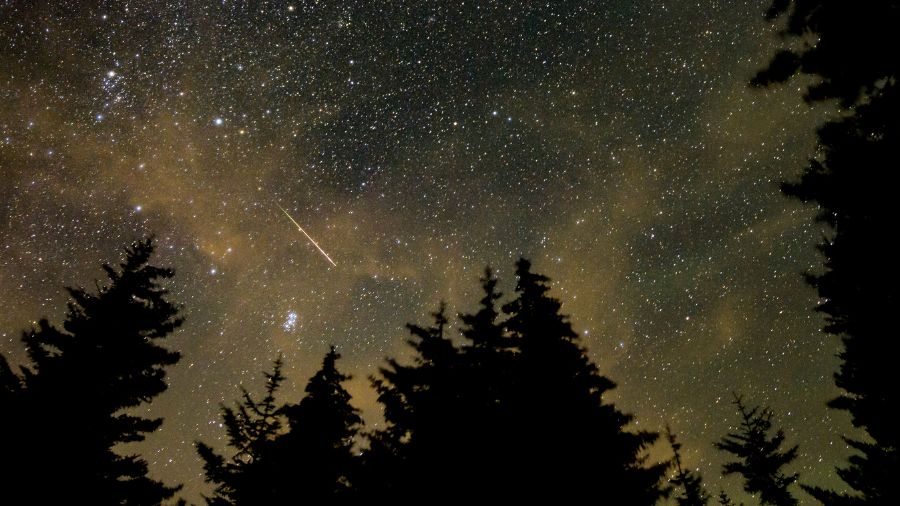
In this 30 second exposure, a meteor streaks across the sky. (Photo: Bill Ingalls, NASA via Getty Images)
(Photo: Bill Ingalls, NASA via Getty Images)
One of the benefits of this dry October weather is viewing the night sky, particularly as nighttime hours continue to grow longer. The final 6 p.m. sunset in Seattle of the year will be on Monday.
Now is a great time to view the Orionid meteor shower. The meteor shower’s active period started early this month and runs through Nov. 7. But the peak of the event happens to be during this week of nearly clear nighttime skies, Wednesday night.
Thanks to the nearly 80% (called waxing gibbous for those keeping score) illuminated moon, the brightness may tend to dim the opportunity to see the roughly 10 to 20 meteors per hour. The best viewing hours will be after moonset, which will occur after 2 a.m.
To enhance viewing even further, move to darker areas away from city lights. Best of all: no telescope is needed. Just let your eyes adjust to the dark.
RELATED STORIES



Influence from Halley’s Comet
The Orionid meteor shower is the result of debris from Halley’s Comet as Earth’s orbit around the Sun passes through the former path of the comet. Halley’s Comet was last visible from Earth back in 1986, and for today’s youngsters, it will again be visible in 2061.
A spectacle to see
Around 10 to 20 meteors per hour enter Earth’s atmosphere at about 150,000 mph, with some producing bright fireballs. That is a spectacle to see!
Thanks to the usually cloudy skies this time of year, those in western Washington do not normally get to see this annual Orionid meteor shower. Yet this time, opportunity is knocking!
Ted Buehner is the KIRO Newsradio meteorologist. Follow him on X and Bluesky. Read more of his stories here.