‘It’s 100% about money’: Jake and Spike clash over Federal Way’s 24/7 school zone cameras
Oct 22, 2026, 5:51 PM

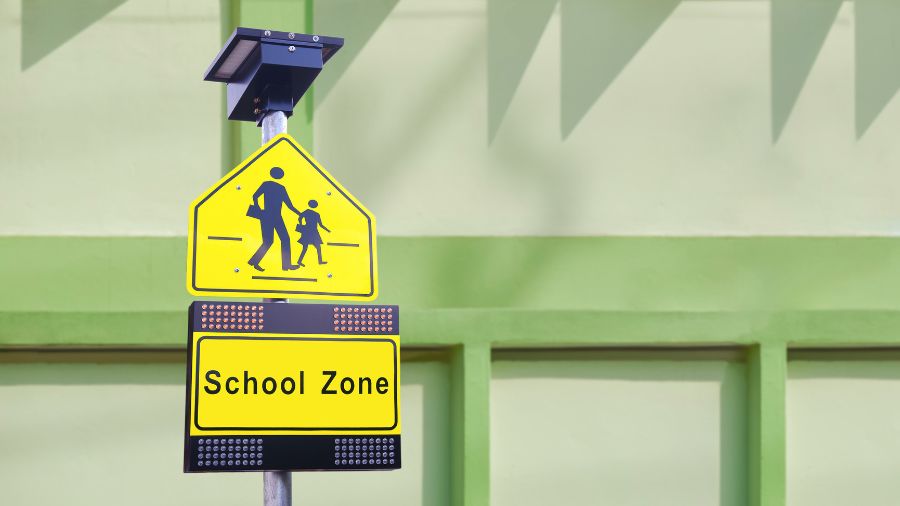
Federal Way will start running four school zone speed cameras 24/7 in November. KIRO host Jake Skorheim called the change a money grab, while KIRO host Spike O’Neill backed it as a way to change how drivers behave near schools.
“It’s not about keeping kids safe. It’s about money, 100% about money,” Jake said on “The Jake and Spike Show” on KIRO Newsradio.
According to KIRO 7, the Federal Way cameras will begin monitoring the school zones around the clock Nov. 1, starting with a month-long warning period. KOMO News reported that the cameras will enforce a 20 mph limit during school zone hours and 35 mph at all other times. Starting Dec. 1, violations outside school hours can bring civil infractions of up to $290, excluding late fees.
24/7 cameras raise questions about the ‘school zone’ label
KIRO Newsradio traffic reporter Chris Sullivan joined the discussion. He mentioned that Seattle plans to try 24/7 enforcement at a handful of school zones next year and argued that the cities should be upfront about what the cameras do.
“Don’t call it a school zone cam. Just be honest. Say this is just a speed cam. We need to get your speeds down,” Sullivan said.
He acknowledged that some of the roads where the cameras sit can get fast. But Sullivan also questioned how far cities could take the safety argument. He wondered whether Spike would support closing roads around schools to everything except buses.
“Spike’s a nice guy, which is why he’s supporting this,” Sullivan said.
Spike backs year-round enforcement
Spike welcomed the change.
“I love this. I’m all for this,” Spike said. “Why? Because you’re trying to change people’s habits. You’re trying to teach people that this is someplace you don’t speed.”
He emphasized that drivers only need to follow the posted speed limit.
“We’re not asking you to do 20 24/7. You know, we’re asking you to do the speed limit 24/7,” Spike said.
Jake tests Spike’s reasoning
Jake pushed Spike on whether the same reasoning would justify cameras near parks, libraries, and children’s hospitals. Spike maintained that schools are different.
“I think schools deserve a little bit more,” Spike said.
Jake saw the change as the start of something broader.
“Because I see this is a slippery slope. That’s what they’re going to do,” Jake said.
Spike rejected the slippery slope argument and held his ground.
“I can lead you to water. I can’t make you drink,” he said.
RELATED STORIES

Longer school zone hours?
Sullivan saw some room for compromise. He suggested extending the 20 mph school zone hours to cover early-morning drop-offs and evening activities.
“I’ve never really kind of understood why the school zone is only when you’re in class, because I know there are a heck of a lot of kids whose parents have to get them to school early, who drop them off at six,” Sullivan said.
Jake offered his own alternative to fines.
“It’s not going to be ticketed with money, but they are going to require you to take a one-hour class on why it’s important to be safe around school zones,” he said.
“I like that too,” Spike responded.
Jake doubted officials would accept the idea, which he saw as proof that the cameras are about revenue. He would give the cities more credit if they took money out of the equation.
“But if it’s only about money, then I don’t think it’s a good idea,” Jake said.
Watch the full discussion in the video above.
Listen to “The Jake and Spike Show” weekdays from noon to 3 p.m. on KIRO Newsradio 97.3