
‘I just don’t believe that’: Gee doubts teachers’ claims as Seattle schools trim recess by 5 minutes
Oct 25, 2026, 5:00 AM
KIRO host Gee Scott questioned whether cutting five minutes of recess could immediately change students’ behavior, while KIRO host Ursula Reutin supported Seattle Public Schools’ effort to make instructional time more consistent across elementary schools.
On “The Gee and Ursula Show” on KIRO Newsradio, Gee and Ursula discussed tighter scheduling requirements that had reduced recess at some schools.
“OK, can I just say I just don’t believe that,” Gee said.
His skepticism centered on teachers’ reported observations that students at Thurgood Marshall Elementary became more restless after losing five minutes of recess.
Gee emphasized that he respects teachers and could be wrong, but questioned whether such a small reduction would produce an obvious difference.
Brie Damitio, a teacher at Thurgood Marshall Elementary School, told The Seattle Times the students notice a difference and even asked why the bell rang earlier. Students are more antsy and shared feelings of frustration in a survey, she noted
Recess versus consistent teaching time
Ursula outlined the district’s expectations: two hours daily for English language arts, 90 minutes for math, 45 minutes for science and 33 minutes for social studies.
She explained that, after other required classes, the schedule leaves limited room for lunch and recess.
Superintendent Ben Shuldiner has directed elementary principals to limit recess to 30 minutes to accommodate additional academic time, with schools able to seek waivers, according to The Bulletin.
Gee supported the goal of ensuring students receive comparable instruction regardless of which school they attend.
“So, if you’re in this school, or this school over here across the railroad tracks, you should be able to be learning and an emphasis on the same topic,” Gee said.
Ursula also welcomed the push for consistency and praised Shuldiner’s leadership. However, she suggested some schools or student populations could benefit from additional break time.
RELATED STORIES


Lanier argues five minutes can matter
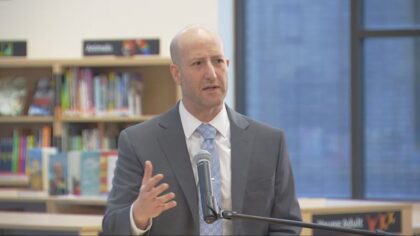
KIRO producer Andrew Lanier offered a counterpoint to Gee’s skepticism: Shorter breaks can also affect whether children have enough time to eat.
Drawing on his children’s experiences, Lanier described lunch and recess sharing a limited block of time.
“And they already say they don’t get enough time to eat,” Lanier said.
He argued that cutting another five minutes could leave some students struggling to get through the lunch line and finish their meals.
“And if kids aren’t eating, they are not happy,” Lanier said.
Gee acknowledged the point.
“Hey, maybe I’m wrong,” he said.
Watch the full discussion in the video above.
Listen to Gee and Ursula on “The Gee and Ursula Show” weekday mornings from 9 am to 12 pm on KIRO Newsradio.