‘How come they always give us deadlines?’: Gee and Ursula slam slow permits as Seattle rents climb
Oct 27, 2026, 1:02 PM
KIRO host Gee Scott wants to know why the government can penalize residents for missing deadlines while taking months to deliver the approvals those same taxpayers need.
The question came as KIRO host Ursula Reutin raised permitting delays as a contributor to western Washington’s housing costs on “The Gee and Ursula Show” on KIRO Newsradio. While discussions about expensive housing often center on land prices, interest rates, and tech money, Ursula questioned how much of the problem begins at city hall.
Gee’s frustration extended beyond housing: He argued that residents expect fast service from private businesses but have grown accustomed to waiting on local government.
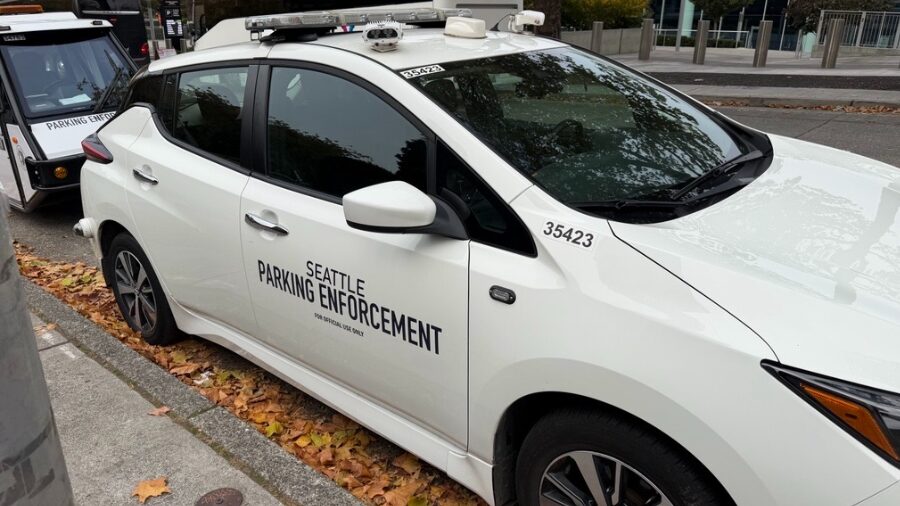
“How come they always give us deadlines? And if we miss those deadlines, we’re penalized for it. If you don’t pay that ticket on time, or if you don’t get the right permit, you’re penalized,” Gee said. “But any time taxpayers want them to do something in a correct amount of time, they slow.”
He compared it to how someone might react to a slow fast-food order.
“Yeah, we expect more from McDonald’s than our government, our local government, and I think it’s designed that way,” Gee said.
The cost of waiting to build
Ursula described research she identified as a University of Chicago and Princeton study examining how permitting delays contribute to differences in rents between cities.
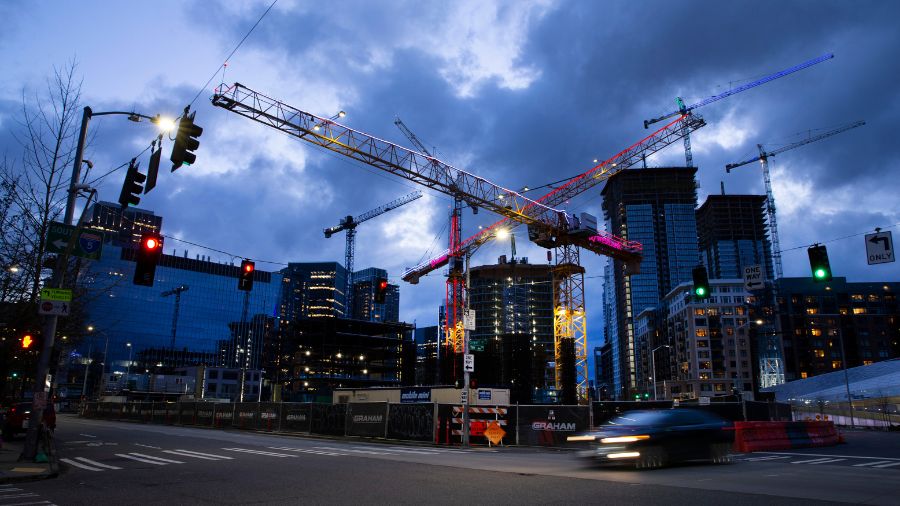
In her account of the findings, Seattle ranked among the slowest major markets, with apartment projects sometimes spending more than two years in design review before getting permits. She cited estimates that delays could add roughly $550 a month to a one-bedroom apartment and more than $700 to a two-bedroom.
“And I mean, think about that. That’s another rent payment hiding inside your rent,” Ursula said.
She explained that high interest rates and slow approvals are connected problems. A developer waiting for permission to build still faces expenses, even when construction has not started.
“But if you think about it, if a developer is waiting 18 months for a permit on an empty lot, they have to pay bank interest, they have to pay property taxes, and they have to pay four and a half percent annual construction inflation before they even turn over a shovel,” Ursula said.
She also pointed to a broader concern: When projects take too long to move forward, some may never get built, leaving fewer apartments available.
Ursula questions urgency at city hall
Ursula noted that shortening permitting timelines has been a goal across mayoral administrations. But she questioned whether the work is receiving the urgency it deserves.
“And one question I have to ask is: Are all hands on deck? Is everyone in the permitting department working right now?” Ursula said.
Gee asked how long she had been handling permit complaints. Ursula described the wait as a recurring point of contention.
For Gee, the frustration was familiar from running his own car-cleaning business. He recalled being excited to land work cleaning government vehicles, only to face a lengthy wait for payment. He did not identify the government involved or specify how long the payment took.
His broader challenge was accountability: Why do residents face consequences for being late while delays on the government’s side are expected to be accepted?
RELATED STORIES


Listeners chime in
Listeners weighed in with their own experiences of permitting delays, construction costs, and land-use restrictions.
“It took us 3 1/2 years to get permits on a new construction project on Vashon, in unincorporated King County. We finally got the permit three days before our septic design was going to expire. We lost over $200,000 in overages and other issues due to the county permitting and inspectors,” one KIRO Newsradio listener texted in.
Blake from Puyallup described difficulties rebuilding.
“My dad’s shop in Pierce County burned down about five years ago,” Blake said. “The city of Puyallup denied his permit twice to rebuild it because it exceeded the new code requirements for size. He had to schedule multiple meetings explaining that it was a rebuild, and the city still made him use the crumbling slab to rebuild it. He rebuilt it on the crumbling slab and then had to demo out the slab once it was rebuilt and have it re-poured. It’s insane what they do.”
Another listener pointed to state land-use rules.
“Nobody ever mentions the ‘Growth Management Act’ that came into effect in the state of Washington in 1990,” G.A. from Camano texted in. “Land prices doubled overnight, and higher restrictions on developing land added to the expense & time. I was a general contractor for 42 years and dealt with this issue from the start.”
Kip from Lakebay offered a different perspective on development restrictions.
“You all forget that the easy-to-develop, vacant land in Pierce and King counties was developed years ago,” Kip said. “Much of what remains in close proximity to job centers has issues such as wetlands, steep slopes, protected farmland (it’s ‘nice’ to eat), aquifer recharge areas, or a lack of public services (water/sewer). Earthquake design is now a part of architectural construction reviews. Citizen groups are now much more proactive in local land use issues … which is not a bad thing. So there is another side to that espoused by developers.”
For Michele, the frustrations helped prompt a change in careers and location.
“We had a high-end remodeling company for 20 years. We just wrapped up, closed our business, and moved to Mossyrock to be Christmas tree farmers. It’s ridiculous in Seattle,” Michele in Mossyrock said.
Mark from Port Townsend compared the cost of building his family home with what he estimates it would cost today.
“I have been a builder for over 50 years and the owner of my own company here in Washington State for 33 years,” Mark said. “I built my family home that we are still living in today … I built that modestly built, 2,200 square-foot home for $72 per square foot. To build the same modest, basic home today would cost around $350 to $450 per square foot.”
He attributed much of that increase to regulations, taxes, and material costs.
“Eighty-five percent of the increased cost to build is based on regulations, taxes, and increased inflationary material costs year-over-year,” Mark continued. “Wages have been virtually stagnant over the same period. This is why it is almost impossible to build affordable housing in the private sector. Government-subsidized ‘affordable’ housing is all that can be built, but on the back of increasing taxes on the taxpayers. So, is it really ‘affordable housing?’ Something has to change!”
Watch the full discussion in the video above.
Listen to Gee and Ursula on “The Gee and Ursula Show” weekday mornings from 9 am to 12 pm on KIRO Newsradio.