Too bad a truck didn’t take out the Fairfax Bridge, then it would have been considered an emergency
Jan 29, 2026, 5:01 AM | Updated: 4:10 pm

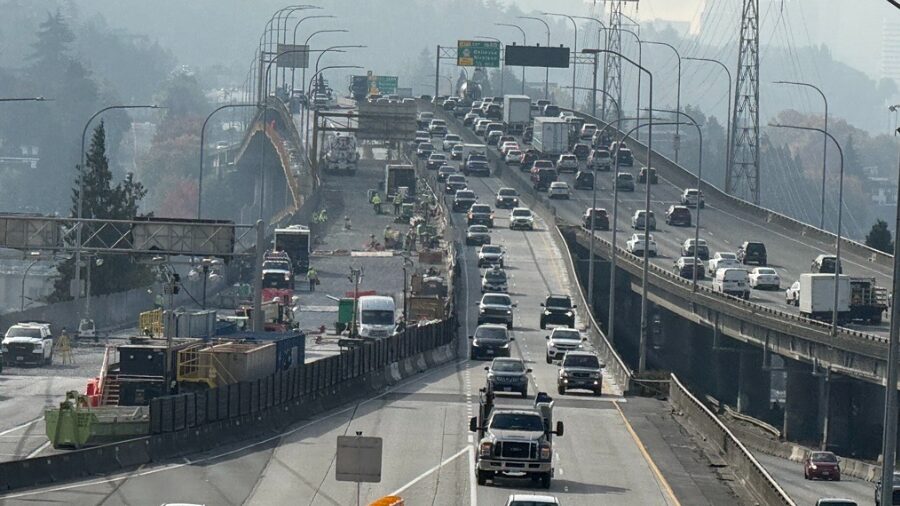
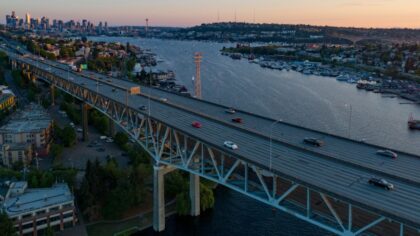
A view of the Fairfax Bridge. (Photo courtesy of Pierce County)
(Photo courtesy of Pierce County)
When a bridge is hit and damaged by a truck, or a landslide takes out a road, those are emergencies that qualify for extra money, grants, and faster response times. When your bridge is shut down by neglect and a failure of lawmakers in Olympia, that’s not an emergency, and you’re on your own.
When a truck struck the Bullfrog overpass on westbound I-90, it took only months to replace it. After a truck damaged the White River Bridge, repairs took only months, and businesses in Buckley and Enumclaw qualified for emergency loans.
It turns out there are emergencies, and then there are emergencies. Not all are treated the same.
Ask Wilkeson Mayor Jayme Peloli. Her city’s lifeline, the Fairfax Bridge over the Carbon River, which connects her town to Mount Rainier National Park, was shut down last year, and everything stopped.
“When that access disappeared, it did not create an inconvenience,” Peloli told the legislature. “It actually severed the system that sustains us. Visitor traffic stopped overnight. Businesses lost their customer base immediately. Seasonal employment disappeared. Emergency routing became constrained and a nationally significant gateway to Mount Rainier National Park was effectively removed from the map.”
But Wilkeson isn’t eligible for emergency funding or expedited repairs. The reason: the bridge’s closure was caused by an intentional lack of funding for maintenance and preservation, which made the steel too deteriorated to keep it open. For decades, the steel got worse, and the legislature failed to fund the work.
The bridge was load-restricted three times before it finally closed last April.
It turns out that willful neglect is not an emergency. There are no grants coming for the businesses to stay open. There is no fast-tracking work to repair or replace the bridge.
Mayor Peloli went to the legislature this week to highlight the absurdity of the situation.
“When infrastructure fails due to natural disasters, our systems quickly respond, but when infrastructure fails due to long-term state neglect, those same systems do not,” she testified.
And while the Washington Department of Transportation (WSDOT) moved quickly to fix Bullfrog Overpass and the White River Bridge, it could be six years before the Fairfax Bridge is rebuilt, if it’s rebuilt at all.
RELATED STORIES
Two options are on the table
Spend at least $160 million to build a new bridge just north of the existing one, or simply remove the damaged bridge and leave the community with nothing.
WSDOT Region Director Steve Roark explained the realities to the mayor and legislature this week.
“Since it’s not a repair, like an emergency slide or something like that, and it’s a new bridge on a new alignment, there’s no contract to let,” he said. “There’s no advantage at this point to declaring an emergency.”
No way to speed up 18 months of study, another two years of environmental and engineering work, and another two-plus years of construction.
Meanwhile, Wilkeson and other small communities on that corridor are left to fend for themselves. And considering how many state bridges are in bad shape, after years of willful neglect, Peloli said they’re not asking for special treatment.
“We are asking for the level of response that this situation warrants, one that restores access, protects public safety, and recognizes that communities cannot be left to absorb the consequences of state-owned infrastructure failure alone,” she said. “Wilkeson is not the exception. Wilkeson is the warning.”
There are several bills before the legislature to help out these communities. One would allow WSDOT to waive red tape. The other would eliminate the Business and Occupation tax and eliminate property taxes in the affected area this year.
But it looks like relief will not be coming any time soon.
There are emergencies and self-made emergencies, but they aren’t treated the same.
Chris Sullivan is a traffic reporter for KIRO Newsradio. Read more of his stories here. Follow KIRO Newsradio traffic on X.
Follow @https://twitter.com/newsguysully