Sullivan: Unseen workers keep the ferries afloat, but a breaking point is near
Aug 8, 2024, 7:17 AM

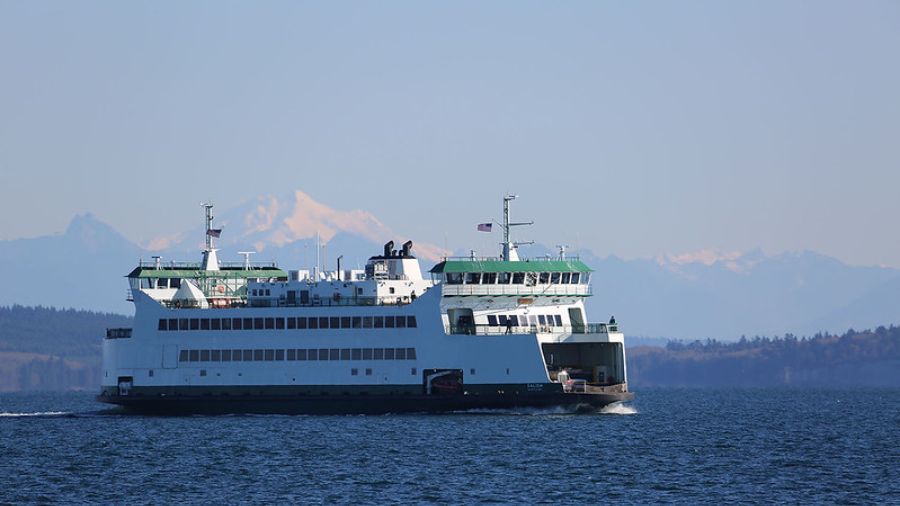
A Washington State Ferry sailing to Friday Harbor, San Juan Island, Washington State, United States. (Photo: Wolfgang Kaehler, Getty Images)
(Photo: Wolfgang Kaehler, Getty Images)
They have the dirtiest jobs in the ferry system. They are rarely seen by the public. They are the key to the future of the ferry system, but there are not enough of them to go around.
They are the wipers, the oilers, the engineers. They are the workers in dirty coveralls keeping the aging Washington ferries on the water. If there are any issues with a boat, the roughly 400 engine room workers are tasked with fixing them.
Brandon Powell, 39, is an oiler on the Tacoma. He’s worked for Washington State Ferries (WSF) for 12 years and, like the others, is a Swiss Army knife when it comes to taking care of the boats.
More local traffic news: Fatal car crash involving pedestrian shuts down all but one lane of SB I-5 in Everett
“We do everything from plumbing to electrical work to some welding and some fabrication,” Powell said. “We will chip the corroding paint and that could be up where passengers are on the car deck or, oftentimes, it’s down in the engine room.”
I joked that it’s all the fun, hot and dirty places on the boat.
“Oh, of course,” he laughed in agreement. “All of the confined spaces. The small tanks and areas. If you’re claustrophobic, it really would not be your cup of tea.”
The boats don’t run if these workers aren’t on the job. They work seven straight 12-hour shifts and then get seven days off, but are still routinely called in for overtime. When they return for their next seven-day shift, they switch from day to night. Day shift. Time off. Night shift. It’s called the “flip.”
Powell is married and has five young kids. He loves working for the ferry system, but he can make much more money in the private sector and the pay gap for a similarly seniored person who works above deck is approximately 20% higher.
“An oiler is the highest unlicensed worker in the engine room,” Powell said. “Quartermaster is the highest unlicensed position on deck. It’s an AB, able-bodied, seaman working as quartermaster. When I was hired 12 years ago, there was a 5% wage disparity between the two. They made 5% more. Now they’re over 20% more.”
Powell and his fellow engineers are asking the state to bring those wages back to par during the current contract negotiations, as the pay gap makes Powell and others in dirty coveralls feel undervalued and underappreciated.
“We do want to keep the ferries running,” he said. “We don’t want people to be stranded. We don’t want people to miss appointments, doctor appointments. We don’t want them to miss work. We don’t want them to miss these special occasions in their lives. But, at the same time, we also need to feel valued by the state, and we’re not.”
Powell placed the blame on the governor and the Washington Legislature for not treating these vital workers on Washington ferries fairly.
“I don’t blame the deck department at all,” he said. “They’re wonderful people. It’s my hope that I’m treated equally to them.”
But this Silverdale native said he is close to a decision that he doesn’t want to make.
“Just a few days ago, and it was after a bargaining session, I told my wife that I was ready to submit my two-week notice that I was ready to quit,” Powell said.
WSF engineers: ‘Inslee has run service into the rocks‘
The ferry service can’t afford to have Powell quit. There aren’t enough engine room workers to run the ferries right now. The workforce is 40 to 50 people short of having the capacity to service all the current boats, and the ferry service is only operating 15 of 22 boats now.
The lack of competitive pay is also keeping the ferry service from attracting new workers to the job, and that puts the entire system in jeopardy.
“I would hate to see the ferries go away,” Powell said. “It’s such an iconic symbol of Washington State, and right now it’s being run aground.”
Bargaining will likely finish this week with no new agreement. Ferry workers cannot strike, by law. The pay decision will be left up to arbitration.
The workers are looking for a 20% raise, to bring their pay up to par. The union representing them says the state has only offered 2%.
Check out more of Chris’ Chokepoints here. You can also follow Chris on X. Head here to follow KIRO Newsradio Traffic’s profile on X.