‘Absolutely not too late to get a flu shot’: Virologist urges vaccination after WA’s first pediatric flu death
Feb 1, 2026, 5:00 AM | Updated: Feb 2, 2026, 5:35 pm
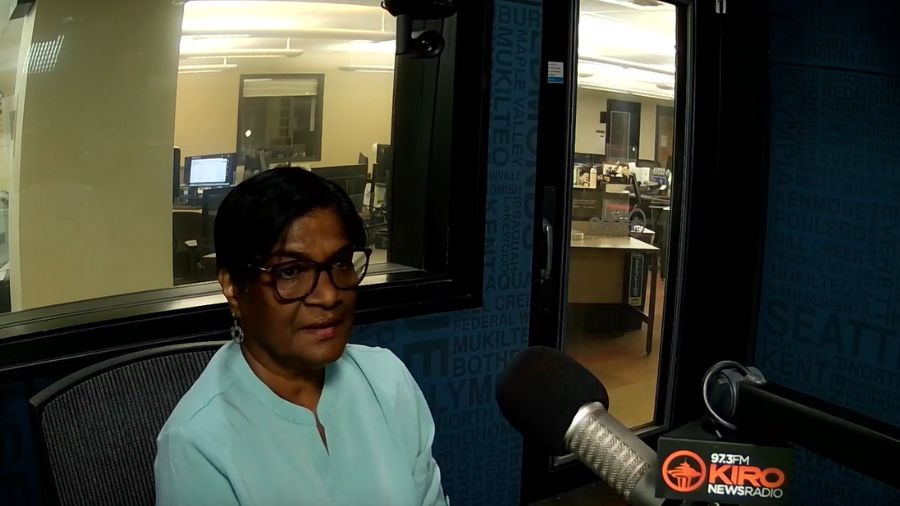
After the first pediatric flu-related death of the season was confirmed in Washington on Wednesday, virologist Dr. Angela Rasmussen joined “The Gee and Ursula Show” on KIRO Newsradio to highlight the importance of getting a flu shot to stave off any viruses.
“It is absolutely not too late to get a flu shot. The flu vaccine is not a good match for the dominant strain that’s circulating, but that does not mean that the flu vaccine doesn’t work,” Rasmussen said. “It means that you’re more likely to get the flu, but you’re still way less likely to be hospitalized with it, and you’re way less likely to die from it. There are still a few months left in flu season. A couple of countries around the world have had really late flu seasons this year. So bottom line, get that flu shot, not too late.”
Co-host Ursula Reutin referenced how the COVID-19 pandemic was handled, asking Rasmussen what she thought people did well, and what she wished people better understood about viruses in general.
“That’s such a great question. I feel like in some ways, we didn’t really learn any lessons from the pandemic,” Rasmussen said. “I suspect that that has to do with this current state of public health, which is markedly worse than it was during the COVID pandemic. What people did understand at the time was that this was something that was going to be really serious.
“We didn’t know exactly how badly it was going to disrupt everybody’s lives, how many people it was going to hurt or kill potentially,” Rasmussen continued. “People did take action to try to reduce their risk. It wasn’t until really, after 2020, that we started to see a lot of the public health advice become really, really divisive and political.”
Amid a flurry of health advice on what to do and what not to do, Rasmussen stated that it is often tough to convey a large amount of technical jargon in a brief format that others can understand.
“It’s really hard to teach everybody a lot of basic science that tends to get very boring. They don’t necessarily want to know about how coronaviruses replicate, or how vaccines work, or any of that,” Rasmussen said. “Unfortunately, there’s just that education gap because it’s very technical and it’s full of a lot of jargon. I think that a lot of people just still don’t really completely understand the threat that we still face now, unfortunately, from completely preventable diseases that are going to come back because of what’s happened to the national vaccination schedule.”
Looking ahead, Rasmussen cautioned people who have been dismissive of recommended vaccines, noting that diseases that had been gone for years could return.
“I’m first and foremost worried about all of the vaccine-preventable diseases that are going to return. On Jan. 20, we almost certainly lost measles elimination status. That is the result of reduced vaccine uptake,” Rasmussen said. “A lot of people don’t really understand how horrible these diseases are. These diseases have been eliminated for so long, we don’t even remember what they look like anymore, but they are coming back.
“We are going to see more kids with polio, which is my personal nightmare,” Rasmussen continued. “We are going to see a reduction in our capacity to respond to any kind of health emergency, because our already depleted resources are going to be so busy dealing with these larger and larger preventable disease outbreaks.”
Watch the full discussion in the video above.
Listen to Gee and Ursula on “The Gee and Ursula Show” weekday mornings from 9 am to 12 pm on KIRO Newsradio.