Executive Girmay Zahilay calls alleged King County DCHS fraud a ‘systemic failure’
Apr 7, 2026, 1:16 PM | Updated: Apr 8, 2026, 10:12 am
An investigation by The Seattle Times into the King County Department of Community and Human Services (DCHS) revealed significant alleged fraud in how King County is handling taxpayers’ dollars.
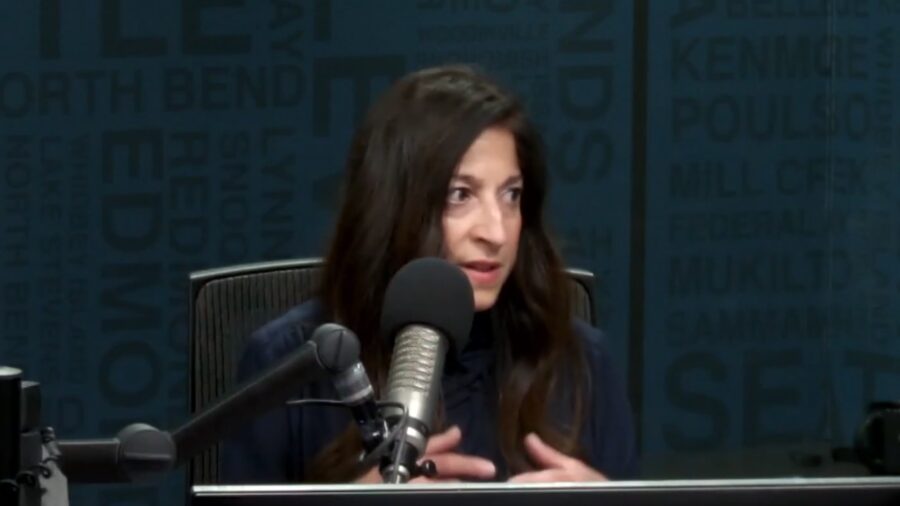
King County Executive Girmay Zahilay joined “The Gee and Ursula Show” to address the questions the hosts, the show’s audience, and the public at large have regarding weak oversight and potential mismanagement of millions of dollars in youth and human services funds.
“I would say that, absent some actual bad actors, I think the overall issue is a systemic failure, which is that during the pandemic, King County received lots of new resources from the federal government,” Zahilay said. “This was a time of emergency, and we made conscious decisions to get dollars out of the door as quickly as possible, because people were in crisis, right? People needed rental assistance, people needed food assistance, people needed masks and vaccines. And there are a lot of smaller organizations that are able to reach the most vulnerable populations more effectively than a big organization or King County itself can, because they have more authentic relationships.”
RELATED STORIES


The Seattle Times uncovers lax oversight in alleged King County fraud
The Seattle Times explained that contractors would request money and receive it without any oversight into whether the funds were actually being used as claimed. For example, Gerry Hill, a licensed cosmetologist, signed a three-year, $470,000 agreement with the county to provide job training opportunities for young adults of color.
She registered her business, Your Pretty Perfect, and said it had community outreach staff and a long list of workshops lined up. However, many of the people named as partners told The Seattle Times they never worked with Hill. In her report to the county, Hill failed to provide the required information, writing “done,” “not yet,” or “anytime” in fields that asked for data, such as the number of young adults she worked with.
Zahilay stated that there was a “conscious decision” to lower barriers for organizations to participate, which meant there was greater assumed risk.
“The infrastructure needed to hold those dollars and these systems accountable: The oversight, the financial controls, the boots on the ground, auditing those types of systems did not keep pace with the growth of those resources,” Zahilay said. “So while I could say that there are just bad employees or bad actors, I think really what the heart of this is, is that leadership did not put enough resources into oversight and financial controls to keep pace with the growth of the resources that are needed when you’re partnering with organizations that might not have the same kind of technical capacity to deliver in a more accountable way.”
Some county officials have been suspicious of how the funds were being handled. Last month, King County Councilmember Reagan Dunn told “The John Curley Show” he had been pushing for an audit for years before the alleged King County fraud was revealed by The Seattle Times‘ investigation.
Dunn said around $1.8 billion is funneled through the DCHS program every 18 months or so, and auditors have only scratched the surface.
What has been fixed with King County’s accountability so far?
“So what have you fixed right now?” KIRO host Gee Scott asked. “What have you fixed, what’s still broken, and who is going to be held accountable?”
“In my first 100 days in office, the big policy direction that I announced was accountability, performance, transparency. I did an executive order on one of my top priorities, which is better government,” Zahilay answered. “So that directive says that King County is going to have an overarching commitment to performance. That means that we’re going to measure our success based on the outcomes that we deliver, not based on how much money we spend or how many new programs we launch.”
He added that a new internal audit director for King County has been hired, tasked with proactively assessing risk and identifying issues across all departments. Additionally, he created a sub-cabinet focused on accountability and transparency.
“Meaning all of my top department directors will meet very regularly to identify these types of risks and eliminate them proactively, rather than waiting for the independent auditor to give us a bad grade on our report card,” Zahilay added. “We’re going to start from the bottom up and say nothing. Everything’s on the table. We’re going to analyze everything. We’re going to find programs that are not producing the results.”
“How long will it take for that broken system to be fixed?” Gee asked.
“I think it’s being fixed as we speak,” Zahilay replied.
Watch the full discussion in the video above.
Listen to Gee and Ursula on “The Gee and Ursula Show” weekday mornings from 9 am to 12 pm on KIRO Newsradio.
Contributing: Julia Dallas, MyNorthwest