‘Working families are paying the real price’: WA House candidate wants to extend climate deadline as energy bills could double in next 3 years
Jun 20, 2026, 6:29 AM

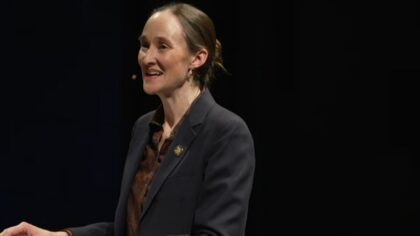
When Katy Cornell, a House candidate in Washington’s 26th Legislative District, went door to door, she heard one issue over and over: skyrocketing energy bills.
Cornell told “The Jake and Spike Show” on KIRO Newsradio that state climate mandates are driving up costs.
“The Clean Energy Transformation Act is the one that they’re pushing us to be at zero emissions by 2030,
net neutral carbon emissions,” she said. “So essentially they’re requiring all of our energy companies to switch over by 2030, and this requires billions of dollars in investment, and you’re talking transmission investment, the storage for this type of energy, converting over to different energy sources, and that is all being passed on to us, the consumer.”
RELATED STORIES

Energy bills could rise 30% a year under current climate mandates
KIRO host Spike O’Neill asked Cornell if she wanted to revoke the policies or just push them to a more realistic timeframe.
“I think we all want to protect our beautiful state. It’s one of the most beautiful places on earth. All the goals are great; we just have to be realistic in how we can get there and how much we’re willing to pay for that — especially when we say we care the most about working families, because they’re the ones paying the real price,” Cornell responded. “They’re hurting really badly. The electric companies are saying energy rate bills are going to go up 30% a year.”
“I mean, that’s going to double your electricity bills in the next three years,” she continued. “Who can afford that? Nobody. Some people in Port Orchard are saying they’re paying already $700 to $800 a month for a three-bedroom house. I mean, you’re talking possibly $1,400.”
Cornell’s plan, if elected, is to extend the timeline from 2030 to around 2035 to 2040.
“That would allow us to decrease those bills, instead of going up 30%, they can go up maybe 10% a year, 5% a year, but it has to go up at a rate that wages go up, that people can adjust to that, if it goes up too drastically, we’re not going to be able to afford electricity,” she said.
Watch the full discussion in the video above.
Listen to “The Jake and Spike Show” weekdays from noon to 3 p.m. on KIRO Newsradio 97.3